Home
Our team
Content
    Cover Story
    All Articles
    Animals Rule!
    Around Town
    Cityscapes
    Community Impact
    Elder Profile
    For The Love Of It
    Good For You
    Goodness InDeed
    Green Page
    History
    Local Sports
    Meet your Neighbor
    Miscellaneous
    Spotlight on our Sponsors
    The Arts
    Your Green Spaces
Advertise
Archives
Donate
Contact


The Lebanon Times - Good people, good places and good things happening
  • Home
  • Our team
  • Content
    • Cover Story
    • All Articles
    • Animals Rule!
    • Around Town
    • Cityscapes
    • Community Impact
    • Elder Profile
    • For The Love Of It
    • Good For You
    • Goodness InDeed
    • Green Page
    • History
    • Local Sports
    • Meet your Neighbor
    • Miscellaneous
    • Spotlight on our Sponsors
    • The Arts
    • Your Green Spaces
  • Advertise
  • Archives
  • Donate
  • Contact
All, Around Town

Lebanon’s Pollinator Champions

September 3, 2024 by Cindy Heath No Comments
Pat McGovern gardening in Lebanon

When long-time community garden champion, Pat McGovern, chooses a cause to support, she goes all in. Whether it’s promoting the abundance of local foods, raising awareness about harmful chemicals in turf and landscape management, or spearheading a campaign to increase pollinator and native plant habitats, Pat has a unique gift for effecting positive change in her community.

It should come as no surprise that these three initiatives are closely related – pollinators support our local food supply (as much as 90% in some regions of the world) and research has shown that the use of pesticides in food production, gardening, and landscaping can be harmful to pollinators, which in turn can threaten our food supply. Pollinators are also challenged by shrinking habitat from develop-

ment pressure, invasive plant species, and extreme weather events.

Recently, Pat’s efforts in pollinator conservation were recognized by the VT Center for Ecostudies with their Community Scientist of the Year Award. Pat explains, “The VT Center for Ecostudies had an iNaturalist focus on pollinators at the Canillas Community Garden and on the Mascoma River Greenway. It was valuable for me because I started to learn more about the vast varieties of pollinators and it enhanced my enjoyment of this work.”

For Pat and her fellow pollinator and native plant enthusiasts, creating new pollinator habitats in Lebanon has become a high priority. More than 15 new pollinator gardens have been created since 2009, when Pat began designing and planting one pesticide-free pollinator garden after another. Many of the gardens are along the Mascoma River Greenway (MRG), and are designated with a ‘Pollinator Pathway’ sign. Pat notes that the goal of the project is multi-faceted. “We want the gardens to be attractive to both people and pollinators. Our goal is not just aesthetics but a life-sustaining system.”  Indeed, in the height of summer, users of the Greenway can be treated to beautiful blooms of bee balm, milkweed, aster, goldenrod, black-eyed susan, coneflower, and other pollinator-friendly plants. For those who stop to look closely and listen carefully, the all-important pollinators will soon appear.
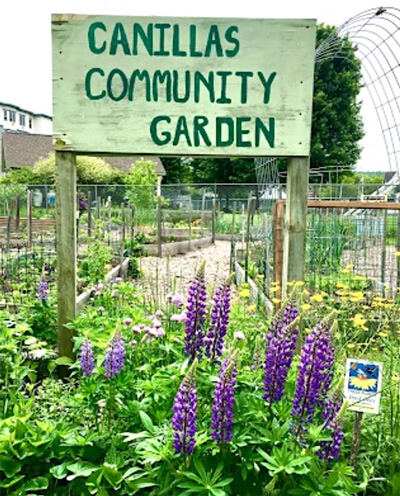
Canillas pollinator garden in Lebanon

Canillas pollinator garden in Lebanon

Many of the plants in the pollinator gardens are native to the Northeast, and that’s important because of a concept known as co-evolution, in which two different species evolve together for their mutual survival. A good example is the monarch butterfly and the native milkweed plant, the only plant the monarch caterpillar eats because it has evolved over billions of years to become tolerant of the toxic nature of the plant.

What’s involved in creating an ideal pollinator habitat? According to UNH Extension, pollinators are species that move pollen from one flower to another, fertilizing plants and allowing them to reproduce. Wild bees, butterflies, moths, birds, bats, wasps, and beetles all play a role in ecosystem health. These species require a variety of native plants for optimal nutrition, a water source, and shelter for breeding and rest from their pollinating journeys. Three season bloom is also important for pollinators, varying the shapes and colors of the flowers to accommodate pollinators who are attracted to specific plants. Pollinators benefit from a plant’s seed heads through the winter, taking shelter in plant stems and leaf litter, so holding off on fall clean up supports their habitat needs.

By all accounts, the pollinators in Lebanon are happy and so is Pat. “I am particularly pleased with the MRG Overpass Garden near APD this year – it is so alive with pollinators! The activity level and the variety of insects has been so satisfying. And, I have had to remove apples from the apple trees – there are too many for these young trees.”

Pat celebrates the partners involved in helping to purchase and plant flowers, shrubs, and trees for the city’s pollinator gardens. In particular, Upper Valley Apple Corps, whose volunteers have planted almost 20 fruit trees and shrubs, and the Robert F. Church Charitable Trust for funding plant purchases. Lebanon Mayor Tim McNamara’s Dartmouth Class of 1989 pollinator project has plantings at the Lebanon airport, recycling facility, and other sites, and Paul Coats of the Recreation, Arts & Parks Department, has provided unwavering support since the beginning of the project and has spearheaded the planting of dozens of trees in West Lebanon’s Westboro Park. The Upper Valley Rugby Club volunteers at the Greenway Pocket Park, and Sustainable Lebanon’s ‘Green the Ground’ initiative supports biodiversity throughout the city.

Paul credits these volunteers and organizations with advancing plant biodiversity in the city. “We try to be supportive of the people dedicated to these projects. When folks like Pat McGovern and Barbara Slaiby (Colburn Park Pollinator Garden) ask to do additional plantings, we want to make that happen. We want to take care of the administrative stuff for them so they can get their hands in the soil.”

Susan Johnson, gardener for the Recreation, Arts & Parks Department, and Lynn Fisher, a volunteer for the MRG Pocket Park, have contributed to the pollinator pathway efforts as well. Lynn is a lifelong student of native plants and animals. “There’s uncalculated value in planting native species – those same plants around which the web of native insects and birds have evolved. My (lofty!) goal is to get 70% of the garden to be native species, so that even the least-adaptable native insects have dining options, to restore a more diverse and resilient ecosystem.” For her part, Susan hopes garden visitors will adapt to the natural pollinator garden look over time. “Pollinator-friendly gardens have a style that people may not be used to. I’m hoping more exposure and education will help expand what people consider beautiful. Seeing insects buzzing all over the plants is a type of beauty.”
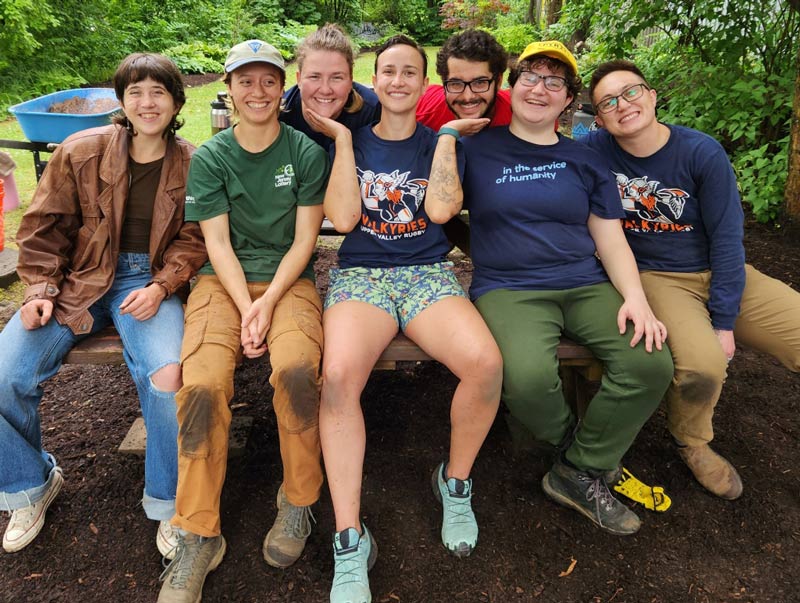
Upper Valley Rugby Club volunteers at Lebanon’s Greenway Pocket Park

Upper Valley Rugby Club volunteers at Lebanon’s Greenway Pocket Park

What does the future hold for Lebanon’s pollinators? With plans moving forward to extend the Mascoma River Greenway toward the Powerhouse Mall, the future is rich with opportunities for new pollinator gardens. Pat McGovern, aka the ‘Queen Bee of Pollinator Pathways’, and her friends are ready!

To learn about Lebanon’s many pollinator gardens, their specific plants, and who maintains them, visit the Google Earth map at tinyurl.com/MRGPollinatorPathway. To join the Pollinator Pathway Project, contact the Lebanon Recreation, Arts & Parks Department, 603-448-5121.
Share:
Reading time: 5 min
All, The Arts

More Murals to Come to the Downtown Lebanon Tunnel

by Devin R. Wilkie No Comments
John Garoutte’s proposal for the addition to his mural, Patchwork

Residents and visitors have likely noticed the existing sculpture and mural installations in the Downtown Lebanon Tunnel, providing public art for the enjoyment of pedestrians and cyclists using the path between the Northern Rail Trail and the Mascoma River Greenway. These installations have been created by local artists and supported by Lebanon ArtWays, the Arts and Culture Commission of the City of Lebanon. Before long, additional installations will join the first four, adding vibrancy throughout the tunnel and expanding the public art offerings in Lebanon.

The goal of commissioning art installations in the tunnel, says Recreation, Arts, and Parks Department director Paul Coats, is to “have Lebanon stand apart as a municipality in the Upper Valley because of our devotion to public art” and also “to make that tunnel more attractive” as a recreational space. Artistic, aesthetically pleasing spaces attract development, tourism, and recreation, while also discouraging less attractive graffiti such as tagging. The effort also enlists local artists and provides fair compensation for their work.

Earlier this year, Lebanon ArtWays presented a Request for Proposals for installations to fill the tunnel with art, owing to the availability of TIF district funds to provide stipends and materials reimbursement to artists. In May, the commission reviewed and recommended approval of five proposals, covering a range of styles, formats, media, and subjects. This was followed in July by a site visit to consider the locations and sizes of each proposal. Lebanon’s Heritage Commission is also involved in the process, intending to support art that highlights the history of transportation locally.

What can viewers expect to see in the coming months? Here is a preview:

Emily Battles has proposed an interactive, three-dimensional installation consisting of hundreds of wooden blocks attached to a grid and painted in varying hues and shades. Emily’s intention is to allow viewers to engage with the installation by rotating the blocks and changing the appearance of the wall. This incorporates viewers into the generation of art, giving passersby the opportunity to create a unique display from the positioning of the blocks. To better engage younger members of the community safely, this installation will be affixed to the northern wall of the tunnel, farther from the section used most frequently by cyclists.

Julio Muñoz Uribe, also known as Ragko, created the recently-completed community mural that adorns the building of COVER Home Repair in White River Junction. His proposal for Lebanon superimposes a collection of images that evoke a sense of place for those in the tunnel: a mountainous backdrop above a map of the City; the distinctive cupola of Lebanon City Hall, and brightly colored fish to represent the river that flows beside the trails. The proposal plays heavily on the concept of confluences, as the images combine in the space between the restored stone wall of the tunnel, in a space that connects two trails that bring riverside nature to a municipal downtown area. Additionally, the colors of this mural will, Julio hopes, complement the colors of the sculpture installation beside it.

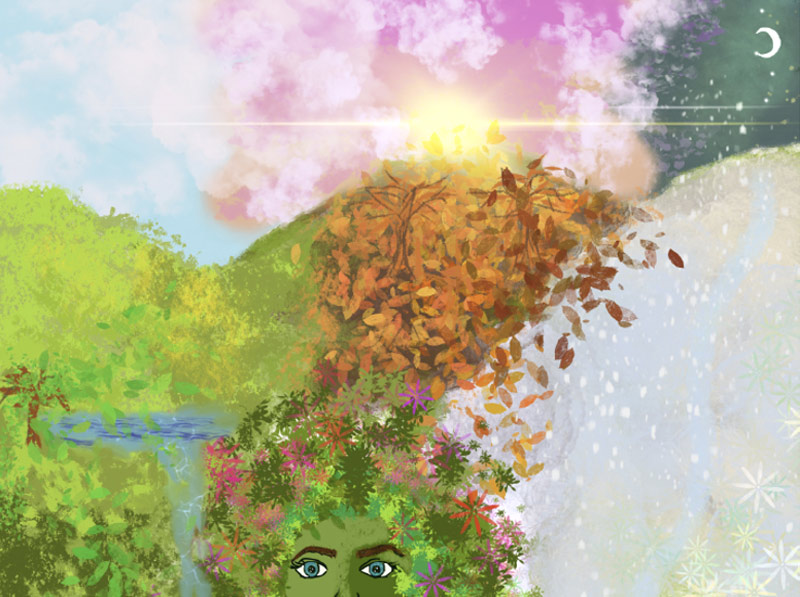
Marley Dube mural proposal – Mother Nature

Marley Dube mural proposal – Mother Nature

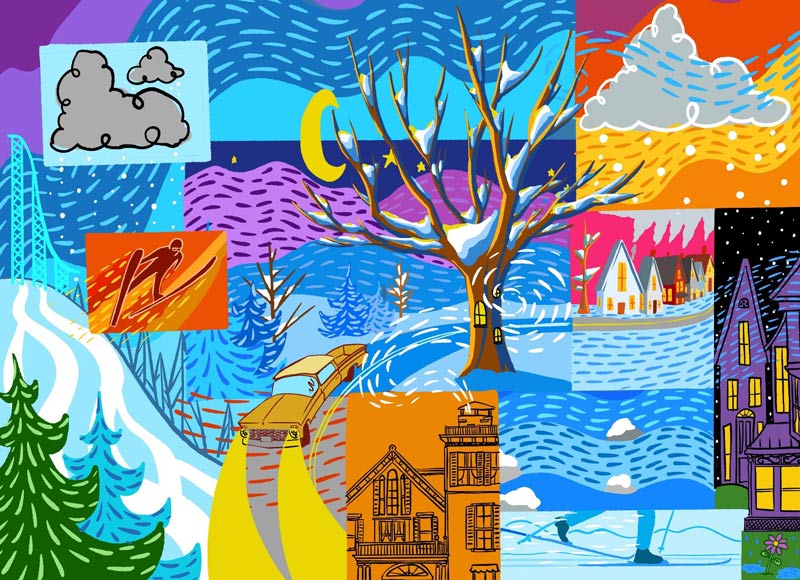
John Garoutte in 2023 painted “Patchwork,” which he describes as “a giant quilt, with patches that depict scenes from Lebanon both past and present,” as an homage to the textile industry of New England. The piece currently resides near the western end of the tunnel’s south wall. His latest proposal expands this mural eastward, incorporating more seasons alongside the estival images tunnel users already enjoy. John notes that “the seasonality of New England is unique and beautiful in so many ways, and I wanted to contrast the warmth and energy of the summer with the cool quiet of the winter.” John’s art is inspired by his snowboarding and his work as a stone wall builder; his love for public art emerges from the idea that it “humanizes the built environment and has the ability to transform and invigorate spaces in ways that make public space so much more inviting and comfortable,” and “it can provide everyone in the community direct and ongoing encounters with art.”

Nicholas Cain is working with Kay Curtis and a team of four volunteers on what he describes as “a parade through the tunnel, playfully illustrating Lebanon’s culture and activities using many of the iconic Lebanon landmarks.” The larger-than-life mural will consist of two stacked panels, sixty feet long and each measuring seven feet high for a total of fourteen vertical feet looming over the tunnel’s visitors. The project sketches show animated figures, evocative of cubism and engaged in activities of celebration and daily life.

Marley Dube is a graduate of Lebanon High School, and in 2019, she painted a mural in the school, so she is familiar with public art. Her submission is titled “Mother Nature” and, like John’s “Patchwork,” depicts the seasons of the region. Marley’s mural leans heavily into organic imagery, including leaves and stars and water in a semi-abstract design embodying the natural environment that draws so many people to the community and its many offerings. Positioned in the western part of the tunnel near to the Mascoma River, “Mother Nature” is sure to evoke in viewers an appreciation of the trails they are enjoying.

Share:
Reading time: 4 min
All, Around Town

Building Community at the Lebanon Farmers’ Market

by Greater Good Media No Comments
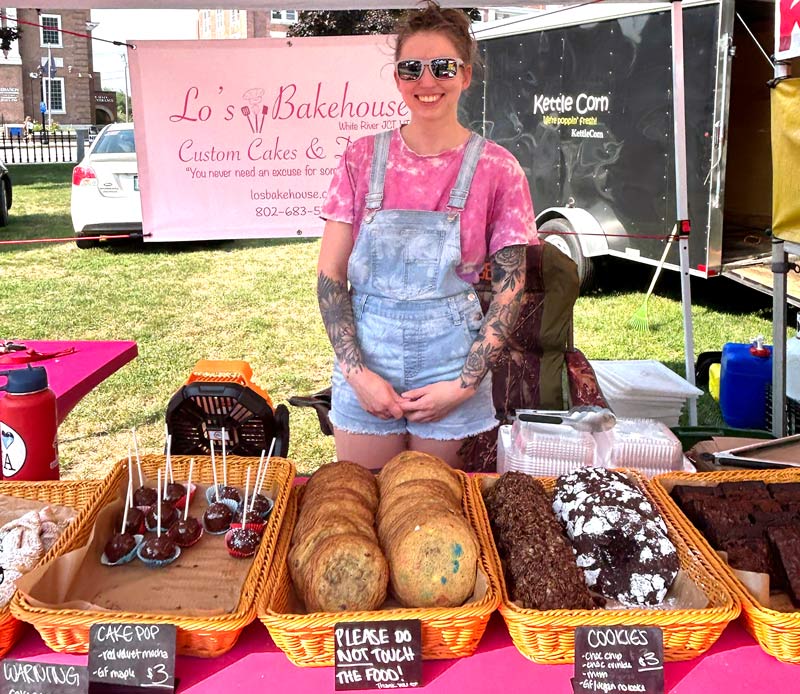
Lauren Tillotson

Nestled in the center of Colburn Park, with its vendors lining the pathways, is the Lebanon farmers’ market. Every farmers’ market has its own flair that makes it unique. This one speaks to a place of social gathering and community.

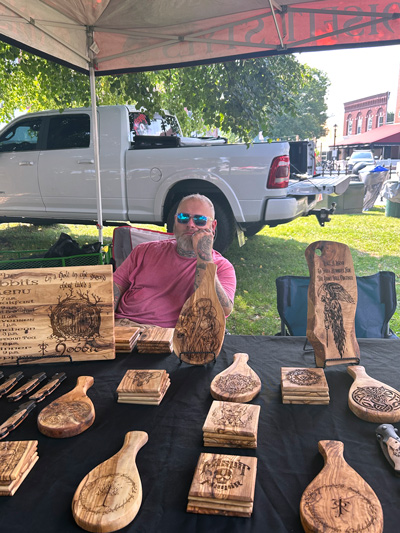
Nick Miller

Nick Miller

I had the wonderful opportunity of visiting with some of the vendors and mingling with patrons to ask them about their own experience at this market.

I first spoke with Lauren Tillotson of Lo’s Bakehouse in Hartford, who specializes in custom cakes and desserts that made my mouth water. This is her second year at the Lebanon farmers’ market. I asked her how she sees farmers’ markets as being a valuable part of the community. She responded, “I think it’s amazing, you know, to get everybody out and about…I love meeting all the new people. And it is a great, great, great way for me to get my name out there.”

Nick Miller, a woodworker who makes the utmost meticulous laser designs in different forms, has been a vendor at the Lebanon farmers’ market for three or four years. He primarily does themed events like Renaissance fairs and festivals. He and his daughter live in Lebanon, and he enjoys being part of and involved with the community. As far as the value of farmers markets in communities, Nick said that “Lebanon has an interesting market in comparison to other markets. Lebanon is much more community oriented…In my opinion, this one kind of [seems] more, not so much a farmers’ market, but a community gathering in the area…There’s more to it here than other farmers’ markets. I think it’s great, that’s why I continue to come.”

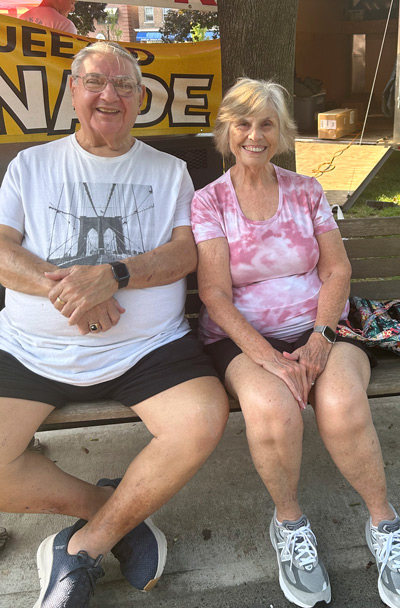
Michael and Janice Novello

Michael and Janice Novello

Danielle Pickles, known as “Pickles”, has lived in Lebanon for thirty years and comes to this market once a month to find what new food vendors she can try out. She finds farmers’ markets to be of a great value, and said, “I know a lot of people that do their sole business through farmers’ markets, and they get their name out through farmers’ markets…It’s really nice to just see the smaller communities get their name out there, otherwise how would they do it?”

Michael and Janice Novello came up from Florida to visit family, and this is their second year at the Lebanon farmers’ market. I asked how they see farmers’ markets being a valuable part of the community. Michael said, “I think it gives the local vendors a place to exhibit their wares, for the local community to take advantage of the local produce, and festivities, and so on. It aids the economy.” Janice commented, “It builds community. People here would not really see each other and then they might come every weekend and see each other, eventually making new friends. And it’s like a town center, so it’s a big appreciation for that. Where some towns don’t have that anymore. So, it’s very lucky that you have this here.”

Danielle Pickles

Danielle Pickles

I asked them if there is a difference between the farmers’ markets where they live in Florida versus the Lebanon one. Michael said with a smile, “These are cooler. The ones in Florida mostly have produce and baked goods.” Janice stated, “There are a lot of organic growers. And honey. They’re big on local honey…but we don’t have the variety of foods here.”

The Lebanon farmers’ market is a wonderful place for businesses to get their names out and to support the local economy. A strong sense of community certainly was felt by everyone I spoke with, and the farmers’ market in Lebanon continues to be an opportunity for building and fostering community.

Share:
Reading time: 3 min
All, Cover Story

The Nexus Festival: “Our Olympics”

by Richard Ford Burley No Comments
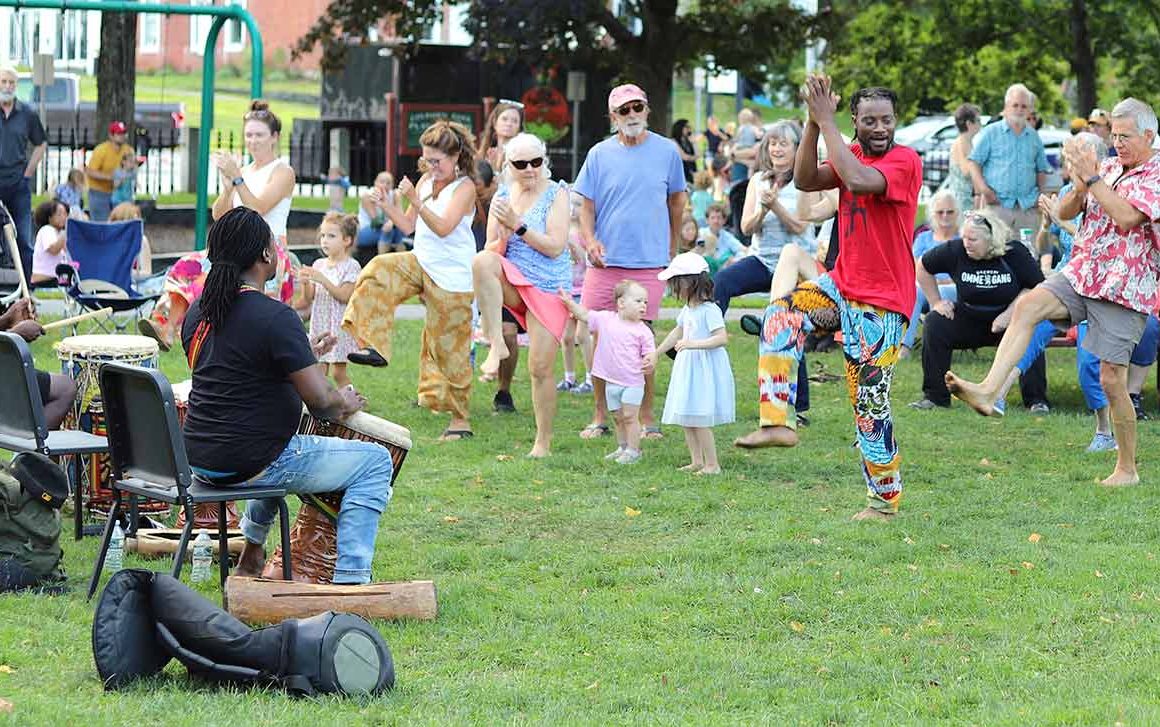
West African music and dance ensemble Jeh Kulu lead a dance workshop in Colburn Park Saturday afternoon.

When Joe Clifford became the executive director of the Lebanon Opera House in 2017, one of the first things on his mind was the 100th anniversary season. Since then, there have been some ups and downs for the live entertainment industry, but the Nexus Festival – the Opera House’s response to the challenges of the pandemic – highlights not only the executive director’s vision, but also the hard work of everyone at the nonprofit, plus the incredible engagement of the whole community in supporting, preserving, and celebrating an important center for culture and the performing arts in the Upper Valley.

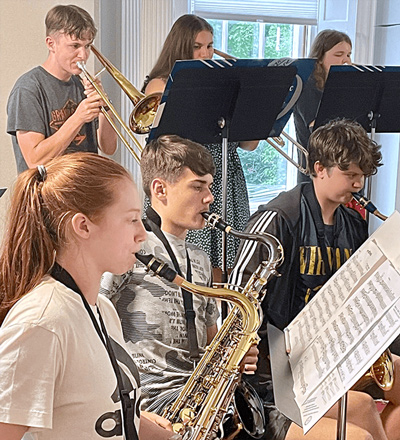
High school students from the Upper Valley Music Center kick off Day Two of the Nexus Festival in 2024.

High school students from the Upper Valley Music Center
kick off Day Two of the Nexus Festival in 2024. (Photo from lebanonoperahouse.org)

The Nexus Festival was born out of the pandemic. Everything shut down in March of 2020: from office work to restaurants, meetings to movies, everything that could do so “went remote.” Needless to say, this posed a problem for a community organization whose focal point is a live, in-person entertainment venue. “By six months in,” Clifford says, “we were getting pretty squirrelly.” But at the same time, it was also becoming fairly clear that the safest place a person could be was outdoors. “At that time, people were doing drive-in movies, outdoor concerts – any workaround not to be in a contained space.” That was when he and the Opera House’s technical director, Joel Giguere, started to formulate a plan.

“We hit upon the idea of doing our festival in downtown Lebanon,” Clifford says. On the one hand, it would allow them to continue with their mission, “by doing events, bringing people together.” But it would also serve as a thank you to a community that helped them to survive. “Even though we weren’t doing programming, they were there to support us during that closure.” The Lebanon Opera House is a nonprofit, and, as Clifford told the Valley News back in 2021, half of their revenue stream at the time came from donations, with the other half coming from events: “To have one half of your revenue stream completely shut down is terrifying.”

It took a year of planning, organization, and elbow grease to see the plan turn into reality. The first Nexus Festival ran for three days: Friday to Sunday, August 13-15, 2021. As with this year’s event, they had three stages: the main stage in the parking lot behind City Hall, the bandshell in Colburn Park, and a “busker stage” directly on the Mall. Featured acts included Bitter Pill, a NH “rhythm and bluegrass” group, Mystic Bowie’s Talking Dreads, who reimagine the hits of the Talking Heads as reggae anthems, and Red Baraat, a NYC-based funk, punk, and hip-hop band with a Punjabi bhangra flair. The festival has only grown since.

This year’s Nexus, the Opera House’s fourth, was bigger and better than ever. Friday evening’s acts may have been moved indoors thanks to Tropical Storm Debby, but they didn’t suffer for the venue change. Jax Hollow kicked things into gear with her signature riff-driven blues rock and an energy that was more than enough to overcome the soggy start to the weekend. Next, the Clements Brothers kept the crowd enthralled (and dry) in the Opera House’s lobby with a gentle combination of guitar, upright bass and harmonies, until grammy-nominated singer-songwriter, Joan Osborne, took to the main stage, playing new singles and old stalwarts alike.

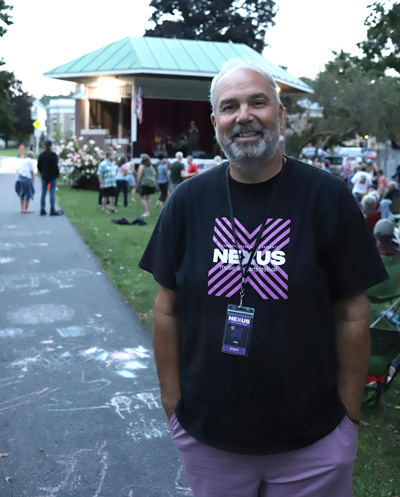
Lebanon Opera House Executive Director Joe Cliffordstands in front of the Colburn Park bandshell Sunday night.

Lebanon Opera House Executive Director Joe Clifford
stands in front of the Colburn Park bandshell Sunday night.

The sun came out Saturday and shone on a full day of eclectic acts, both local and wide-ranging. Notable acts included a dance workshop in Colborne Park led by West African music and dance ensemble Jeh Kulu; Los-Angeles-based folk punk singer, songwriter, and guitarist Sunny War; and a boisterous set by self-described “foot stomping freak folk” collective Bella’s Bartok that had crowds dancing in front of the mainstage well into the night.

Sunday saw yet another day of acts, with an afternoon of jazz and soul by performers like Nation Beat and Soul Porpoise giving way to the mainstage finale: The Full Cleveland. Described as “Vermont’s premier Yacht Rock band,” they played hits by the likes of Steely Dan, Hall & Oates, and Toto to much fanfare. According to Clifford, “the closing band on Sunday has always been a cover band. The first year was a tribute to Van Morrison, the next year it was tribute to the 80s, and then last year was tribute to Prince.” The Full Cleveland did not disappoint.

All in all, this year’s festival had over twenty acts split between the three stages, drew thousands of attendees, and – thanks to the generosity of the festival’s many sponsors – it cost the music-and dance-loving public absolutely nothing. This year, the Opera House’s costs hit “about $60,000” for the festival, Clifford says, between paying artists and extra staff onboarded specially for the event. That also doesn’t include the “army of volunteers”: 20-30 people working 3-hour shifts, doing everything from crowd control, to handing out information, to physically guiding attendees between the stages.

That estimate also doesn’t include the seven months of work that lead up to the event. “Probably in January” is Clifford’s answer to when the planning starts, but he immediately backtracks, explaining that in a way, he’s always thinking about it. The decision to try to get Sunny War, for instance, began when he saw her perform in Nashville back in September of 2023. But “after the holidays,” he says, “that’s when I’ll start putting out offers, and the tech team will start thinking about changes and tweaks to the setup.” He starts recruiting volunteers in March.

But even though it’s an incredible amount of work, and also (as he gently puts it) “a break-even event,” Clifford sees it as something more. “It’s a point of entry,” he says. “The evolution would be, you come to the free festival, and then this fall, come across the street. Go buy a ticket at the box office, go to the show, you know?” If the announced lineup is anything to go by, Nexus attendees will have more than enough reasons to come back.

In fact, looking at the fall schedule, the weekend’s festivities were only the opening act for an exciting season to come. The reason? This October marks the 100th anniversary of the Lebanon Opera House’s construction, and Joe Clifford has been making plans. When he joined the team in 2017, fresh on the heels of a 17-year stint at the Hop, he had already decided that the Opera House’s 100th anniversary season would be a blockbuster one. The response was, as Clifford describes it, a slightly quizzical “okay, but that’s not until 2024?” But there was a lot that needed to happen first. Building the kind of momentum that would be needed would take, in his words, “a seven-year runway.”

It hasn’t always been easy for the performing arts in Lebanon. Back in 1924, when the 100-year-countdown started with the construction of a new Town Hall, it wasn’t unusual for civic buildings to come with a public performance space inside. But, according to city historian Nicole Ford Burley, “it quickly became clear that live theater was out and movies were in.” For decades to come, the Opera House would serve as Lebanon’s local cinema, until that venture closed in 1969. After that, an attempt was made to bring live performances back – an attempt that was stymied by a temporary blacklisting by Equity (the Actors’ Equity Association) because of the state of the green room and other preparation spaces. In 1975, after a renovation, the Lebanon Opera House reopened to great fanfare, with a pre-Broadway production of Moss Hart’s “Light Up the Sky.” “It was a big deal” at the time, notes Ford Burley. Since then, the venue has played host to increasingly notable acts. Among others, pianist George Winston graced the stage in 1996, Marc Cohn performed in 2010, Buddy Guy shredded his way through town in 2012, and Chris Isaak crooned for a full house in 2016.

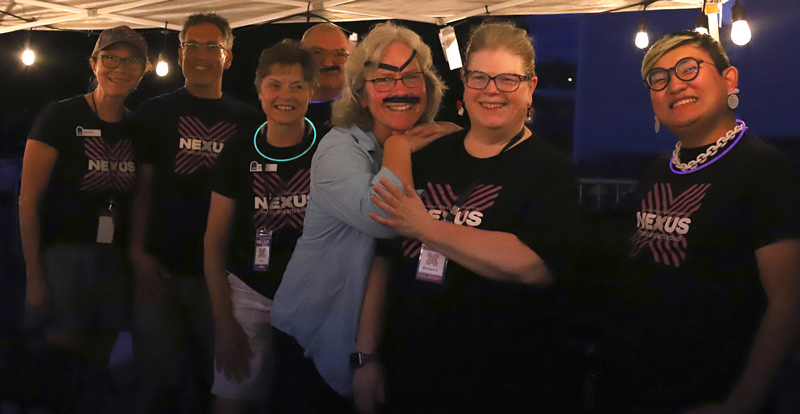
Opera House staff, board members, and volunteers pose under a tent Saturday night. L-R: Kristen Coats, PaulCoats, Chris Morin, Bob Winters, Patrice O’Brien, Barbara Sterling, and Lucas Mendelsohn.

Opera House staff, board members, and volunteers pose under a tent Saturday night. L-R: Kristen Coats, Paul
Coats, Chris Morin, Bob Winters, Patrice O’Brien, Barbara Sterling, and Lucas Mendelsohn.

But Joe Clifford is more ambitious. Under his leadership, the Lebanon Opera House has undergone a major renovation, including a new lobby and concessions, a complete makeover of the performance hall, and improvements to the sound systems and the lighting, all funded by a community-driven capital campaign. “We bought a piano, we built up our donor base, and the staff. To get us ready…It’s like a marathon, right? It’s our Olympics.” And if that’s the case, then it’s clear that the Opera House doesn’t intend to sit out any of the events.

At the time of writing, announced acts for the fall season include the multiple Grammy Award-winning blues-rock band Blues Traveler; singer-songwriter and sometime lead singer of the Canadian indie-rock group The New Pornographers, Neko Case; an evening with Pulitzer-Prize-winning NPR host Ira Glass; hot off his Netflix special “Sweet & Juicy,” comedian Sheng Wang; the incredible participatory musical experience Choir!Choir!Choir! with “An Epic Queen Singalong”; and for the ballet fans, the World Ballet Company will be performing Swan Lake – and that only takes us to the end of November. Clifford gives assurances that there’s more excitement yet to be announced.

“In some ways, it’s a look back on the last 100 years,” Clifford says of the upcoming season, “But also, maybe more importantly, what’s coming forward. It’s [about] the future of the arts in this community. The future of live arts in general.” With Clifford at the helm, a capable team by his side, and a whole community at his back, it’s hard to think that the future will be anything but bright.

Share:
Reading time: 8 min
All, Cover Story

One Family’s Journey to Calling Lebanon Home

by Cindy Heath No Comments
Dipak Niroula with his wife Sharmila, son Aadish, and daughter Aavarika after her high school graduation award ceremony at the Lebanon Opera House.

Dipak Niroula is an award-winning social entrepreneur, published author, and an active community volunteer whose journey from his home country of Nepal to Lebanon, NH is an inspiring and compelling story.

Growing up in an impoverished Nepalese village as the eldest of six children, Dipak had to walk four hours both ways to get to elementary school. After his father led a community effort to build a school in their village, all of the local children then had the opportunity to receive an education, subsequently lifting them out of poverty through education. Dipak was the first in his family and community to graduate from high school, and these early life experiences inspired him to commit to a lifetime of helping other vulnerable children and families, particularly in the rural areas of Nepal.

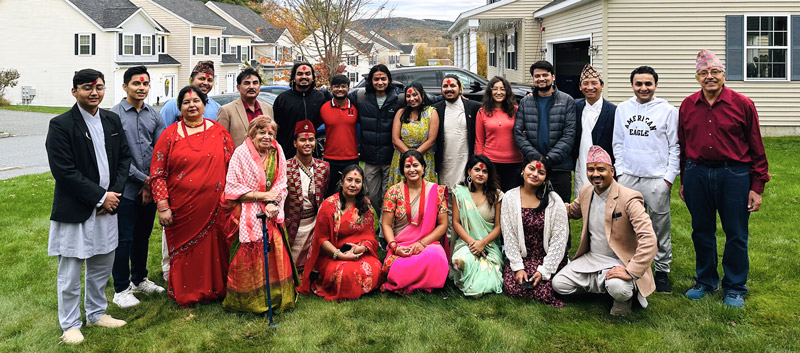
Dashain Celebration with Dartmouth Students and parents (2023)

Dashain Celebration with Dartmouth Students and parents (2023)

In 2011, while still living in Nepal, Dipak and his wife, Sharmila Karki, co-founded Better Life Social Organization (BLSO Nepal) to realize their dream of making a difference in people’s lives, especially for children. The active non-profit offers a diverse array of services to fund its work, including education consulting, travel tours, and homestays. Despite a few setbacks along the way, today, BLSO Nepal helps nearly 200 children in rural Nepal, providing education, healthcare, school uniforms, snacks, stationery, books, and clean drinking water. Dipak is pleased with the work BLSO Nepal is doing. “One thing I’m particularly proud of is how BLSO Nepal has responded to emergencies. During the 2015 earthquake and the COVID-19 pandemic, we rallied hundreds of volunteers to provide critical support. We worked side by side with local residents, government officials, schoolteachers, and social activists. Even with limited resources, our team showed incredible resilience and dedication.” Dipak has been recognized with awards by several international organizations including Lions Club International, Tumbewa Municipal Offices in Nepal, and the National Cultural Heritage Development Society.

Dipak Niroula (right) volunteering with the Rotary Club of Lebanon to clean up the Mascoma River.

Dipak Niroula (right) volunteering with the Rotary
Club of Lebanon to clean up the Mascoma River.

It was during a family vacation to the U.S. in 2015, the same year as the Nepal earthquake, that Dipak and his family received some shocking news. Dipak explains, “We faced a life-altering event. The devastating earthquake that struck Nepal while we were here resulted in the complete loss of my travel company, education consultancy, homestay, and children’s organization. Our home in Nepal was also severely damaged.” Fortunately, the U.S. government granted the family Temporary Protected Status (TPS), and the Niroulas began rebuilding their lives and establishing community connections in Lebanon. “My family and I have adjusted remarkably well to life here in Lebanon. The scenic beauty of the New Hampshire landscape, with its rolling hills and lush forests, evokes memories of our homeland, and has made our transition much smoother.”

Dipak and his family pivoted and became active members of the Lebanon community, continuing their passion for lifting up those in need by developing personal and professional relationships in the Upper Valley, and rebuilding BLSO Nepal remotely. “It’s been so heartwarming to see our kids thriving in the Lebanon schools, even being recognized as exemplary students.” The  Niroulas are grateful for the warm neighborhood welcome they’ve received, as well as the peaceful and safe environment in Lebanon. “We’ve found a perfect balance here – a community that allows us to maintain connections to our Nepali culture while fully participating in American life,” Dipak adds. “The supportive environment, combined with the diverse opportunities available, has not only eased our adjustment but has also opened new horizons for our family’s future.”

Over their time here, the Niroulas have come to appreciate the diverse nature of the Upper Valley and the broader American landscape, and are now working on becoming permanent residents of the U.S. by obtaining a green card. “My long-term goal in pursuing a U.S. green card is to achieve stability and make a significant contribution to the community. I also want to pursue career advancements and educational opportunities that are currently limited due to my temporary status,” Dipak explains.

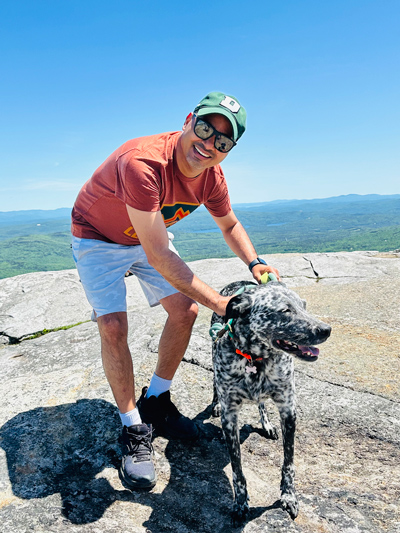
Dipak Niroula enjoying a moment with a dog brought by visitors to Cardigan Mountain (2024)

Dipak Niroula enjoying a moment with a dog brought by visitors to Cardigan Mountain (2024)

In Lebanon as well as in southern New Hampshire, there are thriving Nepali communities that help the Niroulas stay connected to their Nepali culture while becoming fully immersed in a new American community. “We’ve gotten involved with groups like the NH Nepali Community, the International Nepalese Literature Society, and the NH Center for Nonprofits. Having friends who share our cultural background has provided a sense of belonging while also allowing us to introduce our American neighbors to our rich heritage,” says Dipak. The Niroulas join with their friends to cook traditional Nepali dishes, organize sports events, and annually host a local  Dashain (15 day Nepali cultural and religious celebration) for Dartmouth students and area Nepalese families. “This celebration creates a nurturing and supportive environment, helping us all feel cherished and connected to our cultural heritage during this profoundly meaningful festival,” Dipak says.

Traditional Nepali food and fun include momo (dumplings) and dal bhat (lentil soup with rice), traditional music and dance with instruments like the madal (drum), and intricate art like thangka paintings. According to Dipak, a celebration of faith, including Hinduism and Buddhism, is central to the Dashain. “By blending Nepali and American traditions, we strengthen our community and create meaningful connections. Celebrating and sharing these experiences with everyone is incredibly rewarding,” he says.

One of the local organizations Sharmila and Dipak have become involved with is the Rotary Club of Lebanon, participating in events like the Mascoma River clean-up and distributing books and school supplies to elementary school students. “It was wonderful to see the smiles on the children’s faces. It really drove home how important community support is for education,” recalls Dipak. Marilyn Bedell, former president and current secretary of the Rotary Club of Lebanon, is enthusiastic about the Niroulas’ participation, particularly from an international diversity perspective. “Both Dipak and Sharmila have demonstrated remarkable resilience, determination, and an unwavering commitment to improving the lives of marginalized communities in Nepal, and have collaborated on various projects involving disease prevention and treatment,” she says. “Having Dipak and Sharmila involved has educated us about their home country and its traditions and the challenges that have faced Nepal since the earthquake.” Dipak highlights one memorable project that involved providing 200 families with water filters: “It was amazing to see how such a simple thing could make such a big difference in people’s lives. Clean water is something many of us take for granted, but for these families, it was life-changing,” he recalls. For their part, Dipak and Sharmila are grateful for their Rotary Club connections as well. “It honestly feels like family. They’ve been so supportive, not just of our projects, but of us personally,” they say. “Our daughter, Aavarika, has grown up with the club, and it warms my heart to see how much everyone cares for her.”

Helping young people in Nepal find safe opportunities for work and travel is another one of Dipak’s passions. Seeing the struggles of young people when they traveled to other countries not knowing the culture or language, Dipak set about writing two guides that have been widely distributed by the government of Nepal and other organizations. “My books cover everything from language basics to cultural tips, safety information, and advice on managing money abroad,” Dipak explains. “I also wanted to warn people about the risks of human trafficking and give them practical ways to stay safe.” The books helped design Nepal’s mandatory pre-departure orientation program for migrant workers, and the Ministry of Labor presented Dipak with an appreciation certificate for his work. “Writing these books and seeing how they’ve helped people has been one of the most rewarding experiences of my life. It’s amazing to think that something I wrote at my desk in Nepal has gone on to help so many of my fellow Nepalis as they set out to work abroad.”

The Niroula family before coming to the U.S.A.

The Niroula family before coming to the U.S.A.

As to what’s ahead for Dipak and his family, the priority is achieving green card status to open up opportunities for education, federal aid, and business development. There are constraints on realizing the full potential of developing BLSO USA, but giving up is not in Dipak’s nature. “With a green card, I could dedicate more time to developing local programs without the constant worry about visa restrictions, and build stronger, long-term relationships with community partners and donors. It’s exciting to think about the possibilities,” he says. “We’ve seen firsthand how much of a difference this kind of work can make, and we’re really looking forward to bringing that same spirit of support and advocacy to our new home here in the U.S.”

Dipak’s enduring mission of helping others has shaped his life philosophy as well as his life’s work. “These projects have taught me so much about the power of community and working together. Whether it’s cleaning up a local river or helping families across the world, it’s all about making a difference, one step at a time,” he says. “I want the readers of the Lebanon Times to know that helping yourself, your family, and your community can make a huge difference. By caring for others and supporting those in need, we create positive change that extends beyond our own lives.”

For more information or to volunteer with BLSO, contact Dipak Niroula at niroulainfo@gmail.com.

Share:
Reading time: 8 min

Our Latest Issue

The Lebanon Times is delivered to every mailing address in Lebanon.

  • Subscribe at an out of town address!
  • Pick up a copy!

© 2024 copyright Greater Good Media. All rights reserved.