Home
Our team
Content
    Cover Story
    All Articles
    Animals Rule!
    Around Town
    Cityscapes
    Community Impact
    Elder Profile
    For The Love Of It
    Good For You
    Goodness InDeed
    Green Page
    History
    Local Sports
    Meet your Neighbor
    Miscellaneous
    Spotlight on our Sponsors
    The Arts
    Your Green Spaces
Advertise
Archives
Donate
Contact


The Lebanon Times - Good people, good places and good things happening
  • Home
  • Our team
  • Content
    • Cover Story
    • All Articles
    • Animals Rule!
    • Around Town
    • Cityscapes
    • Community Impact
    • Elder Profile
    • For The Love Of It
    • Good For You
    • Goodness InDeed
    • Green Page
    • History
    • Local Sports
    • Meet your Neighbor
    • Miscellaneous
    • Spotlight on our Sponsors
    • The Arts
    • Your Green Spaces
  • Advertise
  • Archives
  • Donate
  • Contact
All, Cover Story

Sunshine Brings Out Lebanon’s Skate Park Community

June 27, 2025 by Richard Ford Burley No Comments
A teenager named Gray enjoys the Rusty Berrings Skate Park on a sunny April day in West Lebanon.

Spring may have gotten off to a dry and dusty start, but the April sunshine was perfect weather for fans of the Rusty Berrings Skate Park at West Lebanon’s Riverside Community Park. As the sun chases away the last of the chill, adults, teens, young children, and families make use of what’s become a regional hub for a supportive and generous culture.

“We’ve been here four times this week,” says Cassandra Rossing, corralling four kids, all wearing helmets and ready for action. “It’s a really great community.” Her husband Michael agrees and adds, “It’s one of the nicest free public parks I’ve ever been to.”
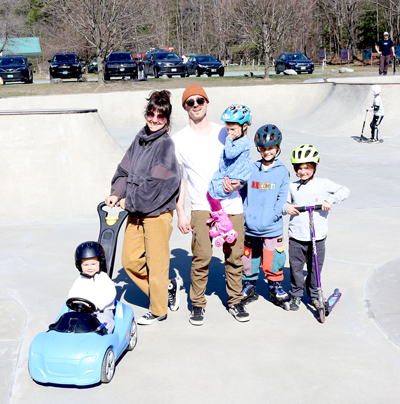
The Rossing family

The Rossing family

The concrete ramps and steel rails host an eclectic crew: adults Marcus and Brian practice their 50-50 grinds and frontside noseslides while a beanied teen named Gray works on ollieing onto a ledge. When asked about photos, Marcus laughs: “so long as you don’t mind them all being of me falling.” Another teen, Jacob, offers to demonstrate wheelies, then crosses the length of the park on his bike – using only the rear wheel. Smaller children do laps on scooters while their adults sit at picnic tables.

“It’s a great culture,” says Jess Morin, alternately watching the kids play and arbitrating disputes about exactly whose scooter belongs to whom. She’s brought her family up from Cornish for the afternoon to use the park. Last year, her daughter, then brand new to skateboarding, was frustrated and getting ready to leave when a group of anonymous teens showed up. One in particular offered some free lessons: “She actually strapped her up in her own brand new equipment,” Morin says, “and she taught her for like 45 minutes.” She didn’t get the good Samaritan’s name, but it really shaped her perceptions of the park and the kind of people that use it. “It was a real ‘restore my faith in humanity’ moment.”
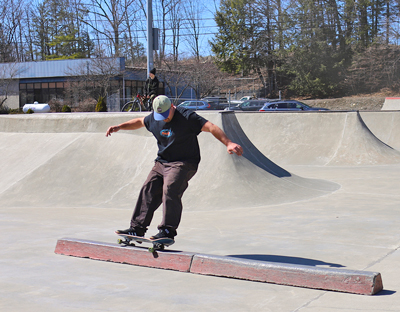
Brian practicing his “50-50 grind”

Brian practicing his “50-50 grind”

It’s a story that gets to the heart of the culture of the park, which itself wouldn’t exist without the generosity of the community – especially that of the Kirschner family, who, in memory of their son Tyler, raised much of the funding to make the park into what it is today. In fact, the park’s name, “Rusty Berrings”, was – in the fashion of skateboarding greats Birdman, Ragdoll, and Wee Man – Tyler Kirschner’s skateboarding nickname. When it came time to upgrade and revitalize the park from the old wooden ramps into something new, the family acted as the skate park’s “angels,” according to Paul Coats, director of Recreation, Arts, and Parks for the City of Lebanon.

That culture of generosity also extends to our relationship with our neighboring communities. “It’s a regional park,” says Coats. “People from neighboring towns are coming to Lebanon to skate – and that’s the way it should be. Just as much as people in Lebanon are going to other towns to do other things. There’s not really a beach in Lebanon at [Mascoma] Lake, so people are typically going to Enfield to do that, or they’re getting in the Connecticut River via Hanover or Hartford’s waterfront. They’re going to other communities for the dog parks because Lebanon doesn’t have that. So it’s good to see a regional approach to a lot of the recreation that happens – and we get the skate park.”
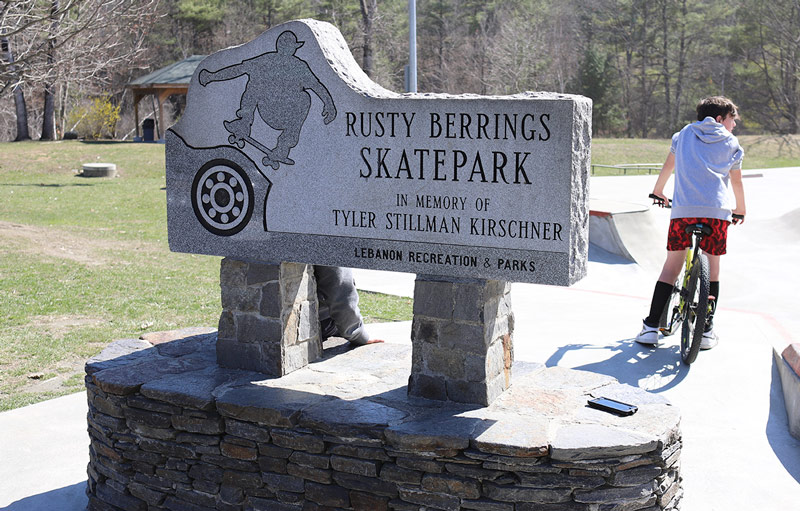
It isn’t just Lebanon’s neighbors coming to use the park. For anything close to the same experience, skaters have to travel as far afield as Burlington, Manchester, and Nashua, which probably explains why it’s the city’s most used “non-programmed” park. “We put a lot of kids in Civic Park and Eldridge Park,” Coats says, “because we have sports being played there. Colburn Park is mostly a pass-through park…but Riverside Park, as far as people seeking recreation, that’s where they’re going.”

Marcus practicing his “frontslide noseslide”

Marcus practicing his “frontslide noseslide”

As the sun goes down the park lights up, its hours extended by the relatively recent addition of lighting to help out in the shoulder seasons. Despite all the people still using it, Rusty Berrings Skate Park isn’t even “finished” – if a living park can ever be considered really done. The most recent addition was some beginner areas, but there are plans for more expansions. Ideally, they’d like to pave the floor of the pavilion (“We’re not trying to make the pavilion skatable,” Coats says, laughing, “but they will skate in there.”) and there are plans for the addition of another “bowl” as well, not to mention the planned extension of the Mascoma River Greenway to connect the park with the Powerhouse Mall, Miracle Mile and parts beyond.

Watching everyone from kids to adults use it together, it’s clear that Rusty Berrings Skate Park is a place for all – from first-timers to four-day-a-week families, more seasoned skaters to those new to the sport. It’s more than just a community resource –  it’s a home for a culture, one with generosity and support at its heart.

Any kind souls wishing to donate toward additions to the park can contact the nonprofit Friends of Lebanon Recreation, Arts, and Parks (FoLRAP): friendsoflebrec.org.
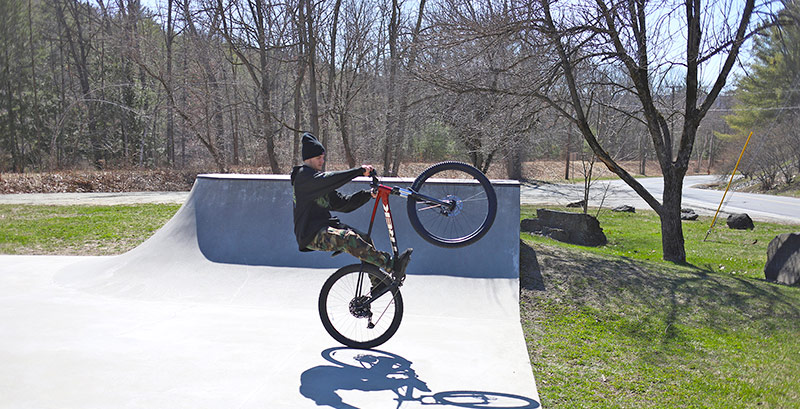
Teenager Jacob Hoisington demonstrating a wheelie

Teenager Jacob Hoisington demonstrating a wheelie
Share:
Reading time: 4 min
All, Miscellaneous

Gusanoz Aims for Another Twenty Years

March 5, 2025 by Richard Ford Burley No Comments
Nick Yager at the counter in Gusanoz Express, next door to the flagship Gusanoz on Lebanon’s “Miracle Mile”. Photos by Richard Ford Burley

When the news dropped at the end of December that two restaurants in the Gusanoz family would be closing their doors, it felt like another sign of the times for an increasingly challenging industry. Costs for restaurants are rising, margins are shrinking, and uncertainty is the economic word of the hour. But for Nick Yager and Maria Limon, co-owners of the restaurant that’s been serving Mexican food to the people of Lebanon for almost twenty years, there might be a better word to focus on: perseverance.

Gusanoz first opened its doors on August 16, 2005, and has been a fixture on Lebanon’s ‘Miracle Mile’ ever since – but it hasn’t been the couple’s only venture. In 2006, they expanded briefly into Woodstock: “that lasted a little over a year,” Nick says. “Which was great in the summertime, but in the fall, everybody would go home and it just wasn’t sustainable.” In 2010, they tried again in Hanover, which worked well until they took on an ice cream business. “[We] found that ice cream was a business that was very foreign to us.” Throughout it all, their flagship location carried the weight well. “We had a good crew here, and we focused on this for the next ten years or so.”

The most recent challenges for the business began in 2021, with the purchase of Mickey’s in Enfield. The previous year, the couple had worked with their son Eddie to open Lalo’s, a taqueria on the Lebanon Mall, and while it wasn’t yet profitable, it wasn’t the strain on the finances that the Enfield location would become: “We were having to put in probably $10,000-$15,000 a month [to support Enfield],” Nick says. “Gusanoz really couldn’t sustain that type of cash flow going out to support that business.”

Talking about exactly how bankruptcy happens, Nick quotes Hemingway: “Two ways: gradually, then suddenly.” A consultant determined that the Enfield location wasn’t financially sustainable. Lalo’s could have survived under Chapter 11, but would have had to make some compromises on ingredients and pricing that were deal breakers for Eddie. But the flagship location? “If we just met our normal budgets, [it] could survive.”

Nick Yager reveals a flavorful batch of slow-cooked birria destined for tacos. Photos by Richard Ford Burley

Nick Yager reveals a flavorful batch of slow-cooked birria destined for tacos. Photos by Richard Ford Burley

“Chapter 11” is the chapter of the US Bankruptcy Code that can help a business make a plan to keep its doors open and its staff employed. In fact, thanks to the restructuring the business is undergoing, Nick was able to offer positions to “anybody that was looking for something” from the closing restaurants, in the end taking in five employees from Enfield and one from Lalo’s.

But this isn’t the first time the restaurant has needed to shift directions to keep moving forward. “The day that they shut down indoor dining in New Hampshire [due to Covid], we had a staff meeting, and we said we’re going to reopen tomorrow and we’re going to focus on ‘to-go’…We shifted gears almost immediately, went out and bought a couple of delivery cars…We hit it hard and we just kept going.” Doing so set the stage for their latest move.

Just next door to the Lebanon location are big signs reading “Gusanoz Express” and “To Go Pick Up Here.” In its previous incarnation, the space had been a podcast studio. Then it was the focus for their Covid-era food prep kitchen and pickup, but the need for that had passed, and they’d been searching for another use for the space that would also be a revenue center. “So in December, we opened up Gusanoz Express,” Nick says. “The intent is to have a quick-serve menu that’s ‘to go’ and delivery, so we make burritos, nachos, tortas, birria tacos, and a couple other things…you can just walk in or you can order off the menu online.” Customers can also order through DoorDash, and they’re working on GrubHub and UberEats as well. “It’s a way to access Dartmouth, a bit easier as far as the population there goes.” The hard part? Getting the word out.

Back when they first opened, Nick says, “there were basically three main TV stations, some cable that everybody watched, and a couple of social media platforms…back then it was easy to place an ad and there would be a response.” He laughs, remembering: “We used to do ads on CNN.” These days, the media landscape is more of a challenge, but they’re seeing some success on the DoorDash front, with “probably $2000-$3000 a week…which is decent volume.” He’s hopeful locals will spread the news through word of mouth.

Another revenue driver on the horizon is Gusanoz-branded sauces and salsas. They put in the work a decade ago to get the needed licenses and developed four hot sauces and a salsa. “We’re certified to sell those anywhere in the country,” Nick says. But, “since we have the license, we can also bottle other things that we can sell out of the restaurant.” Bottles of their red enchilada sauce will be back soon. “It’s super simple: it’s all natural, chili peppers, tomatillos – very simple ingredients, but delicious.” After that, a green enchilada and some salsas, too. “So that’s the goal…I can help cover [Gusanoz Express] and also work on bottling, because the prep kitchen is right back here.”

Throughout the challenges, Nick says there’s been a lot of support from the community. “There’s a lot of positive vibes from people. We get some of it directly from people that know us or see us, and we get a lot of feedback from the staff, from regulars, and other folks too who are coming in because they heard we’re in a situation. And then on social media, you see some positive comments about supporting the Lebanon location, too.” Between that, the restructuring, the new efforts, and a history of elbow grease and, again, perseverance, Nick and Maria are hopeful for the future of Gusanoz: “If the economy holds strong, and if product pricing doesn’t shift for our ingredients, we should be on the path to another twenty years. This is our twentieth year of business and we’d like to do another twenty.”

Share:
Reading time: 5 min
All, Miscellaneous

A New Kitchen Opens in Lebanon

November 29, 2024 by Richard Ford Burley No Comments

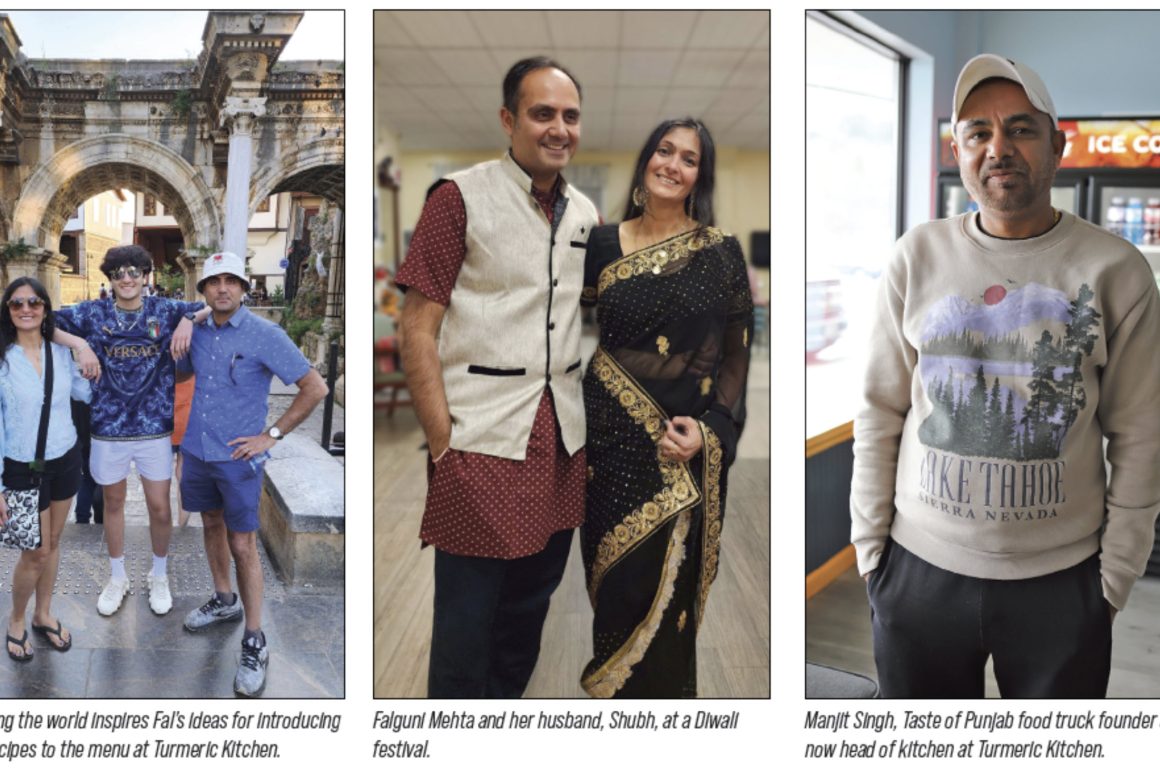
When Falguni Mehta first followed her husband to Lebanon, she imagined it would only be for a year or two. Twenty-four years later, with a career in engineering and healthcare and a son ready to set out for college, she’s started on another venture: bringing delicious, healthful food to the city she calls home.

Newly ensconced in the home of the recently-closed China Station on Miracle Mile, Turmeric Kitchen serves food from across India: from Rogan Josh from Kashmir in the North to Chettinad from Tamil Nadu in the South – with dishes from many other stops along the way. A restaurant specializing in Indian cuisine might seem like an unusual direction for someone whose career has been built around improving the quality of healthcare services and engineering processes, but for Mehta, they come from the same place: a lifelong interest in how we take care of ourselves and each other.

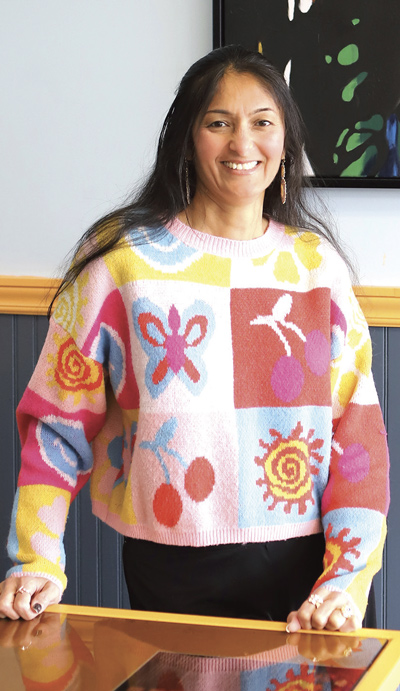
Falguni Mehta, owner of Turmeric Kitchen on MiracleMile in Lebanon.

Falguni Mehta, owner of Turmeric Kitchen on Miracle Mile in Lebanon.

Growing up in Gujarat, Mehta’s family helped form her first connection between food and health. She recalls that the food there was very sweet: “They use sugar in everything, from curry to lentil dishes.” But she says that her mother had always had a very healthy approach to cooking: “she would alter family recipes to use less salt, less sugar, less fried, less butter, less this, less that…and you know, knock on wood, she’s 75, doing well.” Her first experience with American food was rather less auspicious.

When she first came to the United States, her husband’s aunt and family came to pick them up. She recalls one of their then young children offering a stern warning: “You eat Subway, right? If you don’t eat Subway, you won’t survive in this country.” She laughs about it now, but at the time she took it seriously. “It was an acquired taste for us…we’d never had a cold sandwich in India.”

Still, opening a restaurant was never exactly in the plan. After getting master’s degrees in engineering, she and her husband interned in upstate New York before he eventually landed a job in Lebanon, and she followed along on what she expected to be a short-term stay in a small New England town. But the stay extended, and Mehta wound up getting into healthcare. “I found my calling,” she says, in the field of healthcare and making Lebanon home.

After investing several years in her career, Mehta took some time off in order to spend more time with her family. “It was extremely important that I raise my son,” she says, “so he grows up knowing our roots, Indian culture, traditions, cuisine, and various languages.” While raising her son, Mehta also completed her MBA, but she initially hesitated at the idea of starting a business: “business is too much,” she once told her husband, but she tucked the idea away and it became a longtime dream. She might consider it, she thought, when her son went off to college, though she never thought she’d open a restaurant. “We’ll see how I feel.”

Her son is now seventeen and attends Lebanon High School, and for the last year Mehta has been feeling the impending departure approaching. “My son is my entire world,” she says. “I know I will be crying all day long [when he goes],” so she decided, “I need to find something, something new and exciting, that will keep my mind busy!” At first, she considered art lessons at AVA in Lebanon or taking up singing, but the thought of starting a business had been on her mind as well. That’s when inspiration came to her, in the shape of a bright blue food truck. She remembers thinking, “Taste of Punjab? What is that?”

Mehta and her husband had long been running a yearly Indian cultural dance festival called “Navratri”, at which they typically provided an assortment of Indian foods. In previous years, they had to go down to Manchester or Nashua, but last year, thanks to Taste of Punjab, they were able to get the food made locally for the first time. More interestingly, the food truck’s owner, Manjit Singh, was interested in collaborating – and in getting into a real kitchen: “It’s hard to cook Indian food in a food truck,” Mehta says. “This sparked the idea and opportunity to use my business background and open an Indian restaurant to provide a better, healthier option to our community.”

After some back and forth about the structure the business should take, Mehta eventually collaborated with Singh to create the new brick and mortar restaurant that would come to be called Turmeric Kitchen. It was a challenge to find chefs who could cook a wide variety of dishes. “Up here, you only see North Indian food…[like] tikka masala – paneer tikka, chicken tikka masala – and butter chicken.” As a result, she cast her search net wide. “That’s why we had to go to New York, New Jersey, D.C., [and] Colorado,” she says, to look for people able to make authentic dishes from all over India. “There is a lot more to Indian cuisine than just Punjabi food.”

Fans of the Taste of Punjab food truck needn’t worry, though. Mehta volunteers on Lebanon’s new Food Truck Task Force and has plans to bring the truck back under the Turmeric Kitchen name, “come next spring.”

And as for that name, it all comes back to Mehta’s focus on health –

in this case on the health benefits of food. Turmeric has long been used in ayurvedic medicine, and studies

have shown that curcumin, a compound found in the spice, has anti-inflammatory properties. Plus, as a long-time vegetarian, she promises there will always be vegetarian (and nut and gluten free!) options on the menu, as well as fusion menu items that will combine traditional Indian flavors with elements of global cuisines, and a focus on local and healthy ingredients: “We are what we eat,” she says, “I have seen, first-hand in my own home, the health benefits of what you put in you.”

Share:
Reading time: 5 min
All, Cover Story

The Nexus Festival: “Our Olympics”

September 3, 2024 by Richard Ford Burley No Comments
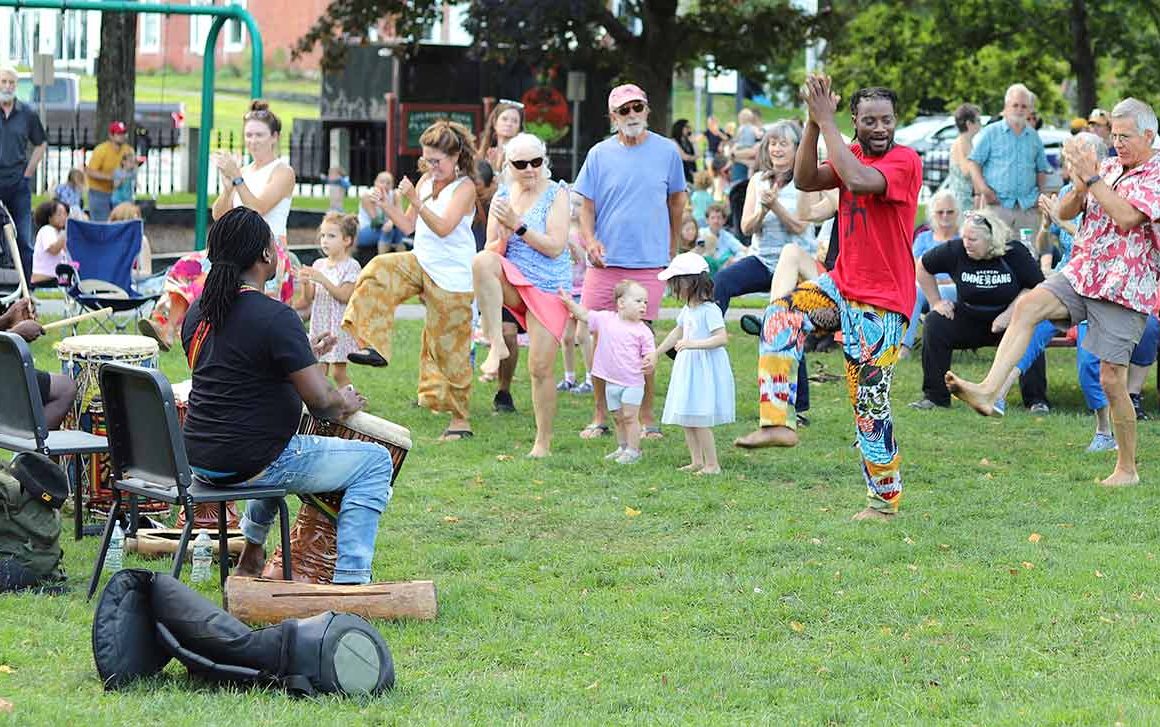
West African music and dance ensemble Jeh Kulu lead a dance workshop in Colburn Park Saturday afternoon.

When Joe Clifford became the executive director of the Lebanon Opera House in 2017, one of the first things on his mind was the 100th anniversary season. Since then, there have been some ups and downs for the live entertainment industry, but the Nexus Festival – the Opera House’s response to the challenges of the pandemic – highlights not only the executive director’s vision, but also the hard work of everyone at the nonprofit, plus the incredible engagement of the whole community in supporting, preserving, and celebrating an important center for culture and the performing arts in the Upper Valley.

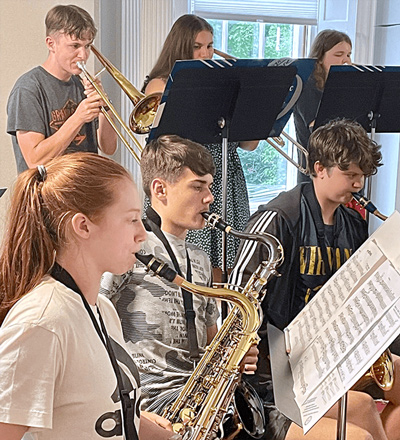
High school students from the Upper Valley Music Center kick off Day Two of the Nexus Festival in 2024.

High school students from the Upper Valley Music Center
kick off Day Two of the Nexus Festival in 2024. (Photo from lebanonoperahouse.org)

The Nexus Festival was born out of the pandemic. Everything shut down in March of 2020: from office work to restaurants, meetings to movies, everything that could do so “went remote.” Needless to say, this posed a problem for a community organization whose focal point is a live, in-person entertainment venue. “By six months in,” Clifford says, “we were getting pretty squirrelly.” But at the same time, it was also becoming fairly clear that the safest place a person could be was outdoors. “At that time, people were doing drive-in movies, outdoor concerts – any workaround not to be in a contained space.” That was when he and the Opera House’s technical director, Joel Giguere, started to formulate a plan.

“We hit upon the idea of doing our festival in downtown Lebanon,” Clifford says. On the one hand, it would allow them to continue with their mission, “by doing events, bringing people together.” But it would also serve as a thank you to a community that helped them to survive. “Even though we weren’t doing programming, they were there to support us during that closure.” The Lebanon Opera House is a nonprofit, and, as Clifford told the Valley News back in 2021, half of their revenue stream at the time came from donations, with the other half coming from events: “To have one half of your revenue stream completely shut down is terrifying.”

It took a year of planning, organization, and elbow grease to see the plan turn into reality. The first Nexus Festival ran for three days: Friday to Sunday, August 13-15, 2021. As with this year’s event, they had three stages: the main stage in the parking lot behind City Hall, the bandshell in Colburn Park, and a “busker stage” directly on the Mall. Featured acts included Bitter Pill, a NH “rhythm and bluegrass” group, Mystic Bowie’s Talking Dreads, who reimagine the hits of the Talking Heads as reggae anthems, and Red Baraat, a NYC-based funk, punk, and hip-hop band with a Punjabi bhangra flair. The festival has only grown since.

This year’s Nexus, the Opera House’s fourth, was bigger and better than ever. Friday evening’s acts may have been moved indoors thanks to Tropical Storm Debby, but they didn’t suffer for the venue change. Jax Hollow kicked things into gear with her signature riff-driven blues rock and an energy that was more than enough to overcome the soggy start to the weekend. Next, the Clements Brothers kept the crowd enthralled (and dry) in the Opera House’s lobby with a gentle combination of guitar, upright bass and harmonies, until grammy-nominated singer-songwriter, Joan Osborne, took to the main stage, playing new singles and old stalwarts alike.

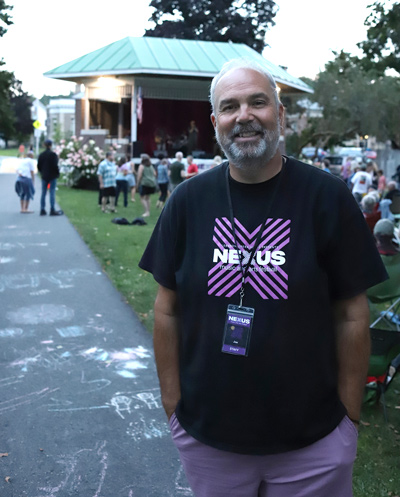
Lebanon Opera House Executive Director Joe Cliffordstands in front of the Colburn Park bandshell Sunday night.

Lebanon Opera House Executive Director Joe Clifford
stands in front of the Colburn Park bandshell Sunday night.

The sun came out Saturday and shone on a full day of eclectic acts, both local and wide-ranging. Notable acts included a dance workshop in Colborne Park led by West African music and dance ensemble Jeh Kulu; Los-Angeles-based folk punk singer, songwriter, and guitarist Sunny War; and a boisterous set by self-described “foot stomping freak folk” collective Bella’s Bartok that had crowds dancing in front of the mainstage well into the night.

Sunday saw yet another day of acts, with an afternoon of jazz and soul by performers like Nation Beat and Soul Porpoise giving way to the mainstage finale: The Full Cleveland. Described as “Vermont’s premier Yacht Rock band,” they played hits by the likes of Steely Dan, Hall & Oates, and Toto to much fanfare. According to Clifford, “the closing band on Sunday has always been a cover band. The first year was a tribute to Van Morrison, the next year it was tribute to the 80s, and then last year was tribute to Prince.” The Full Cleveland did not disappoint.

All in all, this year’s festival had over twenty acts split between the three stages, drew thousands of attendees, and – thanks to the generosity of the festival’s many sponsors – it cost the music-and dance-loving public absolutely nothing. This year, the Opera House’s costs hit “about $60,000” for the festival, Clifford says, between paying artists and extra staff onboarded specially for the event. That also doesn’t include the “army of volunteers”: 20-30 people working 3-hour shifts, doing everything from crowd control, to handing out information, to physically guiding attendees between the stages.

That estimate also doesn’t include the seven months of work that lead up to the event. “Probably in January” is Clifford’s answer to when the planning starts, but he immediately backtracks, explaining that in a way, he’s always thinking about it. The decision to try to get Sunny War, for instance, began when he saw her perform in Nashville back in September of 2023. But “after the holidays,” he says, “that’s when I’ll start putting out offers, and the tech team will start thinking about changes and tweaks to the setup.” He starts recruiting volunteers in March.

But even though it’s an incredible amount of work, and also (as he gently puts it) “a break-even event,” Clifford sees it as something more. “It’s a point of entry,” he says. “The evolution would be, you come to the free festival, and then this fall, come across the street. Go buy a ticket at the box office, go to the show, you know?” If the announced lineup is anything to go by, Nexus attendees will have more than enough reasons to come back.

In fact, looking at the fall schedule, the weekend’s festivities were only the opening act for an exciting season to come. The reason? This October marks the 100th anniversary of the Lebanon Opera House’s construction, and Joe Clifford has been making plans. When he joined the team in 2017, fresh on the heels of a 17-year stint at the Hop, he had already decided that the Opera House’s 100th anniversary season would be a blockbuster one. The response was, as Clifford describes it, a slightly quizzical “okay, but that’s not until 2024?” But there was a lot that needed to happen first. Building the kind of momentum that would be needed would take, in his words, “a seven-year runway.”

It hasn’t always been easy for the performing arts in Lebanon. Back in 1924, when the 100-year-countdown started with the construction of a new Town Hall, it wasn’t unusual for civic buildings to come with a public performance space inside. But, according to city historian Nicole Ford Burley, “it quickly became clear that live theater was out and movies were in.” For decades to come, the Opera House would serve as Lebanon’s local cinema, until that venture closed in 1969. After that, an attempt was made to bring live performances back – an attempt that was stymied by a temporary blacklisting by Equity (the Actors’ Equity Association) because of the state of the green room and other preparation spaces. In 1975, after a renovation, the Lebanon Opera House reopened to great fanfare, with a pre-Broadway production of Moss Hart’s “Light Up the Sky.” “It was a big deal” at the time, notes Ford Burley. Since then, the venue has played host to increasingly notable acts. Among others, pianist George Winston graced the stage in 1996, Marc Cohn performed in 2010, Buddy Guy shredded his way through town in 2012, and Chris Isaak crooned for a full house in 2016.

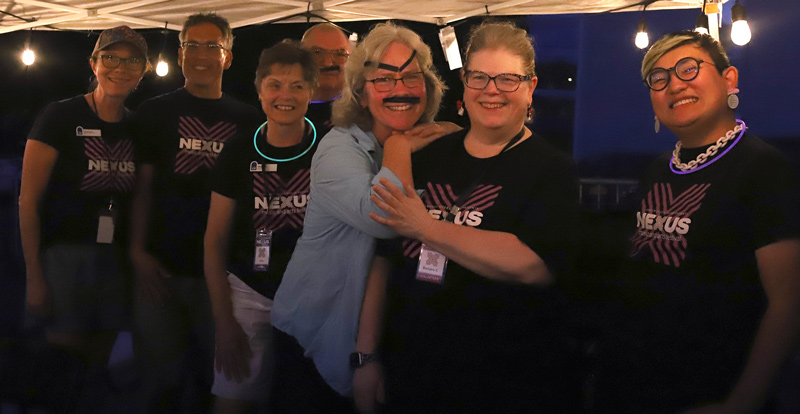
Opera House staff, board members, and volunteers pose under a tent Saturday night. L-R: Kristen Coats, PaulCoats, Chris Morin, Bob Winters, Patrice O’Brien, Barbara Sterling, and Lucas Mendelsohn.

Opera House staff, board members, and volunteers pose under a tent Saturday night. L-R: Kristen Coats, Paul
Coats, Chris Morin, Bob Winters, Patrice O’Brien, Barbara Sterling, and Lucas Mendelsohn.

But Joe Clifford is more ambitious. Under his leadership, the Lebanon Opera House has undergone a major renovation, including a new lobby and concessions, a complete makeover of the performance hall, and improvements to the sound systems and the lighting, all funded by a community-driven capital campaign. “We bought a piano, we built up our donor base, and the staff. To get us ready…It’s like a marathon, right? It’s our Olympics.” And if that’s the case, then it’s clear that the Opera House doesn’t intend to sit out any of the events.

At the time of writing, announced acts for the fall season include the multiple Grammy Award-winning blues-rock band Blues Traveler; singer-songwriter and sometime lead singer of the Canadian indie-rock group The New Pornographers, Neko Case; an evening with Pulitzer-Prize-winning NPR host Ira Glass; hot off his Netflix special “Sweet & Juicy,” comedian Sheng Wang; the incredible participatory musical experience Choir!Choir!Choir! with “An Epic Queen Singalong”; and for the ballet fans, the World Ballet Company will be performing Swan Lake – and that only takes us to the end of November. Clifford gives assurances that there’s more excitement yet to be announced.

“In some ways, it’s a look back on the last 100 years,” Clifford says of the upcoming season, “But also, maybe more importantly, what’s coming forward. It’s [about] the future of the arts in this community. The future of live arts in general.” With Clifford at the helm, a capable team by his side, and a whole community at his back, it’s hard to think that the future will be anything but bright.

Share:
Reading time: 8 min
All, Goodness InDeed

Fore-U Golf Center and Ice Cream

June 7, 2024 by Richard Ford Burley No Comments
Owners Meredith and Jennifer Johnson and Director of Golf Peter Harris in front of the mini-golf course.

A Family-Friendly “Oasis” at the End of 12A

Nestled at the southern end of the Route 12A commercial corridor – past the Best Buy, Walmart, and Applebees, and tucked behind the Home Depot parking lot – comes something of a surprise, if you haven’t been. The destination in question is the Fore-U Golf Center: an all-ages “oasis” that boasts a double-decker driving range, mini-golf course, batting cages, and ice cream – a local business shaped by economics, family ties, and an impressive level of community engagement.

Owned and run by sisters Meredith and Jennifer Johnson, the story of Fore-U began in the 1970s, when their father, Peter, partnered with a local farmer and landowner named Paul Korpela to develop the 12A corridor. The first business to result from their handshake deal was Johnson’s Home Center, which opened in 1972, and was located on the current site of the recently-opened Jersey Mike’s Subs. The partnership would eventually bring a laundry list of businesses to the area: Wendy’s, Walmart, Price Chopper, Home Depot, Golf & Ski Warehouse, BJ’s, and Staples – and, of course, the Fore-U Golf Center.

The mini-golf course

The mini-golf course

The business has changed over the years, starting as a simple driving range in the ’80s and growing into the well-rounded family fun center of today. In 1988-89, its modest center of operations shifted from a garden shed to the snowboard corner of the Golf & Ski Warehouse. In 1996, they added mini-golf and a short-lived Par 3 course – though the mini-golf course has relocated since then. Meredith and Jennifer had worked there since they were fifteen, but by 1998, Meredith had just gotten out of college, Jennifer was getting out of teaching, and it seemed like a good time to sign on to be owners of the family business. Their first official act? Expanding into ice cream sales with the opening of the aptly-named Ice Cream Fore-U. Later, in the mid-2000s, the Home Depot moved in, and the mini-golf course shifted to where it is today, a pocket of green between the double-decker driving range and the Connecticut River.

But the business was shaped by more than simple economics. “Our parents took up the game of golf in 1980, and our grandfather as well,” Meredith says, “and they just fell in love with the sport.” That love was clearly passed on to the next generation: not only do the sisters now own Fore-U, but their brother Mark is also a golf professional, the COO and general manager of a golf development down in North Carolina. “Family is a huge priority for us,” Meredith says, “and that’s an environment we try to foster here.” It’s a priority that’s clear in everything from the free mini-golf admission for children three and under, to the playground setup next to the ice cream shop, to the simple number of parents and children in evidence at the driving range.

Bringing newcomers – children and adults alike – into the world of golf is the job of Peter Harris, Fore-U’s director of golf. A PGA teaching professional and longtime friend of the Johnson sisters, Peter is “one of the most enthusiastic people you’ll ever meet. He loves the game and loves to share his knowledge,” says Jennifer. He runs clinics for beginners and juniors, offers private and group lessons, and even works with First Tee, a national youth development program that uses golf instruction to build important life skills, “like honesty, sportsmanship, respect, and integrity,” Peter says. He describes his teaching as “a way to connect people outside, as well as introduce them to the game of golf.”

Thea Olsen enjoying some Fore-U ice cream

Thea Olsen enjoying some Fore-U ice cream

All three of them are connected to and invested in the community, says Meredith. “Peter lived in Hanover in high school, we grew up in Lebanon, I went to Dartmouth and coached for Lebanon, Jenn taught in Lebanon…we’re all pretty invested.” And that investment shows. The company donates to (and sometimes acts as a stop for) Project Graduation, a substance-free way for high school graduates to celebrate. Last year on the Lebanon Public Libraries website you could find a link to their “Summer Reading Program,” where if you read ten books, (adults, too!), you could get a free coupon for an ice cream, courtesy of Fore-U – and they’re running that program again this year. And if you have a good enough swing at the driving range, you might just hit (and set off) a Hollywood-style “velociraptor” hanging out downrange – a result of a partnership with the Hartford Area Career and Technology Center.

The connection with people is the most important part, says Meredith. “We have a lot of people that come to the ice cream stand that we talk to on a weekly basis, and they share their lives, their ups and downs…I think we’re a really positive place for people to connect.”

“I’ve been here twelve or thirteen years,” adds Peter, “and you get to see them evolve into golfers – young adults, older adults, families – it’s just the connection of people that we’ll see, either people who are here for the first time, or regulars. It’s a welcoming environment, a family environment, and a little oasis.”

And if that oasis comes with over fifty flavors of ice cream, thirty of soft serve, eight flavors of Italian ice, and several non-dairy ice creams as well? “We’re lucky,” says Meredith, “we’re giving them a product that makes 99% of people smile.”

Share:
Reading time: 4 min
All, Cover Story

The Past and Future of Sugaring in Lebanon

February 24, 2024 by Richard Ford Burley 1 Comment
sugaring in lebanon - maple syrup lined up on a window

You can find maple syrup in every city, town, and rest stop in New England, and in every grocery store and gift shop from Connecticut to Maine. Whether you buy it in the familiar, screw-capped, gray plastic jugs or in fancy glass bottles shaped like little leaves, maple syrup carries with it a long tradition of community, family, and hard work. Nowhere is that more true than in Lebanon, where some of the oldest families in town are not only continuing the long legacy of maple sugaring, but carrying it forward into a more efficient – and more sustainable – future.

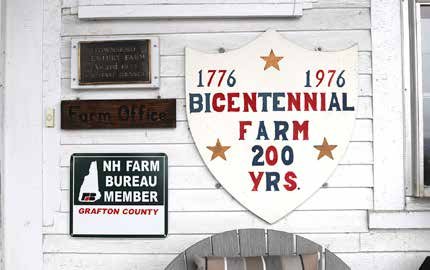
Perched on the top of Storrs Hill sits a white farmhouse, decorated with signs reading “century farm” and “bicentennial farm” on the side. It was built in 1784 by Nathaniel Storrs, one of the first settlers to come to the area. The land had come into his brother’s possession in 1763, just two years after Governor Benning Wentworth signed the charter that brought Lebanon into existence. In February of 1769, “Grandfather Nathaniel” (as his descendant Heidi Townsend Bundy calls him) bought the plot from his brother Cornelius, and two years later he moved his whole family up from Mansfield, Connecticut. The log cabin they first lived in no longer survives, but the farm, which has gone by several names over the years, including Storrs-Townsend and the current Tomapo (an abbreviation of Townsend Maple Orchard) is still in the family – and still producing maple syrup.

sugaring in lebanon - farm 200 years sign
Tomapo Farm, January 2024.
sgaring in lebanon - sepia photo from 1965 showing Tomapo farm sugar house with 4 children outside
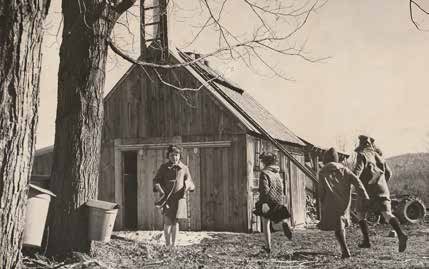
Storrs-Townsend (Tomapo) Farm sugar house 1965.

“We believe that they were probably sugaring shortly after Grandfather Nathaniel settled here,” Heidi says, sitting at the kitchen table in the old farmhouse. Nathaniel was her fifth-great-grandfather. “We only have records back to 1824,” she but “of all the things on the farm, that’s the one thing that we can track having been here. I have diaries from Grandfather Abel from the late 1800s. I have diaries from my grandfather, Harry [Storrs Townsend], from the late 1950s…we’ve got a lot of paperwork that makes us believe that sugaring was here early on.” Sarah Murchie, Heidi’s daughter, sits across the table with her own toddler daughter sitting in her lap: “It’s been the one constant,” she adds.

The earliest history of maple syrup itself isn’t perfectly clear, but one thing that everyone can agree on is that it’s always been plenty of work. Indigenous oral histories from across the northeast tell of the origins of sugaring – clearly an indigenous practice long before the arrival of settlers – with several suggesting that syrup itself once flowed directly from the trees until greater powers intervened, diluting it into sap to prevent humanity from becoming too lazy. When the sap comes out of the trees, its sugar content is very low, usually one to two percent by weight. Finished syrup is around sixty-six percent, and the art and science of sugaring is in how you get from one to the other.

Once upon a time, the secret to maple syrup production was simple: more bodies. “When my father was young,” Heidi says, “there would be an announcement at the [high] school in the afternoon, that the Townsends needed help…and the boys would hike up over the hill and spend the afternoon gathering sap.” Today, the sap is collected using vacuum pumps and plastic lines that crisscross the hillsides and collect in great tanks, but back then, the height of technology was metal buckets and rubber boots. “They still stop at the market and identify themselves as one of those kids that gathered sap, [saying] ‘we had so much fun’…I was around when there were buckets, and I don’t remember it being fun,” Heidi laughs, reminiscing. “They were happy. I always had sap in my boots; my mittens were always wet.” The industry has modernized since, not least because students who will work for a dollar an hour (plus a little ‘sugar on snow’ at the end of the day) are understandably harder to come by than they used to be.

“We have come into the 21st century,” Heidi says. “Back ten plus years ago…we added a vacuum system to our mix…so for quite a while we had a vacuum system on the one side of the road, about a thousand taps, and then we had five hundred on the other side that were all gravity fed to a tank” (they’ve since expanded to over 2,000 taps). But that division still meant extra manual labor, and so they tried an experiment with something called a “sap ladder”. “You bring all of your tap lines into a main line that’s headed downhill, and then there’s a vacuum system that has you spread that volume out into small lines so it will climb up into another line that goes downhill,” Heidi explains, describing the way the sap can travel up a line sixteen feet into the air to safely cross a road frequented by farm trucks and utility vehicles. “And then this past year, we added reverse osmosis to the mix.”

sugaring in lebanon - eric and his wife cole pressing the start button on the RO machine
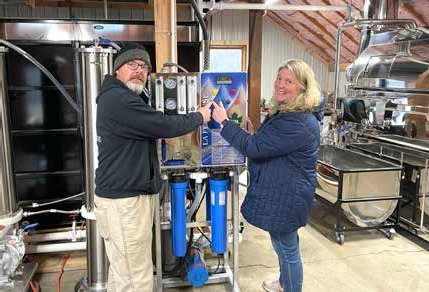
Eric Cole and his wife, Susan Cole, pressing the start button on the RO machine for the first time.

Reverse osmosis – or RO – is a technology that might be more familiar as a water filtration system: using high pressure and a semi-permeable membrane, water is divided into pure drinking water on the one side and a leftover liquid called concentrate on the other. Its use in sugaring just flips around which side is considered valuable. In a drinking water system, it’s the pure water that’s the goal, but in sugaring, it’s the concentrate. “So what it does is, it separates. Seventy-five percent of the water is pulled out of the sap before you even put it in the evaporator,” Heidi says. “I end up with hundreds of gallons of pure water in a tank that I use for cleaning, and then I have the rest of the sap that’s left, which has been condensed from two percent sugar to eight percent.” That means less time and energy spent boiling the sap down into syrup. “Last season, I spent ten 12-14 hour days in the sugar house [boiling sap], and I had help,” she adds. “This last season, 2023, we had the reverse osmosis set up, and I ended up doing 6-8 hour days, at most.” These moves toward labor-saving modernization aren’t limited to Tomapo Farm, either.

Not a mile away as the crow flies is another farm that’s also been around since almost the first days of Lebanon. Standing in his garage-turned-sugar house, Eric Cole explains that Elm Tree Farm has been in his family for eight generations. “We do business here as Ascutney View Farm, which is off of Poverty Lane…our kids will be the ninth generation.” But while sugaring is something the family has done for as long as anyone can remember, this particular venture is something new for Eric, who doesn’t look old enough to be on his third career. “I went to school for forestry, got my forestry license…was in the logging industry for a few years.” After hurting his back, he spent seventeen or eighteen years selling logging equipment:
“skidders and feller-bunchers…everything that you need to cut down a tree in the forest and process it and get it to the mill.” And then, a year ago last November, “I decided to…I say ‘retire’ from my second career,” he says, looking at the setup in the repurposed three-car garage. “And now I’m on career number three.”

The garage doesn’t look like the old traditional sugar house that’s just next door, where Eric grew up sugaring with his brother, father, and grandfather, nor does it look like the modernization of a legacy sugar house like they have at Tomapo. In fact, from the outside, the only clue that it isn’t for cars is the way three large blue sugar lines run up to (and through) the exterior wall. But one look inside tells another story: two raised, black, 3,000 gallon tanks take up a quarter of the interior space. Another half is taken up by an enormous stainless steel machine. “So that’s a three-and-a-half by fourteen CDL evaporator,” Eric says. “It’s oil-fired. Help is fairly limited today – for a lot of people – and so my goal was to be able to do as much of this myself as I possibly could.”

He isn’t overstating things: every part of his sugaring operation can be run from right where he’s standing. The sugar bush, a 20-acre patch with about 2,200 taps so far, is about three quarters of a mile up the hill. “I have a twenty foot conex box, a shipping container, out in the woods with a 2,200 gallon tank inside of it, and a vacuum releaser. So the vacuum goes out to the releaser, from that releaser I’ve got main lines that go all through the woods, which brings the sap down to the storage container…and then I have a pump that’s run off a generator out there, and it pumps the sap back to here.” From his phone, he can tell in real time the temperature and vacuum pressure of any given segment of line, and how full the sugar bush storage tank is. It’s a far cry from buckets and boots. “I don’t touch anything through the whole process. It just comes out of the trees, through here, through here, to the barrel,” he says, pointing. “It’s very efficient for me, as one person. I can do pretty much everything myself.”

Next to the internal storage tanks is an RO setup not unlike the one at Tomapo, but unlike the eight percent sugar concentrate that Heidi runs through her setup, Eric runs his up to twenty, using his two tanks and multiple passes to achieve that level of concentration. The difference is in how long the sap spends being heated in the different evaporators.

The color and flavor of maple syrup come from something called the Maillard reaction. It’s a reaction between amino acids and certain sugars that happens when they’re exposed to heat – think a nicely seared steak or a lightly-browned campfire marshmallow. That browning is what gives maple syrup its flavor, and it’s a function of the type of sugars in the sap and the length of time it spends being heated. Depending on the evaporator, the concentrate might be too sweet, in which case it wouldn’t be able to spend enough time exposed to the heat to develop all the color and flavors that maple syrup is famous for. Heidi recalls an early boil after taking hers to twelve percent: “I tasted that syrup, and I thought… this doesn’t have the kind of flavor I want.” Meanwhile at Elm Tree Farm, Eric says his “rig boils so smoothly at twenty percent that that’s what I shoot for.”

sugaring in lebanon - Clara installing tap line
Clara Cole helping install tap lines at Ascutney View Farm for another sugaring season.
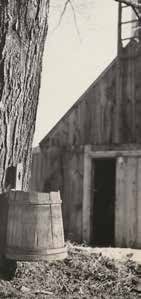
sugaring in lebanon - sepia photo from 1965 showing a wooden sugaring bucket hanging on a tree
Wooden sugaring bucket Storrs-Townsend Farm sugar house, 1965
sugaring in lebanon - Heidi holding the wooden sugaring bucket
Heidi Townsend Bundy holding the same sugaring bucket in 2024

Reducing the number of hands needed isn’t the only upside of modernizing the sugaring process: a more efficient setup also means a significant reduction in greenhouse gas emissions. At Tomapo, Heidi says they used to get six gallons of sap for every third of a cord of wood. Thanks to improvements that include the new RO setup, they now get thirty-six gallons for the same amount of wood, an over 80% reduction in emissions. Meanwhile, running twenty percent concentrate, Eric’s boiling runs are far shorter than they would otherwise be. “Last year my longest boil was two, two-and-a-half hours. I can make about forty gallons of syrup an hour,” and less time boiling means fewer emissions.

But for all the ways that sugaring has changed, some things are still the same. When asked “why sugaring?” Eric says it’s a mix of nostalgia and the need for a challenge. “I have a lot of memories of my father and my grandfather here in the sugar house… [and] I’m just kind of drawn to the woods.” Heidi’s father, Bruce Townsend, still comes down to the sugar house once a season, too. “He tastes the syrup, tells me it ‘tastes pretty good,’ and then as he leaves…he’ll turn around and look at me and say, ‘well, you look like you know what you’re doing.’” She laughs and says, “But that’s Dad…It’s a fun activity, it really is. I mean it’s a lot of work, but it’s fun, especially when you can do it with family.” With a little luck, and a little help from new technologies, they’ll be able to do it for generations to come.

Share:
Reading time: 10 min
All, Cover Story

Listen: Serving the Community for Over Fifty Years

November 25, 2023 by Richard Ford Burley No Comments
listen's holiday baskets probram

By the time the ink had dried on the 501(c)3 paperwork declaring “Lebanon in Service to Each Neighbor (LISTEN)” an official nonprofit in 1973, the start-up activist collaborative had already racked up some significant accomplishments.

In the early 1970s, the conversation around town might have sounded familiar to modern ears: it centered on the shortage of quality, affordable housing for the people who lived and worked in the city. The city’s residents were in favor of the idea of public housing, but then – as now – the question had been about exactly where to put it. In late 1971, the City Council had rezoned South Main Street in West Lebanon to rule out anything other than single-family homes. But by the end of the following year, not only had a tight-knit band of parents and activists helped to overturn that decision – leading to the Lebanon Housing Authority’s construction of Romano Circle –they had also started a food co-op, a community garden, and a thrift store, and had begun to focus their efforts on a proposal for expanded tenants’ rights. Fifty years later, LISTEN Community Services is still working hard every day to serve those in need, in Lebanon and beyond.

LISTEN’s founder,
Marcia Boutin
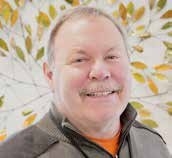
current executive director,
Rob Roy McGregor
comms coordinator,
Roscoe Putnam

It would be impossible to explain the early days of LISTEN without mentioning Marcia Boutin – its founder, first chairperson, and (as everyone will tell you) the driving force behind its early achievements. By all reports, Boutin was an activist in every sense of the word. In 1972, she showed up to City Council meetings to complain that the City’s “substandard housing board” rarely, if ever, met, and that there were dozens of “wrecks” it should be addressing – complaining that she had personally been working on three of them, but that it was a losing battle without City help. The fact that she had been doing so while both founding a community garden on Heater Road and opening a thrift store in the side of former Olympian Ernie Dion’s ski shop on Hanover Street only serves as further testament to her commitment to the cause.

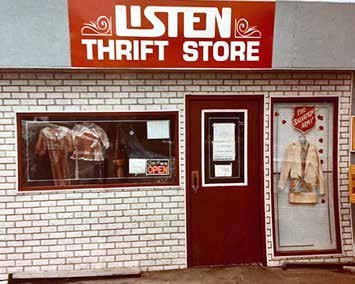
Early Listen thrift store, circa 1980s

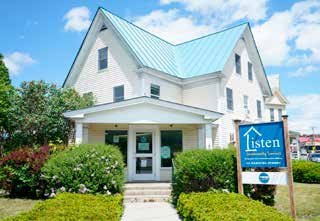
According to Roscoe Putnam, LISTEN’s Communications Coordinator, the thrift shop began as a way to fund the organization’s community aid efforts. “[Marcia] went to the community and said, you know, you donate [the clothes], we’ll put them all on hangers. We’ll sell them for fifty cents and we’ll give the money away to anybody who needs heat or food or whatever else.” By 1973, the shop had moved to 92 Hanover Street, the site of the drive-through for the present-day Jiffy Mart and Dunkin’ Donuts. But even that home proved too small for the quickly-growing organization, and in 1976 they purchased 60 Hanover Street, at the time known as “Scotty’s Boarding House,” and made it LISTEN’s central office. “We had a thrift store downstairs, a food pantry in the back, and [offices upstairs].”

Over the years the thrifting operation expanded further. They opened a second location in White River Junction in 1980 and expanded into Canaan in 1985. In 2013, LISTEN opened their River Point Plaza in White River Junction – renamed the Bourne Center in 2016 after former executive director Merilynn Bourne –which houses not only a thrift store and a used furniture store but also the kitchen and dining hall for their Community Dinners program. In 2018, they purchased the old Bridgman’s furniture showroom on the Miracle Mile and moved their Lebanon thrift store to where it is today. While the stores aren’t solely to fund the other work the charity does – they don’t sell everything they take in, offering vouchers for clothes, shoes, kitchenware, linens, and even furniture to those in need –according to the organization’s 2023 Annual Impact Report, last year the stores generated 22% of LISTEN’s roughly $1.5 million operating budget.

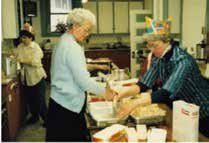
That budget goes towards fulfilling LISTEN’s core mission, “to provide services and support to meet the critical needs of Upper Valley individuals and families,” and few needs are as critical as food. The community garden, first planted in June 1972, was meant as a part of the “Food Co-op” LISTEN had started in March of the same year. The Co-op was intended as a way to shrink families’ grocery bills and provided roughly 75 families a week with nonperishables, bread, and around 25 varieties of fresh vegetables from the garden. There was even a canning operation, both to provide preserved vegetables for the winter and to teach families how to preserve produce for themselves. The Co-op also worked with local businesses like Cabot Creamery to provide access to cheese and milk at wholesale prices, a model that persists to this day, with McNamara Dairy providing milk to the Food Pantry at a deep discount. The community garden and Co-op programs eventually evolved into the modern-day Food Pantry, which had over 11,000 visits last year. Also, in 1986, LISTEN took on the responsibility for the “Soups On” program, which was a weekly free dinner program run through local churches. It was quickly renamed to the Community Dinners program, and in 1994 it found a more permanent home in Canaan. Today, the dinners are served Monday to Friday from 4:30 to 5:30 at the Bourne Center in White River Junction, last year serving almost 33,000 meals.

LISTEN Holiday Baskets
LISTEN Community Dinner at
Sacred Heart Church c 1987

LISTEN also serves the community in other important ways. In 1982, when the Winter Home Emergency Network (WHEN) dissolved, LISTEN took on the home heating assistance program itself. In 1998 it became their Heating Helpers program when it became internally funded. In 2002, the organization began its Housing Helpers program, providing one-time grants and legal assistance to help community members stay in their homes when they are at risk of losing them. Last year alone, those programs helped over 1500 people stay warm and prevented over 350 evictions.

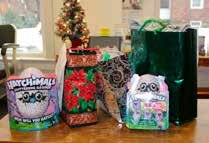
Although they have stepped back from aid specifically for children and teens in recent years – in 2020, they transferred ownership of the Junction Youth Center in White River Junction to Second Growth, an organization more tailored to youth aid and outreach – LISTEN still does a great deal to support children in the area, running an annual Holiday Basket program and giving out scholarships for students to attend summer camps when they otherwise might not be able to. The Holiday Baskets program began in 1980, and today provides groceries and winter clothing for under-18s and seniors, and the Summer Camp Scholarship program began in 1990 and last year made it possible for 186 students to attend summer camps.

The Holiday Baskets and Summer Camp Scholarship programs were also two things Roscoe Putnam mentioned when asked about the benefits of being an independent charity rather than a government agency. “It may be hard for the government to see the need for summer camp scholarships and holiday baskets. Why do you need a holiday basket?” It could be hard, he argued, to sell the need

for summer camps to a government-run program that’s beholden to voting taxpayers, but “[it’s] an opportunity for kids to have some good memories of summer, not [just] sitting at home, sitting on the steps, bouncing a ball.”

The wide diversity of programs offered by LISTEN is at the core of the way the organization operates today, and that flexibility is important for LISTEN’s future, as well. In March, Rob Roy McGregor was appointed as the new executive director of the nonprofit, after almost twenty years as President and CEO of the Southern District YMCA in Exeter, New Hampshire. When asked about the future of LISTEN, he said he sees it as “a social enterprise, where you have a core part of your organization that generates revenue to support other elements of your organization that can’t support itself.” He said it was important for the charity to continue “to be able to generate the revenue through our thrift stores and [to] be able to use that as a revenue driver” to fund their fuel assistance and food insecurity work. He also wants it to be a “community driver for sustainability and environmental impact,” describing a kind of virtuous cycle, diverting clothing and goods from landfill and into reuse, all the while using the proceeds to help those in need.

McGregor seems to feel as though, at LISTEN, he’s standing on the shoulders of giants. He refers to himself and others privileged enough to do the work as “stewards,” of “fifty years of history.” “That’s all we can do, is to try to build on the pillars of what each of us has done.” As a final thought before rushing off to another meeting, he added a final, pragmatic thought about the future: “I’d love to see us out of the food industry and food insecurity business because that doesn’t exist in this world [anymore]. I don’t see that happening. And I’d love to see us out of the housing insecurity world because that doesn’t make sense, but I don’t think that will happen [either]. Until then, we just have to keep moving forward.” With fifty years under its belt, LISTEN has proven that it can do just that.

Shelf stable food and personal care items can be dropped off at LISTEN’s main office at 60 Hanover Street from 10 am-4 pm, Monday-Friday, and monetary donations can be made by going to listencs. org/make-a-donation-now.

Share:
Reading time: 7 min
All, Miscellaneous

Cioffredi & Associates and Lucky’s Coffee Garage

February 23, 2023 by Richard Ford Burley No Comments

Both Cioffredi & Associates and Lucky’s Coffee Garage give generously – in time and money – to local community organizations. However, if there’s one thing that unites these two companies in our first “Business as a Force for Good” segment, it’s the way they care for and invest in their teams of employees. Whatever’s on the menu – whether it’s coffee or physical therapy and wellness – the values and cultures developed within their respective businesses ripple outward, making a positive impact on the communities they serve.

Cioffredi & Associates

When Billy Cioffredi got his start in physical therapy more than four decades ago, the idea of being a “good boss” wasn’t exactly on his radar.

“From the start it was the people element that attracted me,” he says, explaining how he most highly valued the one-on-one connections he was making with the individuals served by his work. But as businesses grow, so do managerial responsibilities. After overcoming some struggles early on in his career, he now recognizes the importance of having someone whose job it is to invest in a team and to empower them to be their best, so they in turn are able to do more good for the community – and that investment is now paying off.

Kate Leiser, PT, with patient Becky Ackerman

Cioffredi initially worked at Mary Hitchcock Memorial Hospital before forming a small private practice – one that grew quickly. Back then, he wasn’t equipped with the proper training to succeed on his own, and he found himself fulfilling a sort of “negative stereotype” of a businessman, he says. He remembers finding himself “busier and busier,” not working with patients but with the “headaches” inherent in managing his burgeoning workforce. At a certain point, Cioffredi says, he “had to make a decision…to learn to master this stuff or get out of it.” He chose the former and invested time and energy in executive training.

These days, Cioffredi mainly views his job as being a resource to help his team “shine” and to “be the best that they can be.” As gratifying as the one-on-one experience is – and he continues to engage with clients that way – putting in that managerial effort has been worth it: “as a group, we can do more good for more people,” he says.

Part of this commitment toward empowering his team of coworkers can be seen in the amount of professional development that takes place within and around the practice. Central to that development is Kate Leiser, Cioffredi & Associates’ clinical director. With a Doctorate in Physical Therapy and years of teaching in a university setting, what sets Leiser apart is her experience as an educator.

“Whenever we bring somebody on board,” she says – regardless of whether they’re more novice or well-seasoned in the profession – “they’re working with me one-on-one weekly to develop skills and problem solving.” In addition to monthly mentoring and time set aside for building team relationships, the practice also serves as a clinical site for physical therapy doctoral students and a residency site for post-doctorate physical therapists. It even provides internship opportunities for undergraduate students who have interest in joining the field.

From a more cynical perspective, these kinds of investments could be considered a risk: workers have a lot of power in today’s economy, so empowering them even further could lead them to set out on their own, as Cioffredi himself once did. But he and his colleagues don’t see it that way.

Burnout is a problem in the American workforce today, and the field of patient care is no exception, with many practices short-staffed and experiencing the kind of rapid turnover often referred to as “churn.” Rather than being a risk, Leiser sees ongoing education as a kind of antidote: the guided mentorship, professional collaboration, and a sense of shared values are all important aspects of the culture that helps the practice to train and retain its highly-skilled staff. There’s also a sense that even if team members leave the practice, there’s still a benefit being made to a wider community. “The investment in them really helps them to better help our patients and our community,” Leiser says.

These lines of thinking hint at a kind of “virtuous cycle,” where having a business that invests in its team and the surrounding community attracts potential team members with what Matt Goodell – Cioffredi & Associates’ director of marketing and public relations – calls a “base of shared values.” “Everybody goes about things a different way, but if there’s a situation where we don’t necessarily see eye to eye on something, we can come back to those values and, because we have this mutual respect for each other…we can come to some sort of resolution,” Goodell adds.

When it comes to the values that his practice espouses, Billy Cioffredi sums it up well: “For many people,” he says, “‘business’ has got a bit of a negative connotation that, in order to be successful, you have to be doing something a bit underhanded, or short-changing somebody… and it I think it’s quite the opposite. I think that the highly successful organizations are the ones that just really know how to get the most out of the people that they have…people that are thriving on feeling like, ‘I’m really doing good. I’m personally doing good, and I’m helping the whole organization do good.’”

Lucky’s Coffee Garage

Lucky’s Coffee Garage is a relatively new addition to Lebanon; nevertheless, in the roughly five years since it opened, it’s gathered a devoted following, weathered a global pandemic, and, of course, served plenty of great coffee, all while taking good care of its workers and giving tens of thousands of dollars to community organizations. At the heart of their success is the idea of “showing up” – not just for work, but for each other and for the community.

Back row: Christian, Jac, Camille, Izzy. Front row: Hayden, Gavin

After returning to the Upper Valley from a decade on the West Coast, owner Deb Shinnlinger noticed a lack of specialty coffee shops that had a “community feeling” – ones that served coffee, but also served as local community hubs. She resolved that if no one else had stepped in by the time her children were in high school, she would take on the task herself. When the time came and no one else had, in her words, “filled the void,” she started looking for a location. The way she tells it, it was as though the stars had aligned: after lucking into a lease on the old Gulf station (the building hadn’t even hit the real estate market yet) and assembling a team of old friends and new experts (their first “coffee expert” walked in as they were renovating the space and almost hired himself into the position), Lucky’s sold its first cup of coffee in December of 2017.

From that moment on, it was clear that Shinnlinger hadn’t been the only one feeling the absence of a community-centered coffee shop, and the business took off almost immediately. “It’s really been a lesson in how to scale up,” she says. They started with four or five people working part-time hours; today, Lucky’s team has fifteen or sixteen members, most of them full-time. That’s despite the pandemic and the widely-reported labor shortages, both of which have been especially difficult challenges for customer-facing businesses.

A random day in November when the crew matched in a fall color palette. Izzy, Alex, Autumn, Gavin, Hayden

According to Gavin Fischer, Lucky’s general manager, Shinnlinger’s dedication is why the coffee shop has thrived over the years and through challenging times. One of the reasons Lucky’s has continually been recognized as a center for community in Lebanon is because Shinnlinger consistently puts her team first, Fischer says.

When the Paycheck Protection Program began amidst the pandemic, Shinnlinger applied immediately, and when things got really dire, she personally coached the employees on how to apply for individual financial assistance. “People can tell we’re really well taken care of here,” Fischer says, “and that echoes out.” Shinnlinger herself sees it more as a matter of the culture and values held by the whole team. But, she admits, “we do make a lot of decisions based on what’s best for the crew, more than what’s best for the business.”

Megan (lead baker), Camille (kitchen crew), Ray (barista), Steen (a bit of everything), and Zach (kitchen crew)

And the members of that crew have a lot of say in the day-to-day operations of the business – to the point where Lucky’s could be described as an almost radically team-driven workplace. Christian Berkey, Lucky’s kitchen manager, says that even what’s on the menu can depend on what individual team members want to be making. He remembers a time when the kitchen staff no longer wanted to make a certain kind of sandwich. Rather than overriding the staff, they not only took it off the menu but asked what the staff would rather be cooking. Soup being the resounding answer, Berkey replied: “We’re going to make a soup, and we’ll sell soup.” Almost as an afterthought, he adds, “It didn’t dip the sales.”

Lucky’s care for their employees also travels up the supply chain. They take great care to purchase coffee from roasters who are transparent about where they get their beans and whether they’ve paid a fair price for them. “We don’t have the cheapest cup of coffee around,” Fischer says, “because we’re trying to make the supply chain pay for itself…so that small-scale farmers get a just price for their product.” In an industry that involves a lot of worker exploitation, it’s a small price to pay. “We’re not the cheapest cup of coffee,” Berkey agrees, “but we’re not that far off.”

Deb Shinnlinger, Emily, Izzy, Lindsey, Jessica, Catherine

What seems clear is that, for the people behind Lucky’s Coffee Garage, the care they put into their community is reflected back in the way the wider Lebanon community has embraced the local coffee shop. When it comes down to it, Shinnlinger says, “Our job is to make the most excellent product and show up for the people that we’re serving…It’s this beautiful circle that happens: if you’re here for us, we’re here for you.”

Share:
Reading time: 8 min
All, Cover Story

Building a More Perfect Union in Lebanon

November 25, 2022 by Richard Ford Burley No Comments

The holiday season is upon us, and for millions of Americans, that means food, friends, and family – and sometimes uncomfortable conversations deftly avoided by offering another serving of apple pie. In Lebanon, the City government is bucking that trend: a recent visit to City Hall by Braver Angels – a nonprofit dedicated to bridging partisan divides and finding common ground – is part of a series of moves meant to help the City come together during a time of increasing polarization.

Juneteenth 2022 celebration in Colburn Park

When former state legislators Doug Teschner and Patricia Higgins sat down with Lebanon’s City Councilors and other City officials in late September, it was as a part of an initiative called “Braver Politics.” Unlike those of us sitting around the dinner table, our elected officials aren’t able to simply change the subject when the conversation gets uncomfortable – it’s their job to meaningfully engage with the concerns of their constituents, after all – but the lessons offered by the seminar could be useful to everyone. Higgins, a former Democratic state representative, stressed the importance of making people feel heard before trying to make your point. Teschner, her counterpart (a former Republican representative), directed participants to large, bold words printed on a handout next to the phrase “The Prime Directive: connect first, then explain your view.”

Over the course of two hours, the Councilors and officials broke into groups to practice the various steps, which included acknowledging others’ points, appreciating where they’re coming from, and agreeing wherever possible before making one’s own point, but much of it boiled down to the difference between listening to understand as opposed to listening for the most controversial points – the best ammunition to use to return fire. For City Manager Shaun Mulholland, who arranged the seminar, the invitation was part of a broader strategy to build a “skill base” that’s needed for a fast-growing city like Lebanon.

In an interview in October, Mulholland explained that these moves began with the New Hampshire City Manager’s Association “challenging managers to take action” in response to the national conversation taking place on race and equity, but he also stressed the preventative nature of these moves.

“We don’t have a particular circumstance…we do not have a crisis here [in Lebanon]. We don’t want one, either. We want to get ahead of this,” he said. A part of that, he added, is bringing programs like Braver Angels to Lebanon, “so we have the skills when we need to have difficult discussions.”

Other parts of this broader strategy have included steps like Race, Equity, and Leadership (REAL) training through the National League of Cities, and the recent creation of a Diversity, Equity, and Inclusion (DEI) Commission for the city.

The DEI Commission is composed of City Councilors and volunteers. It was created late last year “to enhance the City’s support for a welcoming environment by encouraging cooperation, tolerance, and respect among those living, working, and visiting the City.” It serves primarily as an advisory board for the City Council, while also helping to organize events, like multicultural elements of the Lebanon Opera House’s Nexus festival this past summer. They have also reviewed the City Code and Charter for gender-neutral language and recently weighed in on the housing situation in Lebanon, encouraging support for more affordable housing in the area.

Bise Wood Saint Eugene

The commission is currently running a survey on people’s experiences with discrimination in the city (which can be found at tinyurl.com/DiscrimSurvey), in an attempt to gather information on where their efforts are best directed. The survey asks whether the people living and working in Lebanon feel they have been treated differently than others – and if so, why? In a recent interview, Bise Wood Saint Eugene, vice-chair of the commission and family services coordinator at LISTEN Thrift Stores, explained that fact-finding is an important first step for the DEI Commission: “If you can’t measure it, it doesn’t exist,” he said, adding that “without people sharing their stories, we can’t assume anything.” He also stressed that the survey isn’t exclusively about race, but about all forms of identity, including income, disability, gender, and more. He wants respondents to think about their identities as things that overlap, “like being a single mom or dad with multiple kids in the Upper Valley (where daycare spots can be really scarce and exorbitant when available),” or being someone “without a college degree.”

Emily Walton

“We ask about people’s experiences with discrimination,” said Emily Walton, the Commission’s chair and associate professor of Sociology at Dartmouth College, “and then a follow-up question that is, ‘what do you think that discrimination is based on?’ It could be something like your ancestry, gender, age, accent, sexual identity, a disability…those are things that we can all relate to.”

The point of the survey is to build a greater understanding of the concerns of the people who live and work in Lebanon, to learn about their shared struggles in an effort to build trust and empathy. “If you can relate” when you hear someone else’s story, says Saint Eugene, then “take a moment to think about it and say wait a minute, ‘this is my story,’ something might click.”

Alisha Robinson
Alisha Robinson

Another example of Lebanon’s efforts toward empathy and community was seen on the 19th of June, during the city’s first Juneteenth celebration. Though it only became a federal holiday in 2021, Juneteenth has long been a day for celebration in the country’s Black communities, marking the day in 1865 when Union forces arrived in Galveston, Texas to announce that all those who had been enslaved up to that point were now free. While many Americans are taught that slavery ended with the Emancipation Proclamation, in reality, it took time for the law to be enforced. For this and other reasons, the Juneteenth Steering Committee wanted the event to be “as educational as possible,” according to Alisha Robinson, who, in addition to being a member of the DEI Commission, also serves as the DEI program coordinator at Alice-Peck Day Memorial Hospital and as chair of the BIPOC employee resource group for Dartmouth Health.

Tia Winter

According to Robinson, they wanted to bring the community into the special day together with a common understanding, explaining to everyone, “this is why this celebration is important to the Black community, and this is what it means.” Tia Winter, a clinical social worker based in Lebanon and member of both the DEI Commission and the Juneteenth steering committee, added that they wanted people to feel more connected to their own, local history, inviting Lebanon’s City historian to give a talk about the day in relation to the city’s past.

They “really wanted it to be celebratory,” she added, “without any feelings of shame.” “It was great to see how interested the community was,” said Robinson. She noted that while there weren’t any official crowd counts, the New London Hannaford donated cake and drinks – and Hannaford staff donated their time to serve them – for 150-200 people, and there wasn’t any left at the end of the event. “It shows that our community is working together on these issues and that it’s important to all of us,” she said.

At the heart of all these efforts is the idea that empathy, education, and meaningful engagement are integral to the building and maintaining of a community. So this holiday season, whether it’s in Lebanon’s City Hall or at your own dining room table, remember that as the Braver Angels say, it’s important to “connect first.”

City of Lebanon Braver Angels training participants
Share:
Reading time: 6 min

Our Latest Issue

The Lebanon Times is delivered to every mailing address in Lebanon.

  • Subscribe at an out of town address!
  • Pick up a copy!

© 2024 copyright Greater Good Media. All rights reserved.