Home
Our team
Content
    Cover Story
    All Articles
    Animals Rule!
    Around Town
    Cityscapes
    Community Impact
    Elder Profile
    For The Love Of It
    Good For You
    Goodness InDeed
    Green Page
    History
    Local Sports
    Meet your Neighbor
    Miscellaneous
    Spotlight on our Sponsors
    The Arts
    Your Green Spaces
Advertise
Archives
Donate
Contact


The Lebanon Times - Good people, good places and good things happening
  • Home
  • Our team
  • Content
    • Cover Story
    • All Articles
    • Animals Rule!
    • Around Town
    • Cityscapes
    • Community Impact
    • Elder Profile
    • For The Love Of It
    • Good For You
    • Goodness InDeed
    • Green Page
    • History
    • Local Sports
    • Meet your Neighbor
    • Miscellaneous
    • Spotlight on our Sponsors
    • The Arts
    • Your Green Spaces
  • Advertise
  • Archives
  • Donate
  • Contact
All, Cover Story

Great Strides in Lebanon: A Community Walk for Cystic Fibrosis

June 27, 2025 by Siobhan Kizis No Comments
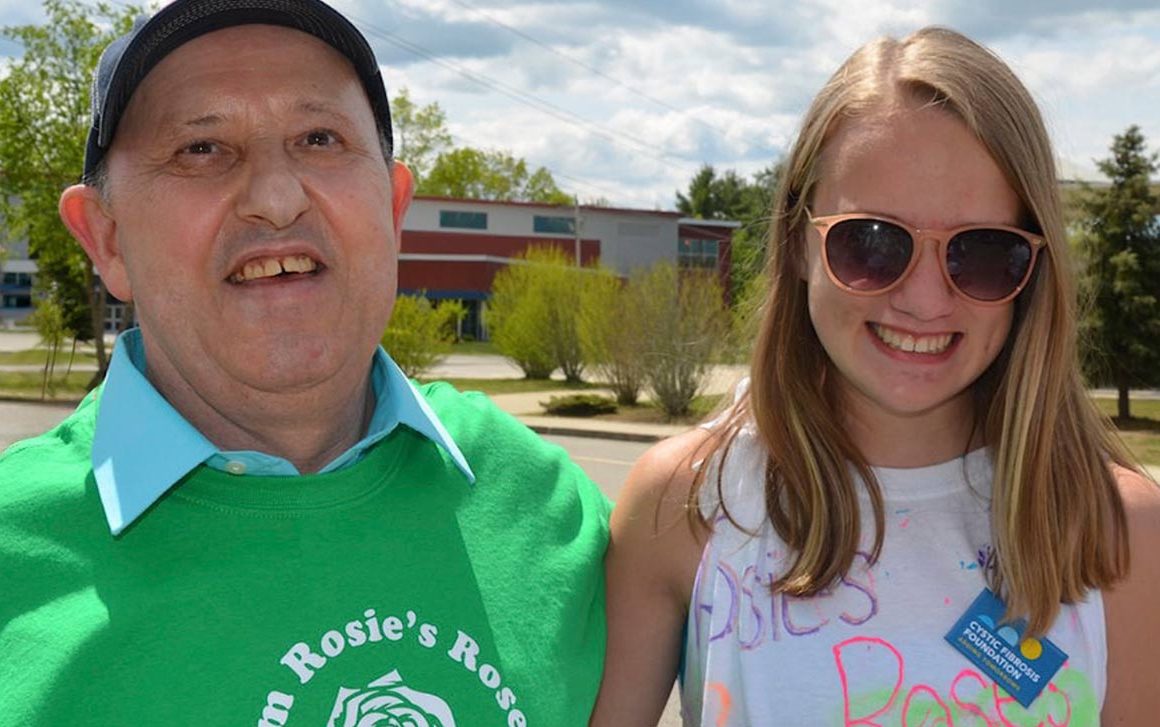
Robert Plante and Rosie, who was diagnosed with CF at two weeks old, at the CF Walkathon in Lebanon

Every year, the Cystic Fibrosis Foundation hosts its largest national fundraising event – Great Strides. Nearly 300 walkathons take place across the country to raise money for research, increase awareness, and support the search for a cure for cystic fibrosis (CF). On May 4th, Lebanon held its 37th annual Great Strides walkathon, bringing together children and adults with CF, their families, friends, community members, care teams from Dartmouth, corporate sponsors like Vertex, and many local supporters at the CCBA Pavilion.

Before the event, I spoke with Lisa O’Connor, executive director of the Cystic Fibrosis Foundation in Nashua, NH. She shared the following on behalf of the CF community:

“Great Strides provides an opportunity for family, friends, students, and colleagues to come together and strengthen the bond of the cystic fibrosis community. The event recognizes the many journeys people with CF face and the work that still needs to be done for those waiting for their transformative treatments – and ultimately, a cure.”

Although there is currently no cure for cystic fibrosis, significant progress has been made in treatments and medications that have transformed the lives of many with CF. These walkathons are vital to sustaining the fundraising necessary to keep that progress going.

At the Lebanon event, I had the privilege of speaking with several members of the CF community – and I quickly discovered a common thread among them: Robert Plante.
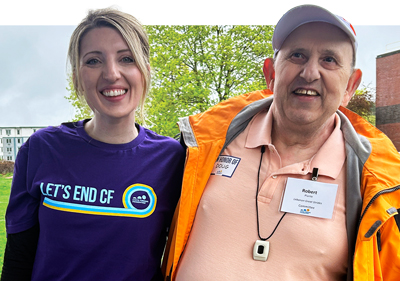
Madison Culver, CF walkathon participant, and Robert Plante at the 2025 Great Strides Walkathon in Lebanon.

Madison Culver, CF walkathon participant, and Robert Plante at the 2025 Great Strides Walkathon in Lebanon.

Robert is the honorary chairman of the Upper Valley Great Strides walkathon and a beloved figure in the CF community. Full of passion, kindness, and commitment, Robert has been involved with the Cystic Fibrosis Foundation for all 37 years of the Lebanon walkathon. Over that time, he has walked more than 7,500 miles, raised over $300,000, and inspired countless others.

His dedication began with his best friend from childhood, Doug Jones, who was diagnosed with and later passed away from CF. Since then, Robert has poured his heart into raising awareness and funds for CF research.

“I’m dedicated to cystic fibrosis research… and I’m going to be for the rest of my life,” he told me. “I love children – they’re my loving angels. All of them.”

One of Robert’s longtime friends and supporters, Bill D’Amico, traveled from Colorado to attend this year’s walkathon. The two met through the Best Buddies program, and this year, they’re celebrating 25 years of friendship. This was Bill’s sixth year participating in Lebanon’s walk and supporting Robert’s team.

“It’s beyond a community… they have a kinship with each other that you can’t help but feel – it’s so endearing,” Bill said. “CF is a very elusive disease. And while they’ve made great strides, there’s still no cure. Events like this make a real difference.”

I also spoke with Paula Garvey, whose daughter, Rosie, was diagnosed with CF at just two weeks old. Since then, Paula has become deeply involved in the CF community. She serves on both the Cystic Fibrosis Patient & Family Advisory Council and the Cystic Fibrosis Foundation – Northern New England Chapter. She met Robert through her work and developed a strong connection with him.

Paula emphasized the importance of Great Strides events – not only for raising funds, but also for bringing people together.

“We used to always have a team – neighbors, Rosie’s friends, her Girl Scout troop. It was a wonderful way to unite people,” she recalled. “Now, the walks are more important than ever. We have to keep up the momentum.”

Thanks to ongoing support and medical advances, her daughter is now thriving – living independently, working full-time, and pursuing a master’s degree in public health.

Another touching conversation was with Lynn Freeman, a CF nurse specialist with 40 years of experience. Her journey with CF began early in her nursing career, and she’s seen firsthand how dramatically things have changed.

“I fell in love with kids with cystic fibrosis,” she said. “They had this amazing sense of humor, energy, and courage.”

Lynn reflected on the game-changing impact of new treatments called modulators:

“When those started coming out and we saw how fast people improved, it was stunning,” she said. “It’s because of the tireless work of the CF Foundation and everyone who walks, bikes, skis, or donates.”
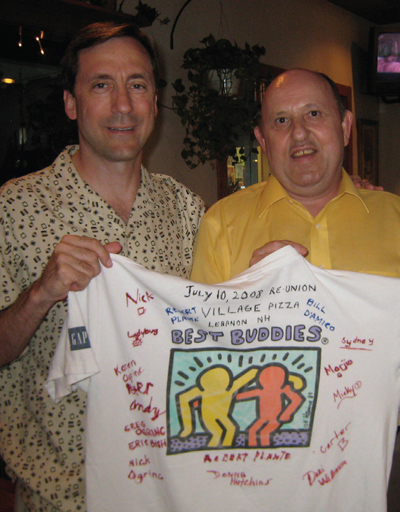
Best buddies, Robert Plante and Bill D’Amico, who met and connectedthrough the Best Buddies program 25 years ago.

Best buddies, Robert Plante and Bill D’Amico, who met and connected through the Best Buddies program 25 years ago.

Lynn also stressed that CF care requires a team: doctors, nurses, social workers – all working in sync. Her bond with Robert is also special – she cared for his best friend Doug at Dartmouth and remained in contact with him until the end of his life.

One of the most powerful stories came from Madison Culver, who was diagnosed with CF at 18 months old. Her brother, also born with CF, tragically passed away at age four from CF and cancer. Madison was told she wouldn’t live past 19, couldn’t become a nurse, and couldn’t have children. She has defied all those expectations.

Now 32 years old, Madison spent 10 years as an ICU nurse and is now a full-time primary care nurse – and a mom.

“It’s wild to see how different my life looks from what we expected,” she said. “I just started saving for retirement – something I never thought I’d do.”

“CF impacts every aspect of your life. It’s an invisible illness, and there’s a lot of silent fighting that happens. But without the CF Foundation and Great Strides –and the millions they’ve poured into research and treatment – I wouldn’t be here.”

I also had the privilege of speaking with a mom whose 10-year-old daughter was diagnosed with CF at birth. The early years were rough, but a new medication has been life-changing.

“She’s been so healthy since then. She’s super active, into all the sports – it’s made a world of difference,” the mother said.

These stories moved me deeply. The strength, determination, and love within this community are undeniable – and incredibly inspiring.

Here’s to the continuation of critical research, the walkathons that fuel it, and the incredible individuals and families who make it all possible. To the CF community in Lebanon: you’ve gained a new supporter. I’ll be there next year – hopefully alongside some of you, dear readers.
Share:
Reading time: 5 min
All, Around Town

Puzzle Swapping at the Kilton Library

by Cindy Heath No Comments
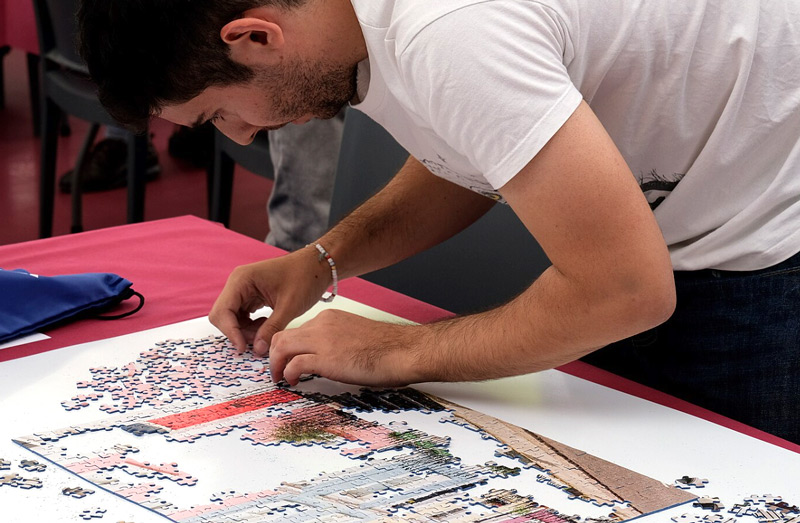
2022 World Jigsaw Puzzle Champion Alejandro Clemente

When Lisa Green’s house started reaching capacity with the many jigsaw puzzles she had finished and even more that she still wanted to put together, she decided it was time to share her passion with others. In launching the Upper Valley Jigsaw Puzzle Exchange Meetup group in 2018, Lisa thought other puzzle enthusiasts might have their own puzzles to share and exchange. Shortly after it began, the group took off and now consists of 170 members, coming from around the Upper Valley and beyond to swap puzzles every two months at the Kilton Library in West Lebanon.

Meetup is an online platform founded in 2002, designed to connect people in person and virtually through similar hobbies and interests. Inspired by the book Bowling Alone, which highlighted society’s lack of connection and community, Meetup has grown to include more than 35 million users, with 225,000 Meetup groups in 180 countries.

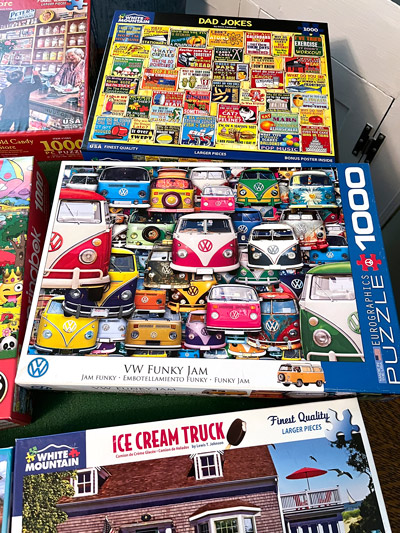
Lisa Green’s Puzzle Collection

Lisa Green’s Puzzle Collection

Lisa explains her motivation for starting the Meetup group. “I have loved puzzles ever since I was a little kid. it was a favorite pastime, and there was always [a puzzle] on the dining room table.” Lisa explains that for hard core “puzzlers”, it’s unusual to do a jigsaw puzzle more than once. “Once you’ve done a puzzle once, you don’t want to do it again. And puzzles are expensive, so I decided to start a group for others to bring all the puzzles they wanted to trade.”

The Upper Valley Jigsaw Puzzle Exchange Meetup group has members who like all kinds of styles of puzzling, says Lisa. “I don’t like anything that’s too challenging like solid colors, but we have some members who do 5,000 piece puzzles, working on them for months.”

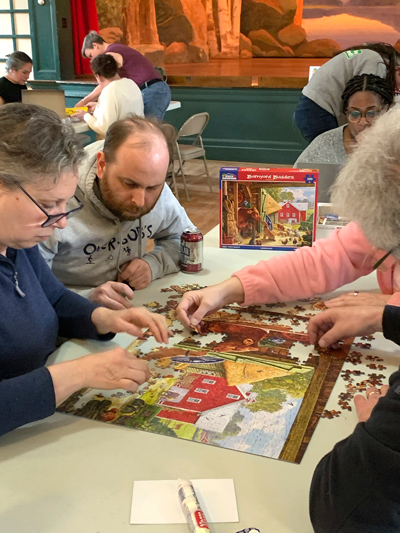
Lisa’s personal puzzling strategy is well thought out. “I don’t go over 1,000 pieces because my dining room table can’t accommodate anything bigger. Sometimes I’ll find a 500 piece puzzle I like, and my son and I can do those in an hour or two.” Lisa and her son Patrick are working on a White Mountain Puzzles brand art puzzle now that has beautiful exterior and interior scenes. “I love to do puzzles with my 33-year-old son. He’s a developmentally disabled young man and he’s very good at them.” Lisa and Patrick have plenty of puzzles to practice on at home, with more than 50 puzzles in their “puzzle closet”.  “I’m whittling the pile down each year,” Lisa says. “Puzzles are artwork because they’re so beautiful or have sentimental value as a gift from a family member.”

Patrick and Lisa puzzling

Patrick and Lisa puzzling

In the last few years, Lisa and Patrick have entered and won some puzzle contests. One might not think of puzzling as a competitive sport, but in fact, speed puzzling competitions are held all over the world. There are annual conferences with competitions (US Jigsaw Puzzle Association, World Jigsaw Puzzle Championships), and dozens of state and local competitions. For puzzle designers, there’s “Puzzle Parley”, a national group that celebrates the art and history of wooden puzzles meeting in a different city each year to showcase their craft. International wooden puzzle manufacturer, Stave Puzzles, in Norwich, VT, known as the “Rolls Royce of Puzzles”, has hosted puzzling competitions featuring their signature “trick puzzles”, presumably impossible to solve.

Locally, there are several puzzling parties to choose from, often hosted by libraries. In Enfield, a church hosts an annual competition inviting six-person teams to finish the same puzzle at speed. “After the event, there’s a turkey dinner that smells so good while we’re puzzling,” Lisa notes. “Whoever finishes their puzzle first wins the top place in line to eat.”

For her part, Lisa loves the calming effect of puzzling. “In this day and age, there’s so much going on and everyone’s stressed out. Puzzling occupies your mind, it’s like you’re in a meditative state. It keeps your mind sharp and engaged and you don’t think about your worries – you’re just having fun.” For now, Lisa will keep working on her puzzle closet, filling the trunk of her car with puzzles to share at upcoming exchanges.

To learn more about the exchange, search under “groups” on Meetup.com for “Upper Valley Jigsaw Puzzle Exchange”, and start clearing out your own stash of puzzles.

Share:
Reading time: 3 min
All, Good For You

Racing With Passion and Purpose

by Siobhan Kizis No Comments
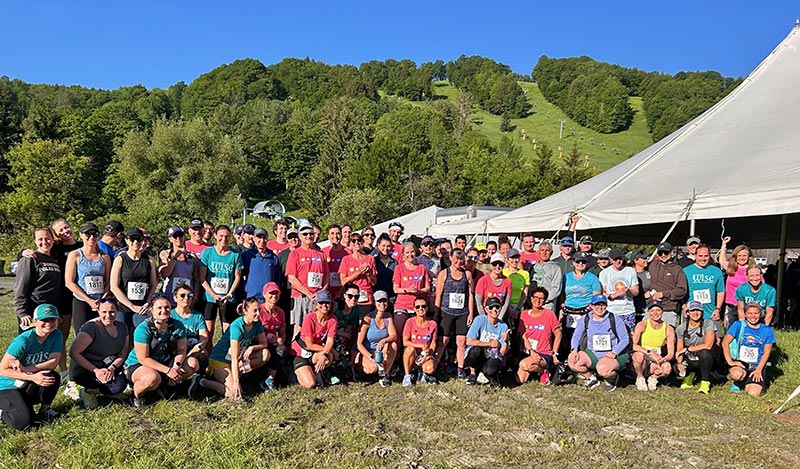
Non-profi t partners team together during the Covered Bridges Half Marathon to support their local communities.

Community efforts met with passion and purpose during the Covered Bridges Half Marathon (CBHM) on June 1st. This annual marathon helps support local non-profit organizations through their fundraising efforts with a 13.1 mile road race that travels through Pomfret, Woodstock, and Quechee.

The five non-profits – which include WISE, The Family Place, Willing Hands, Positive Tracks, and David’s House – partner with CBHM with a goal to help raise funds for their programs and spread awareness about the services they offer to the community. All the non-profit teams work together to support each other in a true collaborative effort, and CBHM also gives money to multiple youth groups who volunteer their time at the race.

I gained insight into the details of organizing the event, as well as the impact it has on the Upper Valley community, by speaking with Mike Silverman, one of the CBHM co-race directors. He was introduced to the CBHM 25 years ago, and now he and co-race director Nancy Nutile-McMenemy partner together to organize the race each year. Mike’s history and passion for community involvement, paired with his love of outdoor activities and working with the Upper Valley community, make him an inspiring leader.

“What makes [CBHM] more special, I think, is that people come from all over. It isn’t just NH and VT, and they see the perfect setting of VT…They come through a valley, they go through a town, and they follow a river.”

There is a lot of planning involved in the race, including safety, gathering supplies, water stations, communication, traffic control, parking, and of course, local musicians who play music at different check points to help keep the energy up! It is also imperative that organizers take into consideration the impact on local businesses and churches and remain mindful when planning and organizing.

One of the challenges Mike acknowledged is finding enough volunteers, as they often have to find new ones to replace those who have moved on. Parking is also a big challenge, especially when the race is over, and people are trying to leave. “The exit is your last impression,” he explains, and he wants the community to feel a sense of appreciation for the event and look forward to the next year.

For Lebanon-based non-profit organization WISE, this was their 10th year partnering with CBHM. I spoke with WISE director, Betsy Kohl, as well as with Susan Dicken, a Lebanon resident who volunteers for the crisis line, is a WISE staff member, and manages the WISE Team.

“For us, it’s a great touchpoint in the community, and honestly, across America,” Susan shared. “The majority of our team is local, but some do come from all over, so it does help share what WISE is to a great number of folks we would have never connected with before.”

She said the most rewarding thing for her is seeing the excitement of the WISE Team runners, some of whom return every year to run. It’s especially heartwarming for her to see students who grew up with WISE in their schools decide to run for their team.

Betsy explained that this event raises “a significant amount of donations. But for us, it’s about participating in this community event with our community partners…it’s a fun way to bring people together; it offers that peer-to-peer fundraising opportunity, and it builds awareness of our issues, and that’s really, for us, what’s most important.” Susan added, “It’s a gorgeous course and the energy is so fun. They have built up such a great community around it.”

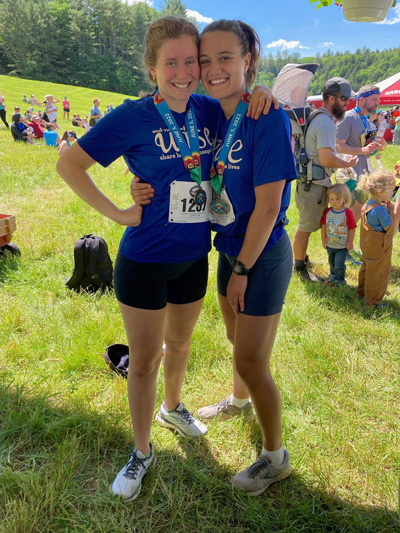
Izzy Kotlowitz & Sarah Wagner, friends and CBHM runners on the WISE team

Izzy Kotlowitz & Sarah Wagner, friends and CBHM runners on the WISE team

CBHM runners, Izzy Kotlowitz and Sarah Wagner, have been running together for the WISE team for five years. They share a passion for running and being involved in their community. They are both from the Upper Valley and have personal connections with WISE, explaining that this is one way they can give back to the community they grew up in.

Izzy was inspired to get involved when she interned at WISE with the parent of a childhood friend who had previously participated in the race. In 2019, Izzy and her mother signed up to run for the WISE Team. It’s a very welcoming and energizing way to get involved with WISE,” Izzy said. “It’s a great way to give some time and some care.”

Sarah shared her interest in running marathons and in supporting local non-profit organizations. “I also just ran the New York marathon…I love to run,” she said, noting that her favorite thing about running is that it is one way in which to show up for yourself and your community.

What excites Izzy about the Covered Bridges Half Marathon is that “the run is like planting little seeds.” When you see runners, some of whom do not know each other well, it normalizes everything when they all come together. “This is one little thing we can put some energy into…the running and the friendship…and raising money for WISE.”

Sarah thinks that the marathon is a wonderful opportunity to spread the word about WISE so people can “be aware of it so they can support it.”

Whether an athlete or someone who just loves to run, the most important thing is the passion behind the purpose. The Covered Bridges Half Marathon is a community event made possible by the creative and thoughtful minds of those who organize it, the 600 volunteers who participated and contributed, and the surrounding community.

When speaking to those who have never run a half marathon before, Izzy explained, “You can go as slow and steady as you want. And people will cheer for you and it’s beautiful.” Racing on behalf of a local non-profit supports individuals and the entire organization, and “feeds right back into the people.”

Share:
Reading time: 4 min
All, Miscellaneous

Lebanon Students Advocate for a Sustainable Future

by Cindy Heath No Comments
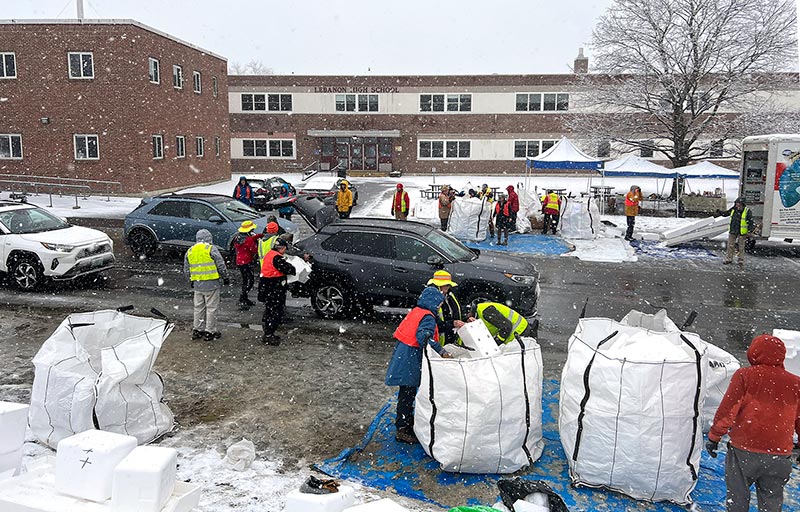
Sustainable Lebanon volunteers collect styrofoam during an April snowstorm

Students for a Sustainable Future (SSF) at Lebanon High School (LHS) was founded in 2000 by Jared Duval, a junior who wanted to inspire his fellow students to work on global warming, composting, and recycling efforts, among other environmental issues. As a senior, Jared successfully led a campaign to prevent a 56,000-square foot supermarket and 302-space parking lot from being built on a wetland adjacent to the school. For his efforts, Jared was awarded the prestigious Brower Youth Award for Environmental Leadership by the Earth Island Institute’s New Leaders Initiative. The award website describes the youth activism that caught their attention: “After a nine-month campaign that involved circulating a petition, recruiting volunteers, letter-writing, canvassing, and frequent attendance at local zoning board meetings, the city planning board narrowly voted to prevent the project.”

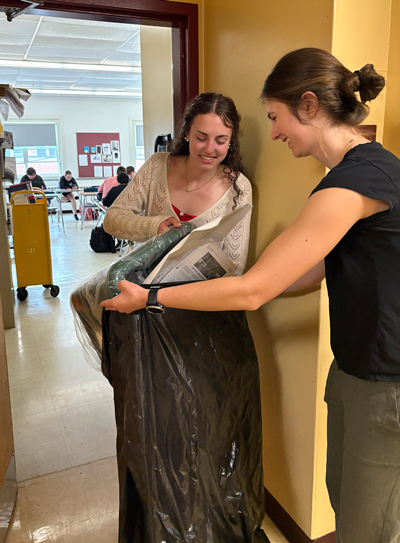
Georgia Gaffney and Mallory Eshbaugh, collecting recycling at LebanonHigh School as part of an SSF initiative.

Georgia Gaffney and Mallory Eshbaugh, collecting recycling at Lebanon High School as part of an SSF initiative.

After high school, Jared pursued degrees in economics and policy, and authored a book, Next Generation Democracy: What the Open Source Revolution Means for Power, Politics, and Change. Twenty-five years later, SSF is still an active club at Lebanon High School, and Jared is the executive director of Vermont’s Energy Action Network – a non-profit that brings together businesses, non-profits, academic institutions, utilities, and government officials to advance data-driven renewable energy initiatives in Vermont. Jared recently received the VT Community Foundation Con Hogan Award for public service for his work. He reflects on the motivation the awards have provided for his continued work on energy issues: “For me, the awards are a positive affirmation for work that is often lonely or contained to a small group. To know that the work is valued by others is just further encouragement to keep providing evidence-based information to help ground and advance climate and energy work.”

Jared speaks of his time at LHS with admiration for his teachers and fellow students. “Nothing is successful unless it’s a team effort, and a lot of other students were involved, including Allison Rogers Furbish, who went on to work for Vital Communities for a time. Joanna Winchester and Sara Vogel were also very involved. A lot of people committed time and effort to it.” SSF was built on the initial efforts of Allison, who started the recycling program and spearheaded other events, including hosting speakers and attending trainings like the Youth Environmental Summit. Eventually, the students got connected to the Sierra Club and their youth training programs.

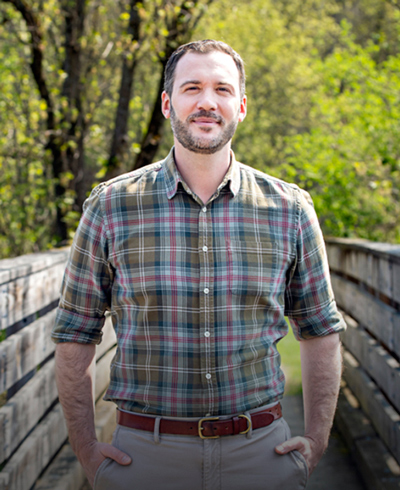
Jared Duval, founder of Students for a Sustainable Future and LebanonHigh School class of 2001 graduate. (VT Community Foundation)

Jared Duval, founder of Students for a Sustainable Future and Lebanon High School class of 2001 graduate. (VT Community Foundation)

A big factor in launching Students for a Sustainable Future was the support of now-retired biology teacher, Mary Maxfield. Jared notes that there was a moment of disconnect between what the students were learning about the value of wetlands for water quality, biodiversity, and wildlife habitat, and the proposal for the large grocery store project on the wetland site. Much of the work SSF did in 2000-2001 was attending Zoning and Planning Board meetings around the proposed project and trying to prevent it from going forward. “An important realization back then that has stayed with me is the power of organizing not just for students but also by students.” Jared notes that groups like SSF allow students to have a direct voice and can be organized in a way that feels right to them rather than being told what to do. “Having teachers like Mrs. Maxfield, who was there primarily to listen and provide support, was really valuable. When the issues feel big and overwhelming, having an avenue to address them in a way that resonates with students is empowering.”

Current LHS student and SSF member Georgia Gaffney is a junior who got involved in the club for the first time this year. “I really care about the climate, and I wanted to find a way to be involved that wasn’t too big of a commitment, and that I could do during the school day,” she says.

SSF has about 20-25 students participating, and is primarily involved in recycling efforts. “Every Friday during our advisory period, we help the janitors by emptying the recycling bins around the school,” Georgia explains. We found that people were throwing liquids into the bins, so we started a campaign with announcements, posters, and signs to educate everyone on how to recycle correctly.”

The group is also planting trees in the school courtyard and applied for a grant to purchase them. SSF is receiving guidance from the Lebanon Tree Advisory Board on tree selection and planting.

The efforts of SSF mirror the goals of another volunteer group in the city – Sustainable Lebanon – which is working on actions related to pollinator health, plastic waste reduction, and energy conservation. Jon Chaffee leads the group’s efforts and has high hopes for more LHS student involvement in environmental activism. “Sustainable Lebanon would love to see more young people getting active about ways that our customary lifestyle affects the environment,” he says. “Choices like buying plastic, driving a gas car, and putting pesticides on the lawn are opportunities for behavior change and education.” Sustainable Lebanon volunteers held a styrofoam collection event in April during a spring snowstorm, with 275 people showing up to drop off foam packaging for recycling.

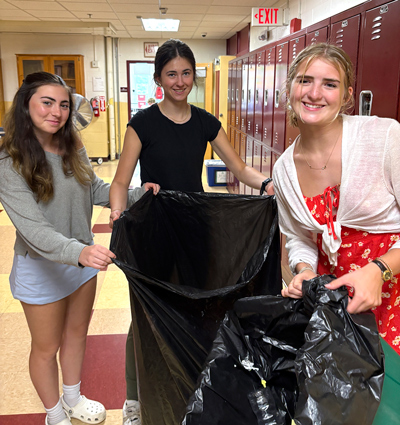
Mariana Utell, Mallory Eshbaugh, and Peyton Rutherford collectingrecycling at Lebanon High School.

Mariana Utell, Mallory Eshbaugh, and Peyton Rutherford collecting
recycling at Lebanon High School.

Past SSF projects have included a composting program in the high school cafeteria, a school garden, and a plastic free lunch day event. The compost stations in the cafeteria allowed students to sort food scraps from their trash and recycling in an efficient way. The stations were designed by the Applied Engineering class, built by the Wood Technology class, and painted by art students. Four 32-gallon totes of food scraps are collected each week, for a total of 4,608 gallons of food scraps each year. The scraps were picked up by a Vermont compost farmer, who then left empty totes. Previously, these scraps went into the trash, and were hauled away to the Lebanon landfill.

The school garden started out with three 4’ x 10’ raised beds, with additional beds recently added. Garlic, onions, carrots, beets, kale, spinach, herbs, were grown and harvested by SSF students, washed, and delivered to the cafeteria kitchen staff once a week. Senior students served as garden interns, working to build the garden, maintain the vegetables, harvest the crops, and work with elementary school students. The plastic free lunch day encouraged the school community to go plastic free for one day to reduce single use plastic waste.

According to Georgia, SSF has plans for future projects to support its mission. “We’re growing, and I’m excited for the future,” she says. “I think the group of senior girls we have will provide some solid leadership to the club. Next year, we plan to do a trash clean up and activities around Earth Day, and one thing I‘m really passionate about is the threat of oil drilling in our national parks.” Georgia is leaning toward studying political science after graduation.

As far as her inspiration for getting involved in SSF, Georgia cites her love of the Upper Valley area and Lebanon in particular. “I love where I live. It’s a great community to grow up in and people really love Lebanon,” she says. “I like growing up in a small town environment, and I really appreciate the city’s efforts to support sustainability and also arts and culture.”

Share:
Reading time: 6 min
All, Cover Story

Did Someone Say “Free Skiing”?

March 5, 2025 by Frank Orlowski No Comments

If you’re a skier, you are well aware of the hit your wallet takes on a weekend ski adventure. Lift tickets for you and a partner, maybe a child or two, add in hot chocolate, a burger and chili, maybe an adult beverage mid day…the costs add up quickly and substantially. That is, of course, unless you are skiing or snowboarding at Lebanon’s own Storrs Hill this winter season.

Thanks to a generous gift from the philanthropic Jack and Dorothy Byrne Foundation, visitors to the Lebanon ski area paid nothing for their lift tickets during the ’24/’25 season. That’s correct; skiers and snowboarders experienced free tickets at the venerable hill in the heart of town. So did area winter enthusiasts take advantage of that economical opportunity?

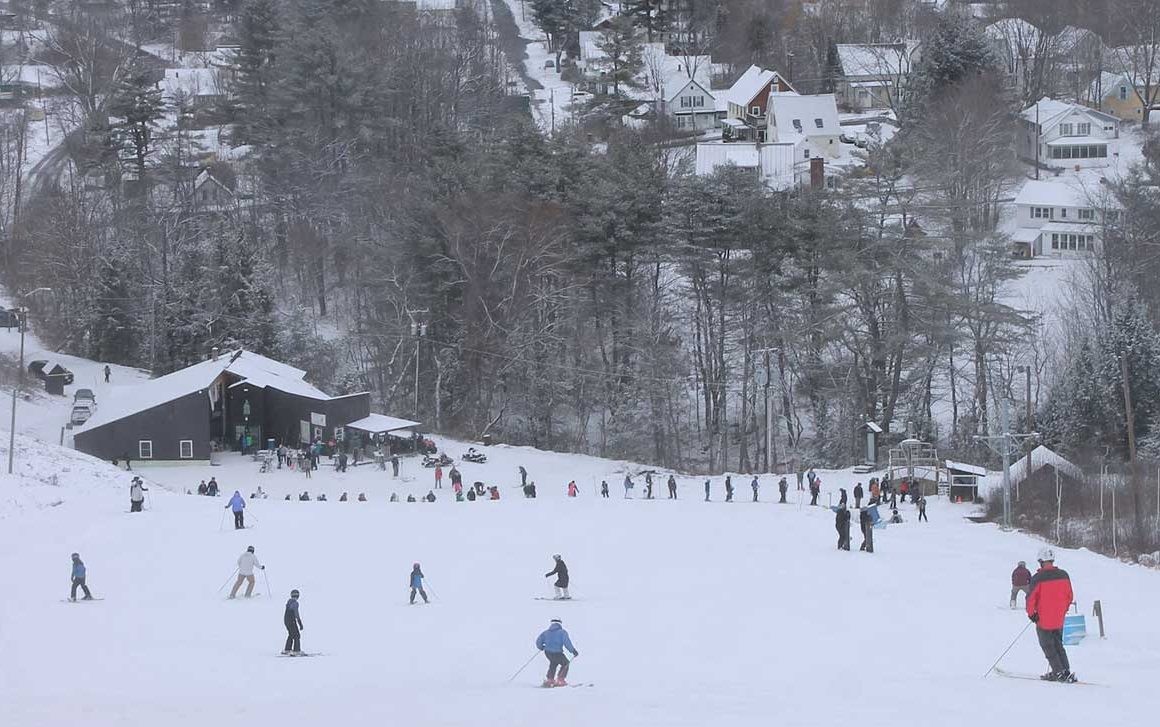
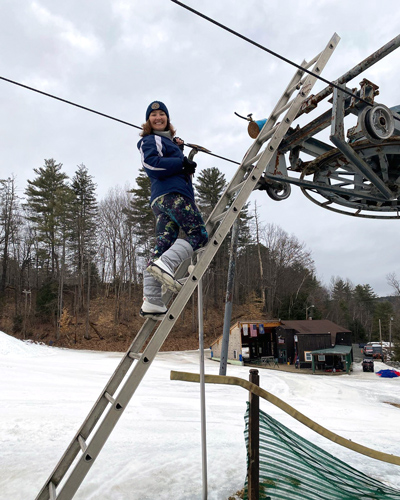
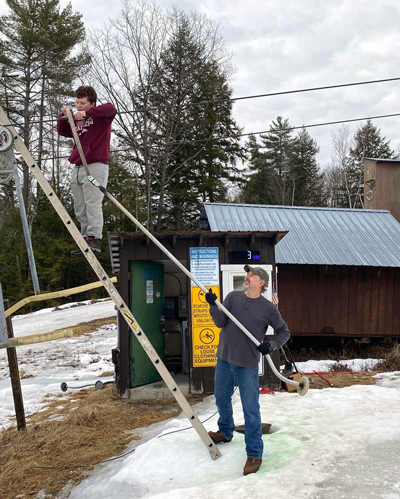
Volunteers help keep Storrs Hill ship shape all season long.

Volunteers help keep Storrs Hill ship shape all season long.

“[On] opening weekend, we saw over 600 skiers from Friday through Sunday,” says Cory Grant, president of the Lebanon Outing Club (LOC), which operates Storrs Hill. That number sounds impressive, especially so when Grant adds, “In the past, we would be lucky to see maybe 15 skiers on a Friday, 40 on a Saturday and Sunday.”

Not surprisingly, the free skiing offer brought many new skiers to Storrs Hill, opening their eyes to this community treasure. “Some locals didn’t know we existed until [now],” says Cory Grant.

Storrs Hill has a long history with Upper Valley skiers. A ski jump was first built on the hill in the 1920s (Storrs Hill originated as a ski jump area), and in the early ’30s, the first alpine trail was developed on the hill. A rope tow was added for skiers in the mid ’30s, which makes Storrs Hill one of the oldest continually operating, lift-served ski areas nationally. Over the years, improvements such as snow making and the POMA lift were added to the ski and ski jump operation.

The history of Storrs Hill cannot be told without mentioning the name of one of the world’s greatest alpine skiers. World Cup and Olympic champion Mikaela Shiffrin spent some of her early years skiing at Storrs Hill, before moving on to Burke Academy and the U.S. Ski Team. In the early 2000s, Shiffrin could often be found practicing for hours on the Storrs Hill ski slope. Another prominent local athlete, Lebanon’s Nick Alexander, learned the art of ski jumping at Storrs Hill as a child, and went on to be a long time member of the U.S. Ski Jumping Team, appearing in two Olympics.

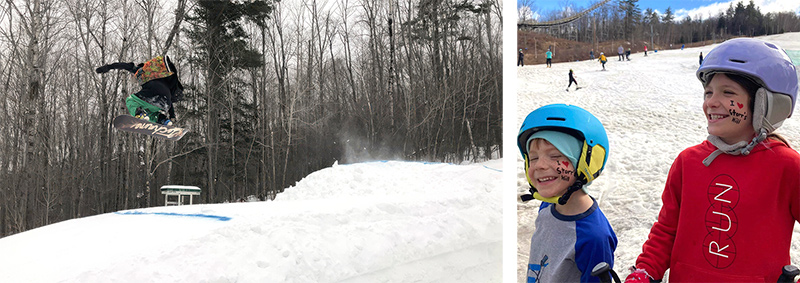
Photos from LOC Facebook page

Photos from LOC Facebook page

The history of Storrs Hill is closely tied to the Lebanon Outing Club. For decades, volunteers from the LOC have operated and maintained the ski area. “The Lebanon Outing Club is a non-profit organization outside of the City of Lebanon, that has to fund the Storrs Hill Ski Area in order for it to be operable,” says Cory Grant. Though one source of funding does come from the City of Lebanon, the LOC must continually seek funds from other sources, such as the Byrne Foundation, to keep operating the ski area each year. Grant says the LOC volunteers spend considerable time writing grants and fundraising for hill operations. Prior to this season, lift tickets and season pass sales also helped run Storrs Hill, though the LOC always kept those prices low to allow as many as possible to use the slope.

“We are still seeking more donations to help with operations; we have to look for business support and community support to keep the ski area functioning,” says Cory Grant, adding, “We have had some unforeseen activities that have cost us a lot this season with snowmaking, and grooming equipment.”

The charitable gift to offer free skiing this winter is not the first time the Byrne Foundation has assisted Storrs Hill. In recent years, the Byrne Foundation provided grants to repair and upgrade equipment and mechanical operations at Storrs Hill.

Snowmaking at Storrs Hill ski area, overlooking downtown Lebanon.Snowmaking is one of the many jobs

Snowmaking at Storrs Hill ski area, overlooking downtown Lebanon. Snowmaking is one of the many jobs

With such a dramatic increase in the number of skiers at Storrs Hill this season, it seems natural that more LOC volunteers would be needed to assist in operations. Cory Grant confirms that, saying, “Volunteers are roughly one per top, and one per bottom [on the slope]. Now we are looking to have at least four so we can do shifts and have a couple of people to help at bottom with [those with novice] abilities.”

So with the increased number of patrons, does the LOC welcome more volunteers? “Yes, we are looking for as many volunteers as possible,” Grant says.

Having a local, community ski area, especially one that offers its slopes at no charge, is a rarity. To make that possible, the community must depend on the generosity and goodwill of others. With a little help from volunteers and donors and grateful patrons, Storrs Hill will remain a hidden gem in Lebanon for years to come.

For other winter activities to explore in Lebanon, read “Mastering the Art of ‘Wintering’ in Lebanon” in this issue on page 22-23.

Share:
Reading time: 4 min
All, Cover Story

Striking at Success on the Playfields: Lacrosse Club Propels Local Athletes to High Levels

by Isabella R. Vanasse No Comments
Coach Taylor Miller and Lebanon resident, Caroline Knittle.

In the spring of 2022, the former director of the local girls athletics program, Echo Lacrosse, announced she was moving out of the area. When parent and educator Vicki McCorkle heard this, she immediately stepped up to the plate. She knew she wanted her three young daughters, and the broader Upper Valley community, to continue to benefit from a competitive youth lacrosse program. “I’ll do whatever it takes,” McCorkle had reported to the former director, expressing her intentions to keep the program going.

So after Vicki McCorkle expressed her willingness to lead, the former Echo Lacrosse director “paired [me] up” with another parent and educator, Kim Higgins, she says. Higgins had played Division I college lacrosse at Virginia Tech.

Morgan Fitts and Vera Linter at Echo Lacrosse summer camp in Lebanon.

Morgan Fitts and Vera Linter at Echo Lacrosse summer camp in Lebanon.

Higgins became the new head coach of the Lebanon-based program, while McCorkle became its director of operations. Like McCorkle, Higgins is also a mother of three growing daughters, so they had seen each other on the sidelines from afar prior to their newfound partnership.

McCorkle attests that Higgins has become “a friend I never knew I needed…We both saw the value in this program to the community.” Both have certainly shown unflagging commitment to Echo Lacrosse. Over the years, it has grown from a small exclusive program, serving primarily the Hanover and Norwich communities, to an organization that draws girls and boys from all over the Upper Valley, including seven towns last season, with many players hailing from Lebanon.

The expanded program now offers year-round programming for girls in grades 3-12: from a club team in the spring, camps in the summer, Sunday drill sessions in the fall, and indoor skill development in the winter, to keep development of technical skills sharp. Boys in grades 3-12 now too benefit from a high level of competition and offerings three seasons a year, including camps, fall Sunday drills, and competitive spring club teams, with all play rooted in New Hampshire.

In the winter, girls’ programs practice indoors at the CCBA (Carter Community Building Association), a nonprofit recreation and fitness organization in downtown Lebanon. Why continue with lacrosse in the winter if girls are already committed to their ice hockey or basketball teams? To Nordic or Alpine skiing organizations? Higgins paints the landscape: The sport of lacrosse is growing in regions of the country, and world, with prolonged outdoor play. “It’s an incredibly technical sport in terms of hand-eye coordination,” she says. “If you’re able to play lacrosse year long, you have a technical advantage.”

In the warmer months, athletes practice on the CCBA-owned fields behind the brick and mortar facility. CCBA “has become a pivot point for us,” explains Higgins. “It’s centrally located, so people can see what lacrosse looks like out here on the fields…there’s still a lot of people who don’t know what lacrosse is…and the staff have become a great partner supporting us any way they can.”

Team cheer at the end of practice.

Team cheer at the end of practice.

But Echo Lacrosse is more than a recreation outlet for Lebanon youth and their neighboring p eers. The organization’s directors have aimed to develop an extraordinarily high level of competitive play that stays as local as possible – a gem of an offering these days.

Competing on a club team for young athletes of the Upper Valley typically requires families to commute to Manchester or Boston, just for practices. Club team travel for away-games stretches to the far reaches of the Northeast: for lacrosse, the hotbed communities are Maryland, Philadelphia, and Long Island. Game and tournament travel to these locations, or Florida or Texas, typically occurs eight to a dozen times annually.

That’s why Higgins and McCorkle set as a top intention for their program to provide local lacrosse players with a high level of competitive play and multi-season skill development within their own broader Upper Valley community.

Enter Echo Lacrosse’s spring club program: Echo’s primary season of operating center-stage. The eight boys’ and girls’ Echo Lacrosse teams compete against other New Hampshire club teams through the New Hampshire Youth Lacrosse Association (NHYLA). Echo hosts its home games at the Kimball Union Academy (KUA), also a fairly central location for its Lebanon High School, middle school, and elementary athletes.

“It’s been a labor of love,” recounts McCorkle. Beyond serving their daughters, McCorkle and Higgins have been able to help Upper Valley families stay in Lebanon and Meriden for a high-level of competitive play during the travel club season, and in keeping their hands on the stick in the off-season.

Juggling eight spring teams and year-round programming, Higgins and McCorkle are far from a two-woman show. Many layers of collaborative and selfless contribution have watered and fed Echo’s profuse and quality expansion. Higgins and McCorkle are quick to spread the credit around the table: Higgins opens by noting, “We inherited a very nice program.” What’s more, Echo receives a steady amount of support from a vast and impressive array of coaches, guest speakers, and supporting organizations, such as Lebanon’s CCBA and Empower Lacrosse.

Yes, Echo Lacrosse skillfully “leverages” the incredible array of coaching and educational resources within the Upper Valley community. But much more than this, Higgins continues, “in this community, there’s a lot of willingness: [people routinely ask] ‘how can we help?’”

For instance, Echo has benefited from a cast of coaches that includes former and current Division I players – from Dartmouth College and elsewhere – former high school players, and expert teachers: Taylor Miller, for one, a current medical student at the Geisel School of Medicine and graduate of West Point. She played goalie on the military university’s Division I lacrosse team and now presently coaches goalies for Echo Lacrosse.

The diversity of contribution has also come from local sports psychologists, who talk to the players about balance and emotional well-being, and coaches who are trained or experienced educators – who know the ”science of learning.” Higgins clarifies, “educators know that learning a technical skill like lacrosse is not a linear path. There are plateaus, there are dips when new skills are acquired.” Even more than this, the Echo Lacrosse directors work to educate their experienced lacrosse coaching staff with teaching principles, and their experienced educator coaching staff with the principles of the game. “We have a good balance [of type of coaching expertise] on most of our teams,” Higgins describes.

Support has also come from the distinct complementary organization, Empower Lacrosse, which exists exclusively to offer financial support to Upper Valley players, and their families. Proof of income is not even required. According to Higgins and McCorkle, the Upper Valley Lacrosse community really wants everyone to be able to play lacrosse.

Empower Lacrosse is not the only player committed to keeping the sport financially accessible. Echo itself recently paired up with CCBA to offer a gear swap to make “this expensive sport accessible to everyone.” Higgins continues to marvel at the behind-the-scenes collaboration: the dynamic with CCBA and Kimball Union has always been one of mission-oriented problem-solving, she reports. “The conversation with them will start with the query, ‘we’re thinking about …a gear swap (for instance); there’s a need…’ So we sat down and had a problem-solving meeting.” The response is always unequivocally, “‘sure, let’s think about this.’”

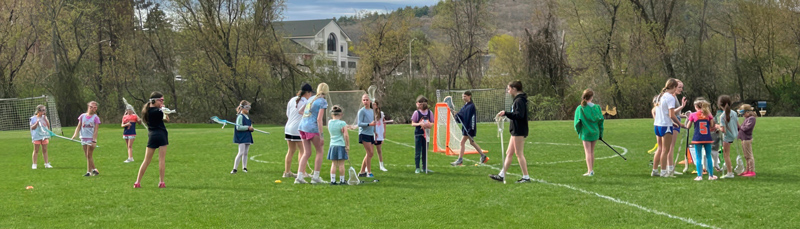
Echo Lacrosse practicing on playing fi elds at the CCBA in Lebanon.

Echo Lacrosse practicing on playing fi elds at the CCBA in Lebanon.

Another noteworthy contribution from the leadership at CCBA has been to support Echo’s three weeks of half-day summer camps by partnering to provide wraparound childcare.

For their own part, Higgins and McCorkle strive to collaborate beyond Echo’s domains as well. When winter snow flurries begin to fly, Higgins and McCorkle reach out to query how to best support the high school lacrosse teams during Echo’s off-season development program. Higgins recounts, each year at this time, “[We] contact the high school coaches to ask, ‘How can we support you? Is there any [specific skill] you need us to work on [with] your players? How can we help your players get ready?’” What other types of support do your players need?

This cycling back to reflecting on how to best support the personal development of young athletes weaves throughout this interview for the Lebanon Times. McCorkle opened our evening’s conversation at CCBA musing, “We talk about this a lot. How to help each child develop not just as an athlete, but a person and a friend.” Higgins concurred: “We focus a lot on the intangibles…We encourage whatever [activities] a child is interested in…We also talk about how to hold each other and ourselves to high standards, standards of excellence…in a non-confrontational way.”

The focus and commitment of Echo’s second phase, with McCorkle and Higgins at the helm, has paid off: in their community-wide relationships, their friendship and professional collaboration with one another, their impact upon countless Lebanon youth, in the saving of innumerable Lebanon families from extensive driving beyond state limits; and not least of all, with the successes of their own daughters on the lacrosse field.

Lena Braga and Maddy Pearce at Echo summer camp in 2024.

Echo Lacrosse practicing on playing fi elds at the CCBA in Lebanon.

Higgins’ eldest, Sadie, is beginning her first year playing lacrosse for the Naval Academy. Her middle, Maggie, is a junior lacrosse player at Holderness Academy. The youngest daughters of both directors, Campbell and Clare, play on the eighth grade teams and help with the younger Echo Lacrosse groups.

McCorkle’s middle daughter, Allie, is a current player at the University of Colorado, another hotbed lacrosse region of the country. McCorkle’s eldest daughter, Maddie, just completed her tenure as a standout on the starting roster for Duke University, her father’s alma mater. She’s now working toward a master’s degree at the University of Virginia, studying public policy, with an interest in sports leadership. Maddie looks at sports philosophy underpinnings: how to help all players, not just the standouts, to feel belonging?

Both McCorkle and Higgins, as current and former educators, both know the importance of respectful and positive interactions. At the Ray School in Hanover, where McCorkle is a speech language pathologist, the philosophy of respectful interactions predominates their educators’ perspectives: at the Ray School as at Echo, “How can everybody feel seen? Everybody [needs to] get a greeting …Every single person should get a touch point, (for example) ‘I’m so glad you’re here,’ explains McCorkle. “People need to feel seen and valued for more than being …the best [at a sport].”

The focus on steady service, focused contribution, and the whole child’s well-being seems to be bearing fruit for many.

When Higgins observed the girls arriving at the first session of the winter program, returning to Echo Lacrosse and CCBA after a month away, she heard exclamations of greetings between not just teammates, but friends. “We’re building something special.” McCorkle nods in agreement: “you get a sense we’re their people. We are their community.”

“It’s about so much more than lacrosse,” McCorkle summarizes. “It’s about community and learning about yourself, as a person and a teammate.”

During all seasons of the calendar, from the neighborhood gym and fields of CCBA, young Lebanon athletes are maneuvering, spinning, pivoting, and stretching their lacrosse sticks – and spirits – towards their goals, and their own personal best.

Share:
Reading time: 9 min
All, Around Town

Nature’s Wisdom in Art

by Rose Terami No Comments

We’re excited to share that one of the Lebanon Times’ beloved writers, Cindy Heath, has a fantastic art show on display at the Kilton Library in West Lebanon through March. Cindy is a talented artist and writer who cares deeply about the environment, evident in her work with local gardens and as a member of Sustainable Lebanon, and in her constant advocacy for protecting and respecting the nature around us.

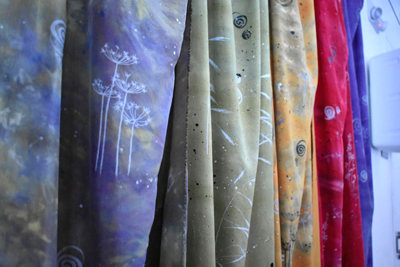
Cindy’s hand-dyed and screen-printed silk panels, representing the colors on the color wheel.

Cindy’s hand-dyed and screen-printed silk panels, representing the colors on the color wheel.

Her quilted art exhibit, titled “Nature’s Wisdom”, features vibrant and evocative depictions of various elements of nature that are important to Cindy, and that she hopes will inspire others who view her artwork to consider their relationship with the natural world.

“I’ve always been an environmentalist and drawn to nature themes,” she says, explaining that this exhibit is “intended to represent the fact that we can learn so much from nature.”

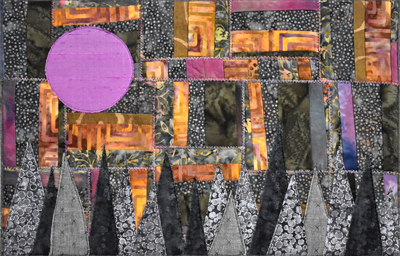
Cindy employs biomimicry (nature inspired designs) to demonstrate this in her quilted artwork. One piece, “A Gift From the Sun”, depicts pieces of a Sun in fiery yellows and oranges and deep, mysterious reds moving across the fabric canvas confined by a quilted frame. “That piece says a lot to me about how everything on Earth and in life starts with the Sun; we need it to live.” Another of Cindy’s favorites, “Night Forest”, shows “dark skies” and a “raspberry-colored moon” above a shadowy forest of trees in grays and blacks.

“Night Forest”

“Night Forest”

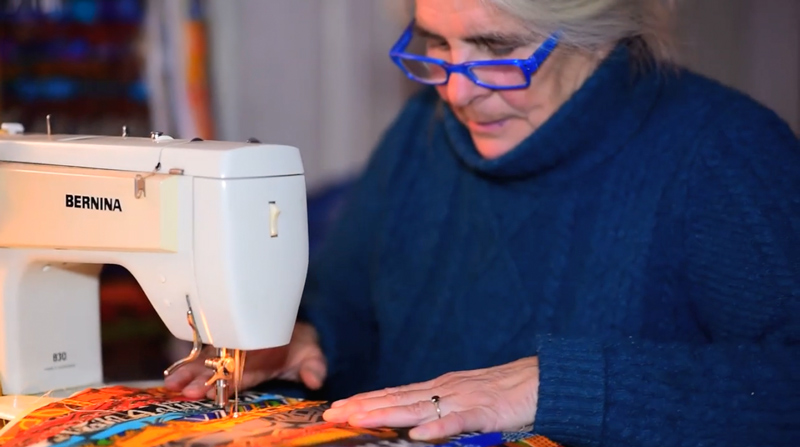
Cindy started making quilts as a child, learning from her mother how to work a sewing machine and sew her own clothes. In the early ’80s, Cindy rediscovered quilting and sewing in a new light through art quilting, a method of merging art with traditional quilting. “Quilters who had been working in textiles making full bed quilts with patterns started to shift to freelance designing quilts and wall hangings,” Cindy says.

Adapting to this new trend, Cindy started taking classes with professional art quilters who taught her different styles and techniques to incorporate into her own work. “I gradually began to learn mixed media and how to dye my own cloth,” she says. “Other pieces contain some of the cloth that I’ve dyed, but there’s also commercial cloth [and] there’s textiles that I get at thrift stores or people give me.”

“Night Forest”

“Night Forest”

Colors have since fascinated Cindy, and she tries to feature every color of the 12-color colorwheel in her art – a theme she’s been working on for a few years. “When I do a series, I try to think about what it might look like in all the different colors of the color wheel and variations of those colors,” she says. Hand-dying her own cloth helps achieve that goal. One part of this exhibit, a series of panels of silk cloth – represent “the sky and air and movement, energy,” she says, using a screenprinting technique to layer different designs onto fabric that she previously dyed. “You’ll see if you look closely…I had several shades of screenprinting, so it went from white, to gray, to black, so that there’s different variations of white in it.”

“Some pieces take a few days once I get the idea,” Cindy says, but a piece as big and intricate as her colored panels takes around a year to complete, needing time to dye her fabrics to just the right shade before adding their finishing touches.

Cindy’s art show will close with a reception on March 20th (fittingly, the spring equinox), from 6-8 pm at the Kilton Library in West Lebanon.

“I hope people take the time to read the descriptions next to some of the pieces about how nature is operating in the world,” she says, “and how nature can help us with our [own] designs and systems.”

Share:
Reading time: 3 min
All, Miscellaneous

Gusanoz Aims for Another Twenty Years

by Richard Ford Burley No Comments
Nick Yager at the counter in Gusanoz Express, next door to the flagship Gusanoz on Lebanon’s “Miracle Mile”. Photos by Richard Ford Burley

When the news dropped at the end of December that two restaurants in the Gusanoz family would be closing their doors, it felt like another sign of the times for an increasingly challenging industry. Costs for restaurants are rising, margins are shrinking, and uncertainty is the economic word of the hour. But for Nick Yager and Maria Limon, co-owners of the restaurant that’s been serving Mexican food to the people of Lebanon for almost twenty years, there might be a better word to focus on: perseverance.

Gusanoz first opened its doors on August 16, 2005, and has been a fixture on Lebanon’s ‘Miracle Mile’ ever since – but it hasn’t been the couple’s only venture. In 2006, they expanded briefly into Woodstock: “that lasted a little over a year,” Nick says. “Which was great in the summertime, but in the fall, everybody would go home and it just wasn’t sustainable.” In 2010, they tried again in Hanover, which worked well until they took on an ice cream business. “[We] found that ice cream was a business that was very foreign to us.” Throughout it all, their flagship location carried the weight well. “We had a good crew here, and we focused on this for the next ten years or so.”

The most recent challenges for the business began in 2021, with the purchase of Mickey’s in Enfield. The previous year, the couple had worked with their son Eddie to open Lalo’s, a taqueria on the Lebanon Mall, and while it wasn’t yet profitable, it wasn’t the strain on the finances that the Enfield location would become: “We were having to put in probably $10,000-$15,000 a month [to support Enfield],” Nick says. “Gusanoz really couldn’t sustain that type of cash flow going out to support that business.”

Talking about exactly how bankruptcy happens, Nick quotes Hemingway: “Two ways: gradually, then suddenly.” A consultant determined that the Enfield location wasn’t financially sustainable. Lalo’s could have survived under Chapter 11, but would have had to make some compromises on ingredients and pricing that were deal breakers for Eddie. But the flagship location? “If we just met our normal budgets, [it] could survive.”

Nick Yager reveals a flavorful batch of slow-cooked birria destined for tacos. Photos by Richard Ford Burley

Nick Yager reveals a flavorful batch of slow-cooked birria destined for tacos. Photos by Richard Ford Burley

“Chapter 11” is the chapter of the US Bankruptcy Code that can help a business make a plan to keep its doors open and its staff employed. In fact, thanks to the restructuring the business is undergoing, Nick was able to offer positions to “anybody that was looking for something” from the closing restaurants, in the end taking in five employees from Enfield and one from Lalo’s.

But this isn’t the first time the restaurant has needed to shift directions to keep moving forward. “The day that they shut down indoor dining in New Hampshire [due to Covid], we had a staff meeting, and we said we’re going to reopen tomorrow and we’re going to focus on ‘to-go’…We shifted gears almost immediately, went out and bought a couple of delivery cars…We hit it hard and we just kept going.” Doing so set the stage for their latest move.

Just next door to the Lebanon location are big signs reading “Gusanoz Express” and “To Go Pick Up Here.” In its previous incarnation, the space had been a podcast studio. Then it was the focus for their Covid-era food prep kitchen and pickup, but the need for that had passed, and they’d been searching for another use for the space that would also be a revenue center. “So in December, we opened up Gusanoz Express,” Nick says. “The intent is to have a quick-serve menu that’s ‘to go’ and delivery, so we make burritos, nachos, tortas, birria tacos, and a couple other things…you can just walk in or you can order off the menu online.” Customers can also order through DoorDash, and they’re working on GrubHub and UberEats as well. “It’s a way to access Dartmouth, a bit easier as far as the population there goes.” The hard part? Getting the word out.

Back when they first opened, Nick says, “there were basically three main TV stations, some cable that everybody watched, and a couple of social media platforms…back then it was easy to place an ad and there would be a response.” He laughs, remembering: “We used to do ads on CNN.” These days, the media landscape is more of a challenge, but they’re seeing some success on the DoorDash front, with “probably $2000-$3000 a week…which is decent volume.” He’s hopeful locals will spread the news through word of mouth.

Another revenue driver on the horizon is Gusanoz-branded sauces and salsas. They put in the work a decade ago to get the needed licenses and developed four hot sauces and a salsa. “We’re certified to sell those anywhere in the country,” Nick says. But, “since we have the license, we can also bottle other things that we can sell out of the restaurant.” Bottles of their red enchilada sauce will be back soon. “It’s super simple: it’s all natural, chili peppers, tomatillos – very simple ingredients, but delicious.” After that, a green enchilada and some salsas, too. “So that’s the goal…I can help cover [Gusanoz Express] and also work on bottling, because the prep kitchen is right back here.”

Throughout the challenges, Nick says there’s been a lot of support from the community. “There’s a lot of positive vibes from people. We get some of it directly from people that know us or see us, and we get a lot of feedback from the staff, from regulars, and other folks too who are coming in because they heard we’re in a situation. And then on social media, you see some positive comments about supporting the Lebanon location, too.” Between that, the restructuring, the new efforts, and a history of elbow grease and, again, perseverance, Nick and Maria are hopeful for the future of Gusanoz: “If the economy holds strong, and if product pricing doesn’t shift for our ingredients, we should be on the path to another twenty years. This is our twentieth year of business and we’d like to do another twenty.”

Share:
Reading time: 5 min
All, Cover Story

From Page to Stage in a Day: Lebanon Residents Behind the Upper Valley’s “24-Hour” Play

November 29, 2024 by Siobhan Kizis No Comments

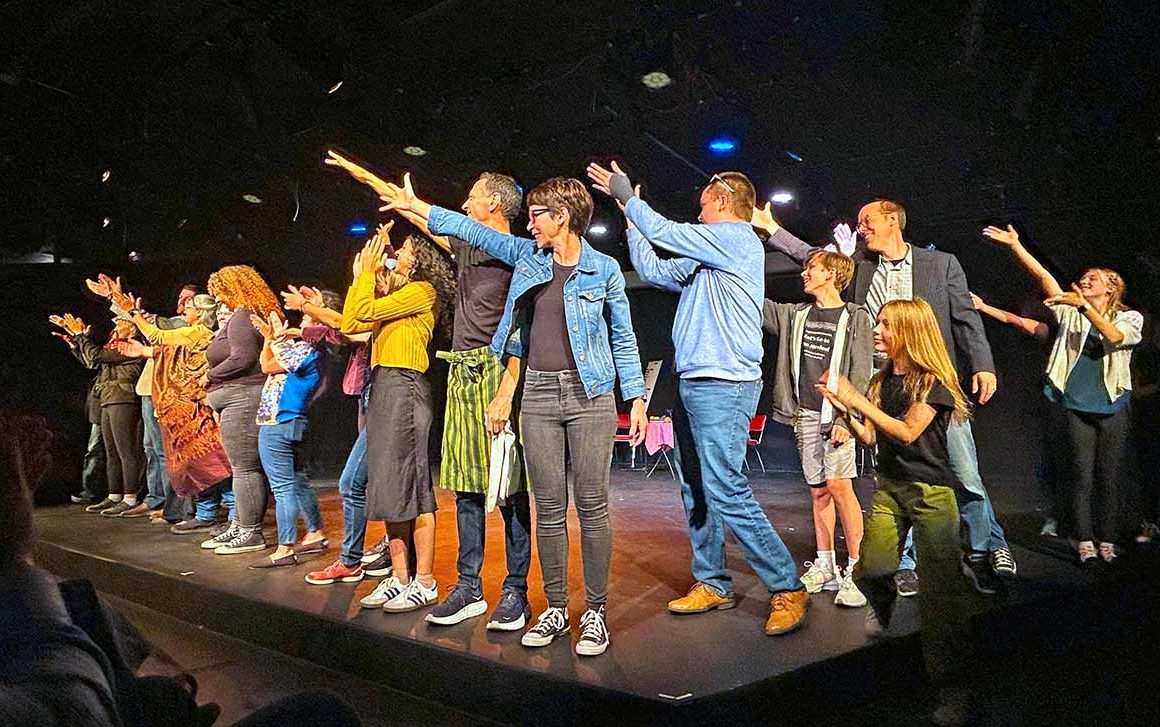
After a successful first year, the Upper Valley 24-Hour Play Fest was back this September, held at the Briggs Opera House in White River Junction, and organized by Lebanon residents Rachael Thomeer and Molly Raposa. What is a 24-hour Play Festival? Great question! It’s just what it sounds like: 24 hours for participants to audition, write, direct, rehearse, and then perform short plays in just one calendar day.

With the festival beginning at 7pm on a Friday night, the actors audition (everyone is cast), and the writers stay overnight to work on their plays until the wee hours of the morning, when they then head home for some sleep. On Saturday morning, the directors and actors arrive to review scripts and hold the casting session, and then the tech crew arrives, rehearsals take place, and a performance begins to take shape. By 7pm Saturday night, the plays begin – six ten-minute plays – written, rehearsed, and performed in just 24 hours, and never seen before by any other audience. The Play Fest’s theme this year was “The Day Everything Changed”.

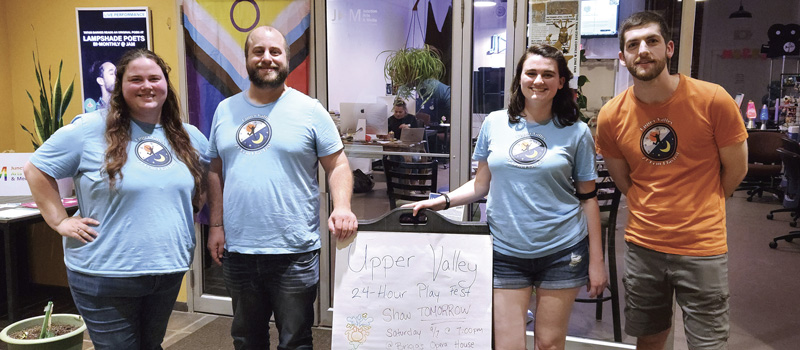
Upper Valley 24-Hour Play Fest Producers: Molly Raposa, Aaron Richter, Rachael Thomeer, Loriston Fennell

Upper Valley 24-Hour Play Fest Producers: Molly Raposa, Aaron Richter, Rachael Thomeer, Loriston Fennell

I met with two of the four producers to ask them some questions – Rachael Thomeer and Molly Raposa. Rachael has a background in community building, social events, and theater, and she served on the board of the Upper Valley Young Professionals. Having participated in a couple of play festivals in college, she had a vision of bringing such an event to the Upper Valley when she moved here in 2021, with the goal of inviting people from the broad community to come together for a fun, low-barrier, all-inclusive experience. She explained that the small time commitment (of 24 hours) helps make the event accessible to many, and the aspects she looks forward to the most are the camaraderie and team-playing of the participants who all work to bring the plays to life.

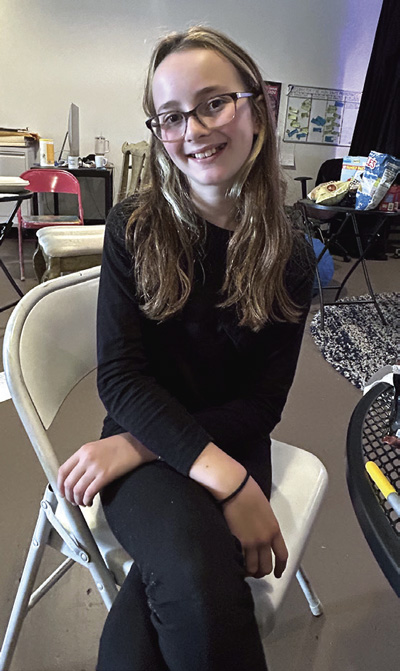
Eliza, UV 24-Hour Play Fest actress

Eliza, UV 24-Hour Play Fest actress

Outside of organizing the Play Fest, Rachael also works in the box office at the Lebanon Opera House, and she loves how walkable downtown Lebanon is. “I like walking on the Rail Trail, going to the summer farmers’ market, and visiting the downtown businesses (Katie’s Cookies is my favorite!),” she said.

Molly also has a theater background, having majored in theater management and participating in play festivals at college as a director. She gave a shout out to the “Upper Valley Ladies 20s and 30s” group on Facebook, which is where she was first introduced to Rachael last year and joined in her mission to hold annual play festivals for the Upper Valley.

Both Rachael and Molly live in Lebanon, and “The festival has always been rooted in Lebanon,” Rachael said. “Since its founding, we’ve always had at least half of our production team live in Lebanon.” A few of the actors this year hail from Lebanon, too.

Even though the event itself is only 24 hours long, the producers and collaborators – all of whom are volunteers – work on making this event possible for months. In the months of planning leading up to the festival, the producers met at libraries in Lebanon and Hanover to plan the event. Rachael said that she sometimes forgets that the UV 24-Hour Play Fest is a real thing that an audience is coming to watch: it’s “not real until it’s real,” she said, and “it’s so short it feels like a dream.”

“It’s exciting and so nerve wracking at the same time,” Molly explained. “We are so heavily involved, and on the day-of, we’re starting to pass [what we’ve worked on] off to other people [actors].” She expressed how exhilarating the leap of faith and trust feels in passing their idea over to the Play Fest participants and seeing what they come up with over such a short period of time.

As far as this kind of event being a valuable part of the community, they both had a lot to say. Rachael said that this kind of event brings people together, especially during a time when social ties have disintegrated in recent years. “We really try to be inclusive and welcoming,” she said. “It’s an opportunity to let people try new things, and I think that’s just really empowering for them…We want to offer a low barrier of entry, and we want to make it really low stakes.” The first priority is that “we want everyone to have fun, feel safe, and be comfortable,” she added. “Our second thing is that [we] put on a good show. We really care about our [audience and actors] and their experience.”

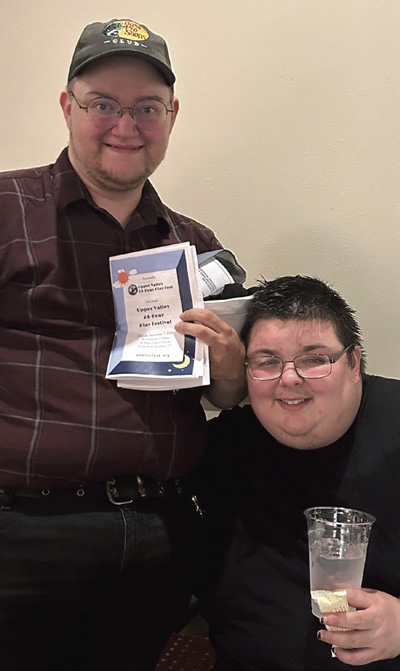
Aran Eagle (L), director and Talon Eagle (R), actor

Aran Eagle (L), director and Talon Eagle (R), actor

Molly said, “we’re just so passionate about bringing accessible art to the Upper Valley.” A 24-Hour Play Fest is a unique niche that is “awesome for the community.” A lot of people don’t want to make a big commitment (time wise), but still want to be involved in theater, and the Play Fest provides a great, low-commitment opportunity for them. “And, if you walk away from the day wanting to get more involved in the local theater scene at all of our amazing local arts venues, that’s awesome, and that’s a win for us,” Molly added.

This event is all-inclusive, no experience necessary, and come as you are, with some participants trying it for the first time, while others may have a background in theater and acting. Everyone gets to participate and share in the collaborative process, making it a rewarding and community-building experience.

As far as any changes since last year’s event, there were a few notable things. The auditions used to happen the morning-of, after the writers had written the plays. However, not knowing the demographics of the actors ahead of time, they wrote plays that were not necessarily written with specific demographics in mind, such as more kid-friendly scripts. This year, they had the writers watch the auditions, so they had a better idea who they were writing for, and this made a big difference. They learned a lot about the venues as well. Last year, they held the first Play Fest at Parish Players, and it was such a huge success; not only did they have to turn away participants because of lack of space, but the festival sold out! So, this year they found a larger space and ended up having over double the number of participants – 60 participants in total, with the number of children increasing and even a couple of families joining the mix.

Eliza, an 11-year-old participant, said this was her first play festival experience, though she has been involved with plays in the past at camp and was in

A Christmas Carol at Northern Stage. What excites her most about this event is the pressure of it. “I work best when I’m under stress,” she said. “This is really motivating but also scary, in a good way.” She thinks this is a valuable part of the community because it “causes a lot of people who share the same interests to come together and meet new people, and share their passion,” she said.

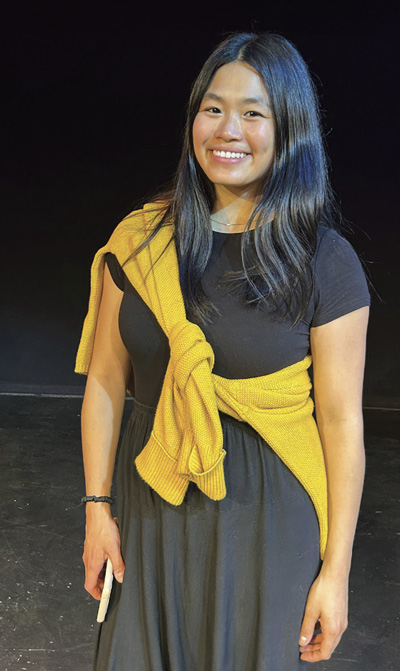
Fauve Dela Cruz, actress

Fauve Dela Cruz, actress

Alexander Bulova, one of the co-directors who participated in 24-hour play festivals back in college, said that the most challenging aspect of the event is having only 24 hours to pull everything together. He is very used to coming into rehearsal having already done the blocking and preparation, and you don’t have that kind of time with the 24-Hour Play Fest. “This is really an opportunity to step out of my comfort zone and just work in the moment, learn with the actors, and discover stuff in the moment, which is really valuable,” he said. He explained that it’s important to keep things fresh for the performers, and that you don’t want them to “over act” and be tired by show time. “You want a little bit of uncertainty before you go on stage, because that’s where the acting and the magic comes from, is working with that audience and discovering stuff in the moment.” Also, the format removes barriers between the different roles, and everyone comes together. “This is a great opportunity for people to step out of their day-to-day lives and their jobs and just have fun.”

Play Fest actor Rawan Bresselsmith, from Lebanon, is new to acting, though you would never know; she is such a natural! Her background in ballet lends to her familiarity with stage performance, and part of her studies in medical school require some role playing. This was her first time taking part in a play festival, and she explained that the most challenging aspect of a ten-minute play is learning to memorize lines. And, in their play, they had a few scenes taking place all at once, which made it a challenge to stay focused on her next line. “This is a great way to meet people that I otherwise never would have crossed pathways with,” she said. “Coming together to do something collectively challenging is so fun…this is the essence of teamwork.”

Fauve Dela Cruz, another actor, said this is her second year involved with a play festival. What excites her most is “how it is so uncertain, and we have no idea what the outcome is going to be,” she said. “Everyone is obviously pushing to their best, but there’s no pressure to make it perfect…You literally have no time to get into your head, you’ve just gotta do it and go for it, and that’s the beauty of this whole thing that everyone’s going for…because you’re only doing it once.”

“It requires a lot of different people of different abilities, and so it pulls from all these different areas of the community,” Fauve added. “It will pull people from all walks of life…This is such a great entry-level way of getting into it and getting your feet wet and seeing if you like it, versus a huge commitment for a full production.”

Rawan Bresselsmith (L) and Jane Svindrychova (R), both UV 24-Hour Play Fest actresses.

Rawan Bresselsmith (L) and Jane Svindrychova (R), both UV 24-Hour Play Fest actresses.

Talon Ansteth heard about the UV 24-Hour Play Festival from his partner, who participated as a director. He was planning on being an usher, until someone dropped out from acting and he decided to audition. He participated for a number of years with the “Arts In Reach” program in Durham, Nh, and this really piqued his interest and involvement in theater.

What excited Talon most is that, “from the group that I’ve been in, they’re very inclusive, and they understand that I can’t do a lot of things, and they’re really helping me express myself in the play itself.”

You might not think it takes long to put something like this together, but there is always more behind the scenes than we ever imagine. It takes months to find just the right space, the sponsors and partners that come together to make this possible, the creative marketing, and all the thoughtful coordination. The four producers, including Molly, Rachael, Loriston Fennell, and Aaron Richter (who is the music director/organist and admin assistant at the West Lebanon Congregational Church), all volunteered their time, energy, and effort to make this happen. And, at the end of the night, a successful, exciting show that left me with such enthusiasm that I just might have to participate next year myself!

Share:
Reading time: 9 min
All, Cover Story

In Loving Memory: A Community Vigil on the Winter Solstice

by Devin Wilkie and Sophia Gawel No Comments

December 21 marks the winter solstice this year – the shortest day and longest night of the year, and the moment when the Northern Hemisphere tilts the farthest away from the path of the Sun in the sky. This has become the annual date of the Homeless Memorial Vigil that is the product of efforts by LISTEN Community Services, Lebanon Human Services, the Upper Valley Haven, the First Congregational Church of Lebanon, TLC Family Resource Center, and a range of other individuals and organizations, many rooted in Lebanon. The 2024 vigil will take place on December 20 starting at 5:30pm at LISTEN’s campus in White River Junction, in memory of those who have passed in the last year, whose lives have been shortened due to homelessness. The event is open to anyone who wishes to attend to recognize and grieve the lives that have been lost.

The winter solstice has long been the setting for memorial vigils across the country for those who have been without stable housing. In the Upper Valley, the event has taken many iterations over the past few years. The event, which centers on the reading of names of the departed, has also featured stories about the departed, hymns, and calls to action. In recent years, the event has taken place at various locations in the Upper Valley, including Colburn Park in Lebanon, as well as on the Upper Valley Haven’s campus in Hartford. In 2018, the vigil included a walk across Lyman Bridge to symbolize the bi-state nature of the event; in 2020, the vigil was broadcast virtually. This year, the event will be co-sponsored by organizations in Lebanon and Hartford and will take place outside LISTEN’s Community Dining Hall, a common destination for many seeking a warm dinner in the evening. Following the event, organizers, community leaders, and other members of the regional community will hold vigil, aiming to keep a campfire lit throughout the night.

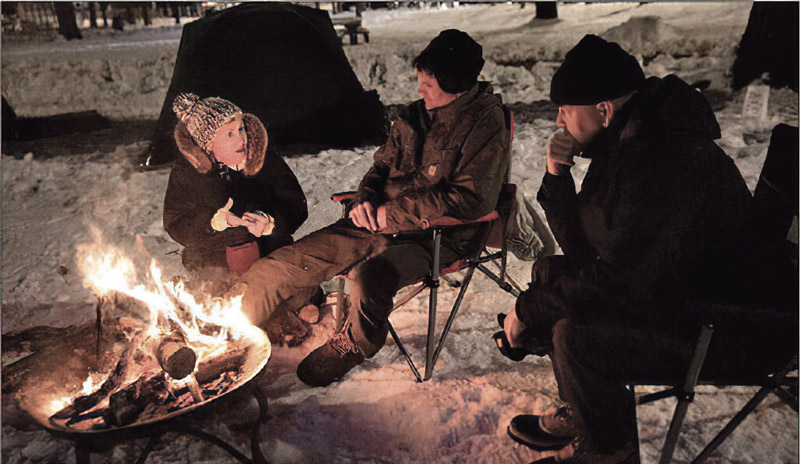
Attendees holding vigil around a campfi re at 2022’s memorial vigil

Attendees holding vigil around a campfi re at 2022’s memorial vigil

In her introduction at last year’s vigil, LISTEN Community Services programs director, Angela Zhang, invited attendees “to notice the cold and the wind, and how it feels on your skin, in your fingers and toes, on your nose and ears, in your bones.” This experience is a key component of the vigil, and Zhang asked her sheltered listeners to imagine how their unsheltered neighbors feel when they do not have the option to return to a warm place after the event. “For those of us who are sheltered, this is an exercise of imagination,” she said. “For those of us here who don’t have shelter, this is a daily, lived reality, and the beginning of a long night, not just a long hour.” The vigil’s speakers then read the names and stories of nineteen individuals from the Upper Valley who passed away in 2023.

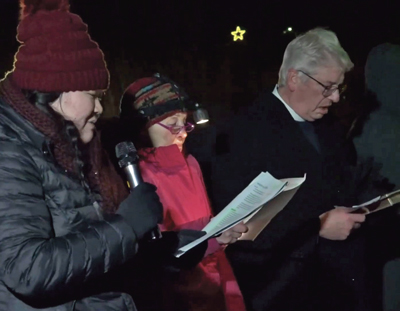
Angela Zhang of LISTEN Community Services speaking at the 2023 vigil.

Angela Zhang of LISTEN Community Services speaking at the 2023 vigil.

Sterling Daniel Swortfiguer is one of the Upper Valley residents whose passing was mourned by the attendees of last year’s vigil. Sterling was born on October 22, 1947, and died alone in his vehicle on March 25, 2023 in Lebanon. He worked as an interior designer in New York City for many years before coming to Vermont and becoming a substitute teacher at Leland and Grey Union High School in Townshend.

The Upper Valley community also mourned Walter McDow, who spent many of his later years in Lebanon and White River Junction. Walter was born on November 10, 1965 and died on January 13, 2023 in the care of the oncology unit, visiting nurses, and hospice staff at Dartmouth Hitchcock Medical Center. He enjoyed listening to country music, watching old sitcoms, and sharing stories about his loved ones. While living in the Upper Valley, Walter was a regular client of LISTEN, Lebanon Human Services, and the Haven; many staff members of these helping organizations continue to grieve Walter’s passing.

Sterling and Walter were two of the nineteen individuals whose stories were read at the 2023 vigil. Sadly, there will be more stories of our neighbors to be shared at this year’s gathering, but the spirit of remembrance and togetherness will be collectively experienced. The list and stories will be compiled shortly before the date of the vigil, to ensure the information is as accurate and comprehensive as possible, but there are likely more individuals who were not known to service providers, and certainly far more experiences than can be shared in the short time of the event.

The Upper Valley Housing First Working Group has been meeting regularly since 2016 under the guiding principle that safe and reliable shelter is a fundamental need for human beings, and so the first step in supporting the needs of unhoused people is to ensure this access to shelter, after which their other needs can be addressed. The working group has since seen numerous successes, including the apartments at 10 Parkhurst Street in Lebanon, that provide access to both housing and supportive services to those in need as the result of a partnership between Twin Pines – which owns and manages the building – and the Haven, which provides supported housing services and a seasonal emergency shelter that opened on Mechanic Street in Lebanon at the beginning of 2024 and is returning this winter. The working group in turn convened a smaller organizing group for the Homeless Memorial Vigil; this year the group began meeting in July to plan the December event.

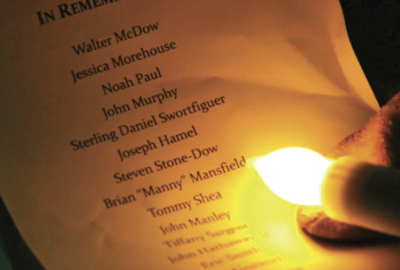
Reading the list of names at the 2023 vigil.

Reading the list of names at the 2023 vigil.

The vigil is an important event for many in the community. “Mourning the dead is one of the most fundamental of human instincts, an activity that is common across cultures around the world,” notes Reverend Stephen R. Silver of Lebanon’s First Congregational Church, one of the members of the organizing group. “The unhoused who have passed away in the past year were our neighbors, members of our community. It is fitting to acknowledge the death of these individuals, known and unknown, for they are people, just like you and me, and it is appropriate that we grieve their passing.”

The vigil’s organizers recognize and support the need of people to grieve the loss of life; that said, they also hope to prompt members of the community to take what action they can to mitigate this problem. For some, this may be as simple as having a conversation with neighbors; for others, it may mean volunteering time at organizations and municipal boards. Lebanon Human Services director, Lynne Goodwin, notes that “inaction will lead us right back here next year,” organizing another vigil for more lives lost. As such, the organizers have the distinctive goal of organizing an event that calls for its own end. This reality is not lost on the organizers, who hope in future years to complement the vigil with a celebration of those community members who have found permanent housing. Until the point at which no more lives are lost due to homelessness, though, the group intends to continue mourning those lost lives and to seek more solutions to support our most vulnerable neighbors.

Share:
Reading time: 6 min
Page 4 of 25« First...«3456»1020...Last »

Our Latest Issue

The Lebanon Times is delivered to every mailing address in Lebanon.

  • Subscribe at an out of town address!
  • Pick up a copy!

© 2024 copyright Greater Good Media. All rights reserved.