Home
Our team
Content
    Cover Story
    All Articles
    Animals Rule!
    Around Town
    Cityscapes
    Community Impact
    Elder Profile
    For The Love Of It
    Good For You
    Goodness InDeed
    Green Page
    History
    Local Sports
    Meet your Neighbor
    Miscellaneous
    Spotlight on our Sponsors
    The Arts
    Your Green Spaces
Advertise
Archives
Donate
Contact


The Lebanon Times - Good people, good places and good things happening
  • Home
  • Our team
  • Content
    • Cover Story
    • All Articles
    • Animals Rule!
    • Around Town
    • Cityscapes
    • Community Impact
    • Elder Profile
    • For The Love Of It
    • Good For You
    • Goodness InDeed
    • Green Page
    • History
    • Local Sports
    • Meet your Neighbor
    • Miscellaneous
    • Spotlight on our Sponsors
    • The Arts
    • Your Green Spaces
  • Advertise
  • Archives
  • Donate
  • Contact
All, Cover Story

Sunshine Brings Out Lebanon’s Skate Park Community

June 27, 2025 by Richard Ford Burley No Comments
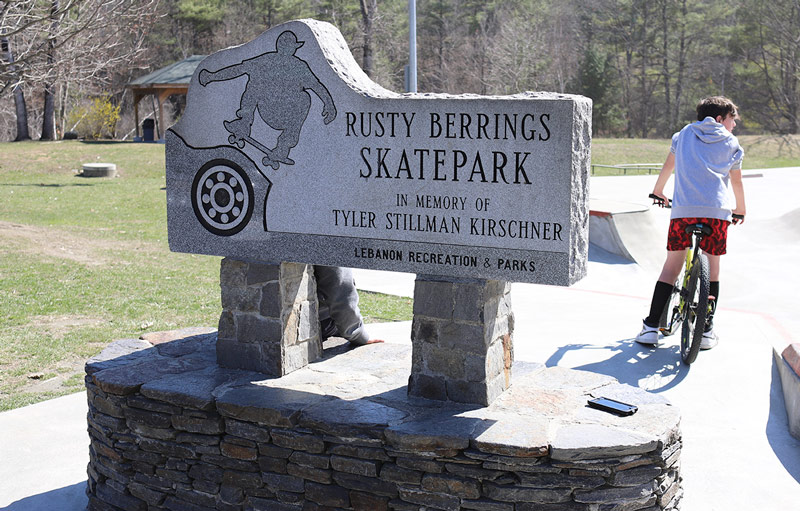
A teenager named Gray enjoys the Rusty Berrings Skate Park on a sunny April day in West Lebanon.

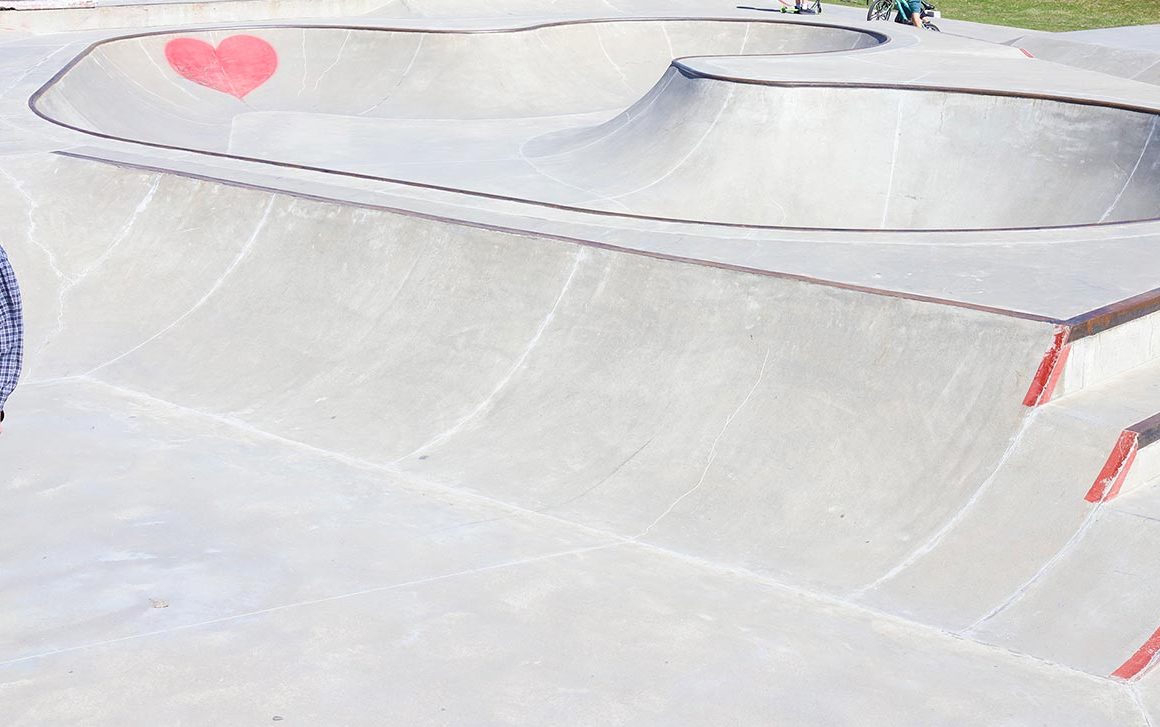
Spring may have gotten off to a dry and dusty start, but the April sunshine was perfect weather for fans of the Rusty Berrings Skate Park at West Lebanon’s Riverside Community Park. As the sun chases away the last of the chill, adults, teens, young children, and families make use of what’s become a regional hub for a supportive and generous culture.

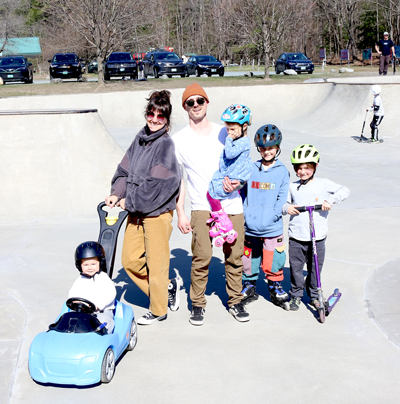
“We’ve been here four times this week,” says Cassandra Rossing, corralling four kids, all wearing helmets and ready for action. “It’s a really great community.” Her husband Michael agrees and adds, “It’s one of the nicest free public parks I’ve ever been to.”

The Rossing family

The Rossing family

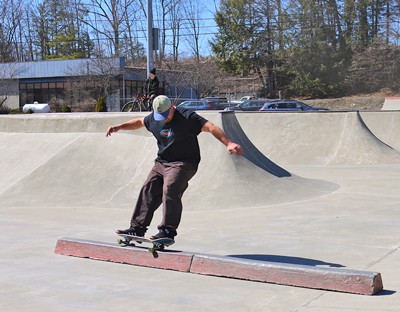
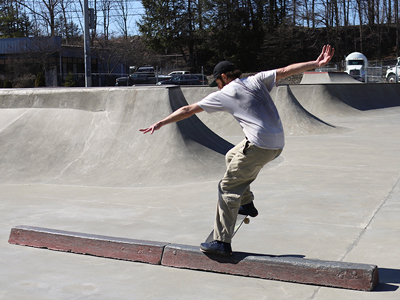
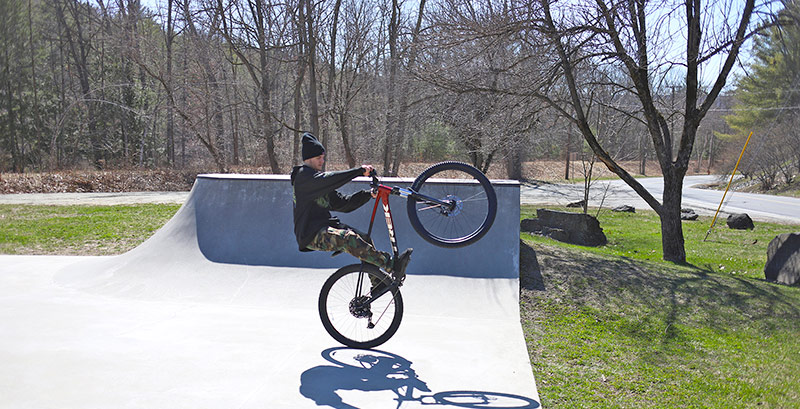
The concrete ramps and steel rails host an eclectic crew: adults Marcus and Brian practice their 50-50 grinds and frontside noseslides while a beanied teen named Gray works on ollieing onto a ledge. When asked about photos, Marcus laughs: “so long as you don’t mind them all being of me falling.” Another teen, Jacob, offers to demonstrate wheelies, then crosses the length of the park on his bike – using only the rear wheel. Smaller children do laps on scooters while their adults sit at picnic tables.

“It’s a great culture,” says Jess Morin, alternately watching the kids play and arbitrating disputes about exactly whose scooter belongs to whom. She’s brought her family up from Cornish for the afternoon to use the park. Last year, her daughter, then brand new to skateboarding, was frustrated and getting ready to leave when a group of anonymous teens showed up. One in particular offered some free lessons: “She actually strapped her up in her own brand new equipment,” Morin says, “and she taught her for like 45 minutes.” She didn’t get the good Samaritan’s name, but it really shaped her perceptions of the park and the kind of people that use it. “It was a real ‘restore my faith in humanity’ moment.”

Brian practicing his “50-50 grind”

Brian practicing his “50-50 grind”

It’s a story that gets to the heart of the culture of the park, which itself wouldn’t exist without the generosity of the community – especially that of the Kirschner family, who, in memory of their son Tyler, raised much of the funding to make the park into what it is today. In fact, the park’s name, “Rusty Berrings”, was – in the fashion of skateboarding greats Birdman, Ragdoll, and Wee Man – Tyler Kirschner’s skateboarding nickname. When it came time to upgrade and revitalize the park from the old wooden ramps into something new, the family acted as the skate park’s “angels,” according to Paul Coats, director of Recreation, Arts, and Parks for the City of Lebanon.

That culture of generosity also extends to our relationship with our neighboring communities. “It’s a regional park,” says Coats. “People from neighboring towns are coming to Lebanon to skate – and that’s the way it should be. Just as much as people in Lebanon are going to other towns to do other things. There’s not really a beach in Lebanon at [Mascoma] Lake, so people are typically going to Enfield to do that, or they’re getting in the Connecticut River via Hanover or Hartford’s waterfront. They’re going to other communities for the dog parks because Lebanon doesn’t have that. So it’s good to see a regional approach to a lot of the recreation that happens – and we get the skate park.”

It isn’t just Lebanon’s neighbors coming to use the park. For anything close to the same experience, skaters have to travel as far afield as Burlington, Manchester, and Nashua, which probably explains why it’s the city’s most used “non-programmed” park. “We put a lot of kids in Civic Park and Eldridge Park,” Coats says, “because we have sports being played there. Colburn Park is mostly a pass-through park…but Riverside Park, as far as people seeking recreation, that’s where they’re going.”

Marcus practicing his “frontslide noseslide”

Marcus practicing his “frontslide noseslide”

As the sun goes down the park lights up, its hours extended by the relatively recent addition of lighting to help out in the shoulder seasons. Despite all the people still using it, Rusty Berrings Skate Park isn’t even “finished” – if a living park can ever be considered really done. The most recent addition was some beginner areas, but there are plans for more expansions. Ideally, they’d like to pave the floor of the pavilion (“We’re not trying to make the pavilion skatable,” Coats says, laughing, “but they will skate in there.”) and there are plans for the addition of another “bowl” as well, not to mention the planned extension of the Mascoma River Greenway to connect the park with the Powerhouse Mall, Miracle Mile and parts beyond.

Watching everyone from kids to adults use it together, it’s clear that Rusty Berrings Skate Park is a place for all – from first-timers to four-day-a-week families, more seasoned skaters to those new to the sport. It’s more than just a community resource –  it’s a home for a culture, one with generosity and support at its heart.

Any kind souls wishing to donate toward additions to the park can contact the nonprofit Friends of Lebanon Recreation, Arts, and Parks (FoLRAP): friendsoflebrec.org.

Teenager Jacob Hoisington demonstrating a wheelie

Teenager Jacob Hoisington demonstrating a wheelie

Share:
Reading time: 4 min
All, Cover Story

Great Strides in Lebanon: A Community Walk for Cystic Fibrosis

by Siobhan Kizis No Comments
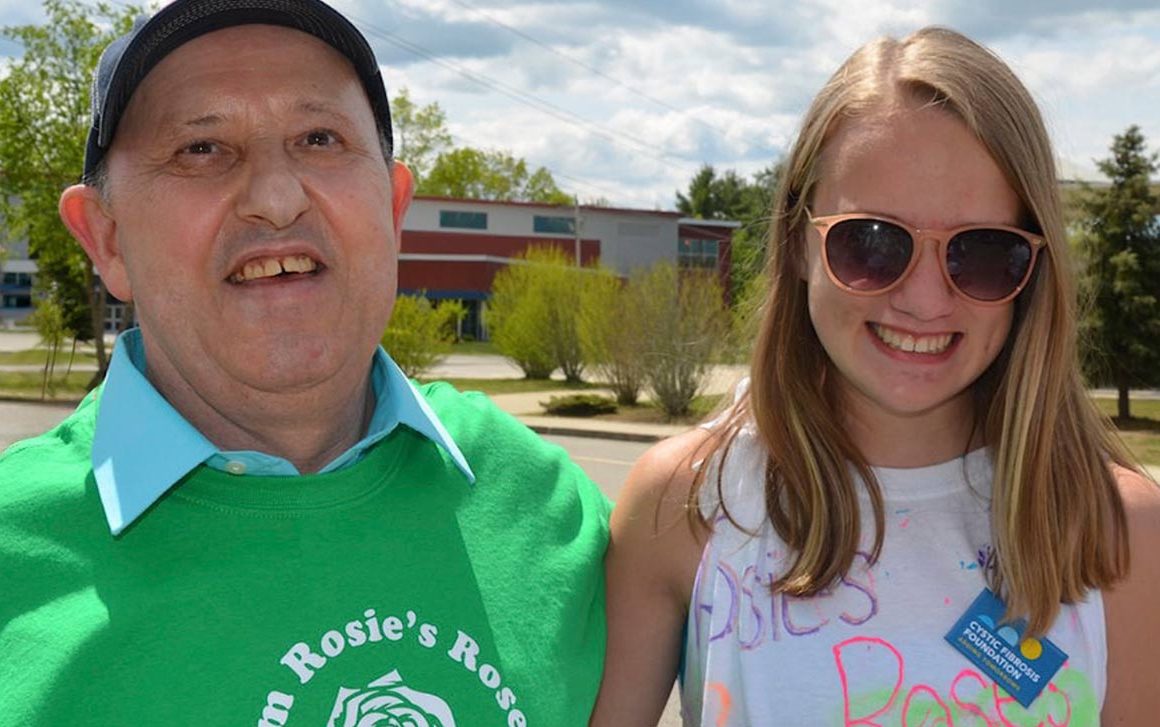
Robert Plante and Rosie, who was diagnosed with CF at two weeks old, at the CF Walkathon in Lebanon

Every year, the Cystic Fibrosis Foundation hosts its largest national fundraising event – Great Strides. Nearly 300 walkathons take place across the country to raise money for research, increase awareness, and support the search for a cure for cystic fibrosis (CF). On May 4th, Lebanon held its 37th annual Great Strides walkathon, bringing together children and adults with CF, their families, friends, community members, care teams from Dartmouth, corporate sponsors like Vertex, and many local supporters at the CCBA Pavilion.

Before the event, I spoke with Lisa O’Connor, executive director of the Cystic Fibrosis Foundation in Nashua, NH. She shared the following on behalf of the CF community:

“Great Strides provides an opportunity for family, friends, students, and colleagues to come together and strengthen the bond of the cystic fibrosis community. The event recognizes the many journeys people with CF face and the work that still needs to be done for those waiting for their transformative treatments – and ultimately, a cure.”

Although there is currently no cure for cystic fibrosis, significant progress has been made in treatments and medications that have transformed the lives of many with CF. These walkathons are vital to sustaining the fundraising necessary to keep that progress going.

At the Lebanon event, I had the privilege of speaking with several members of the CF community – and I quickly discovered a common thread among them: Robert Plante.

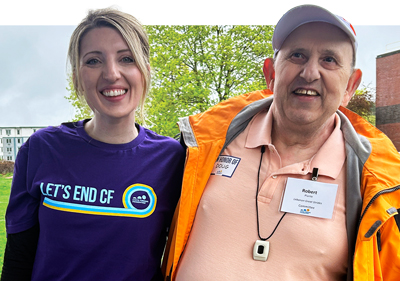
Madison Culver, CF walkathon participant, and Robert Plante at the 2025 Great Strides Walkathon in Lebanon.

Madison Culver, CF walkathon participant, and Robert Plante at the 2025 Great Strides Walkathon in Lebanon.

Robert is the honorary chairman of the Upper Valley Great Strides walkathon and a beloved figure in the CF community. Full of passion, kindness, and commitment, Robert has been involved with the Cystic Fibrosis Foundation for all 37 years of the Lebanon walkathon. Over that time, he has walked more than 7,500 miles, raised over $300,000, and inspired countless others.

His dedication began with his best friend from childhood, Doug Jones, who was diagnosed with and later passed away from CF. Since then, Robert has poured his heart into raising awareness and funds for CF research.

“I’m dedicated to cystic fibrosis research… and I’m going to be for the rest of my life,” he told me. “I love children – they’re my loving angels. All of them.”

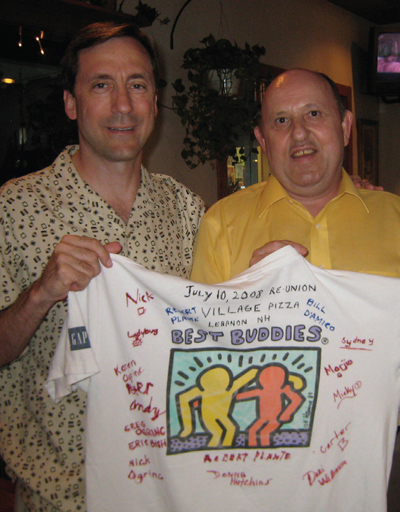
One of Robert’s longtime friends and supporters, Bill D’Amico, traveled from Colorado to attend this year’s walkathon. The two met through the Best Buddies program, and this year, they’re celebrating 25 years of friendship. This was Bill’s sixth year participating in Lebanon’s walk and supporting Robert’s team.

“It’s beyond a community… they have a kinship with each other that you can’t help but feel – it’s so endearing,” Bill said. “CF is a very elusive disease. And while they’ve made great strides, there’s still no cure. Events like this make a real difference.”

I also spoke with Paula Garvey, whose daughter, Rosie, was diagnosed with CF at just two weeks old. Since then, Paula has become deeply involved in the CF community. She serves on both the Cystic Fibrosis Patient & Family Advisory Council and the Cystic Fibrosis Foundation – Northern New England Chapter. She met Robert through her work and developed a strong connection with him.

Paula emphasized the importance of Great Strides events – not only for raising funds, but also for bringing people together.

“We used to always have a team – neighbors, Rosie’s friends, her Girl Scout troop. It was a wonderful way to unite people,” she recalled. “Now, the walks are more important than ever. We have to keep up the momentum.”

Thanks to ongoing support and medical advances, her daughter is now thriving – living independently, working full-time, and pursuing a master’s degree in public health.

Another touching conversation was with Lynn Freeman, a CF nurse specialist with 40 years of experience. Her journey with CF began early in her nursing career, and she’s seen firsthand how dramatically things have changed.

“I fell in love with kids with cystic fibrosis,” she said. “They had this amazing sense of humor, energy, and courage.”

Lynn reflected on the game-changing impact of new treatments called modulators:

“When those started coming out and we saw how fast people improved, it was stunning,” she said. “It’s because of the tireless work of the CF Foundation and everyone who walks, bikes, skis, or donates.”

Best buddies, Robert Plante and Bill D’Amico, who met and connectedthrough the Best Buddies program 25 years ago.

Best buddies, Robert Plante and Bill D’Amico, who met and connected through the Best Buddies program 25 years ago.

Lynn also stressed that CF care requires a team: doctors, nurses, social workers – all working in sync. Her bond with Robert is also special – she cared for his best friend Doug at Dartmouth and remained in contact with him until the end of his life.

One of the most powerful stories came from Madison Culver, who was diagnosed with CF at 18 months old. Her brother, also born with CF, tragically passed away at age four from CF and cancer. Madison was told she wouldn’t live past 19, couldn’t become a nurse, and couldn’t have children. She has defied all those expectations.

Now 32 years old, Madison spent 10 years as an ICU nurse and is now a full-time primary care nurse – and a mom.

“It’s wild to see how different my life looks from what we expected,” she said. “I just started saving for retirement – something I never thought I’d do.”

“CF impacts every aspect of your life. It’s an invisible illness, and there’s a lot of silent fighting that happens. But without the CF Foundation and Great Strides –and the millions they’ve poured into research and treatment – I wouldn’t be here.”

I also had the privilege of speaking with a mom whose 10-year-old daughter was diagnosed with CF at birth. The early years were rough, but a new medication has been life-changing.

“She’s been so healthy since then. She’s super active, into all the sports – it’s made a world of difference,” the mother said.

These stories moved me deeply. The strength, determination, and love within this community are undeniable – and incredibly inspiring.

Here’s to the continuation of critical research, the walkathons that fuel it, and the incredible individuals and families who make it all possible. To the CF community in Lebanon: you’ve gained a new supporter. I’ll be there next year – hopefully alongside some of you, dear readers.

Share:
Reading time: 5 min
All, Cover Story

Did Someone Say “Free Skiing”?

March 5, 2025 by Frank Orlowski No Comments

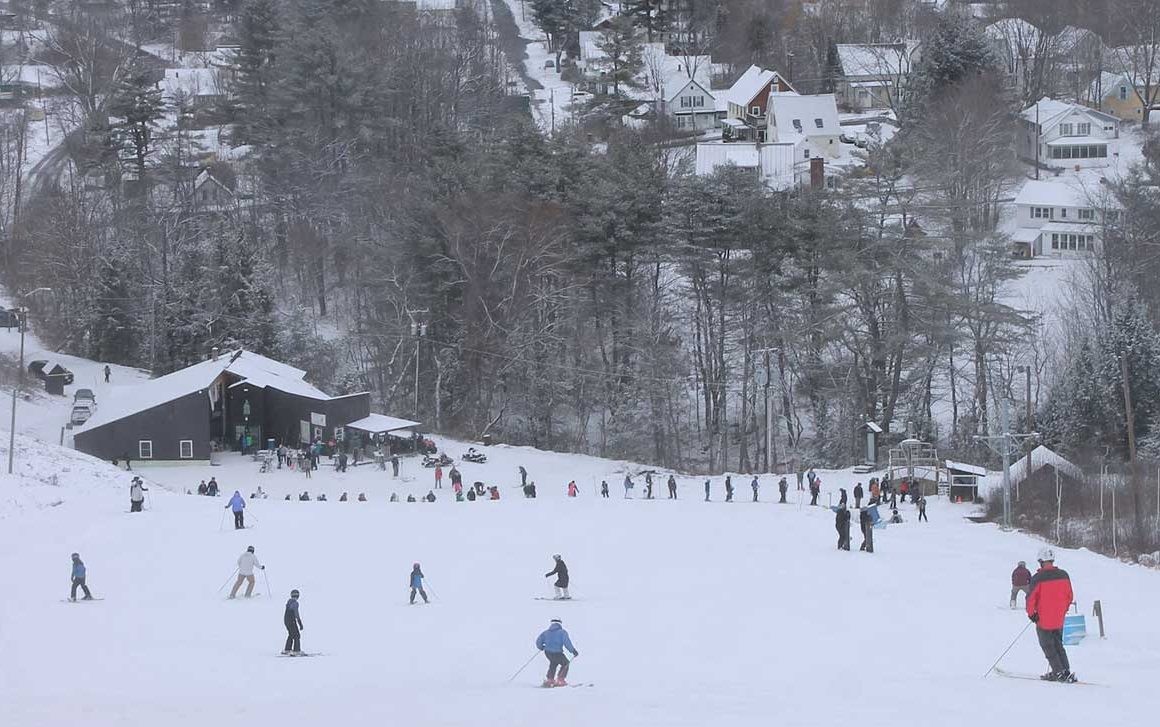
If you’re a skier, you are well aware of the hit your wallet takes on a weekend ski adventure. Lift tickets for you and a partner, maybe a child or two, add in hot chocolate, a burger and chili, maybe an adult beverage mid day…the costs add up quickly and substantially. That is, of course, unless you are skiing or snowboarding at Lebanon’s own Storrs Hill this winter season.

Thanks to a generous gift from the philanthropic Jack and Dorothy Byrne Foundation, visitors to the Lebanon ski area paid nothing for their lift tickets during the ’24/’25 season. That’s correct; skiers and snowboarders experienced free tickets at the venerable hill in the heart of town. So did area winter enthusiasts take advantage of that economical opportunity?

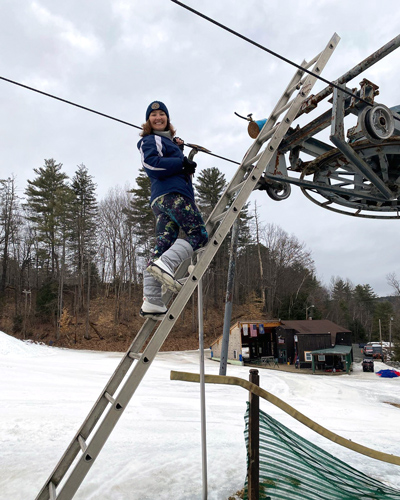
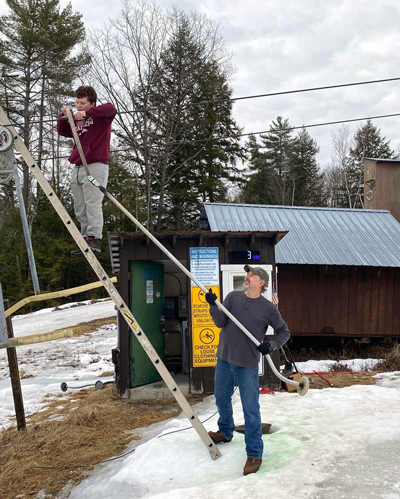
Volunteers help keep Storrs Hill ship shape all season long.

Volunteers help keep Storrs Hill ship shape all season long.

“[On] opening weekend, we saw over 600 skiers from Friday through Sunday,” says Cory Grant, president of the Lebanon Outing Club (LOC), which operates Storrs Hill. That number sounds impressive, especially so when Grant adds, “In the past, we would be lucky to see maybe 15 skiers on a Friday, 40 on a Saturday and Sunday.”

Not surprisingly, the free skiing offer brought many new skiers to Storrs Hill, opening their eyes to this community treasure. “Some locals didn’t know we existed until [now],” says Cory Grant.

Storrs Hill has a long history with Upper Valley skiers. A ski jump was first built on the hill in the 1920s (Storrs Hill originated as a ski jump area), and in the early ’30s, the first alpine trail was developed on the hill. A rope tow was added for skiers in the mid ’30s, which makes Storrs Hill one of the oldest continually operating, lift-served ski areas nationally. Over the years, improvements such as snow making and the POMA lift were added to the ski and ski jump operation.

The history of Storrs Hill cannot be told without mentioning the name of one of the world’s greatest alpine skiers. World Cup and Olympic champion Mikaela Shiffrin spent some of her early years skiing at Storrs Hill, before moving on to Burke Academy and the U.S. Ski Team. In the early 2000s, Shiffrin could often be found practicing for hours on the Storrs Hill ski slope. Another prominent local athlete, Lebanon’s Nick Alexander, learned the art of ski jumping at Storrs Hill as a child, and went on to be a long time member of the U.S. Ski Jumping Team, appearing in two Olympics.

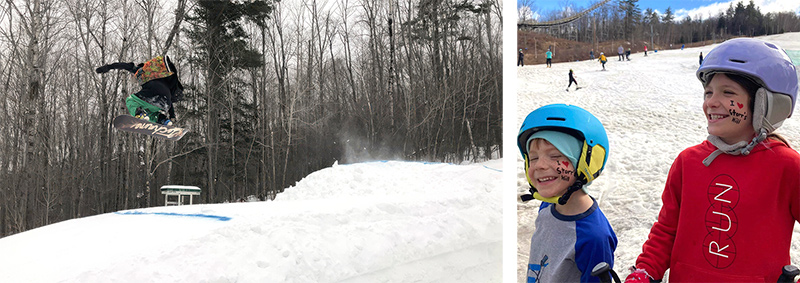
Photos from LOC Facebook page

Photos from LOC Facebook page

The history of Storrs Hill is closely tied to the Lebanon Outing Club. For decades, volunteers from the LOC have operated and maintained the ski area. “The Lebanon Outing Club is a non-profit organization outside of the City of Lebanon, that has to fund the Storrs Hill Ski Area in order for it to be operable,” says Cory Grant. Though one source of funding does come from the City of Lebanon, the LOC must continually seek funds from other sources, such as the Byrne Foundation, to keep operating the ski area each year. Grant says the LOC volunteers spend considerable time writing grants and fundraising for hill operations. Prior to this season, lift tickets and season pass sales also helped run Storrs Hill, though the LOC always kept those prices low to allow as many as possible to use the slope.

“We are still seeking more donations to help with operations; we have to look for business support and community support to keep the ski area functioning,” says Cory Grant, adding, “We have had some unforeseen activities that have cost us a lot this season with snowmaking, and grooming equipment.”

The charitable gift to offer free skiing this winter is not the first time the Byrne Foundation has assisted Storrs Hill. In recent years, the Byrne Foundation provided grants to repair and upgrade equipment and mechanical operations at Storrs Hill.

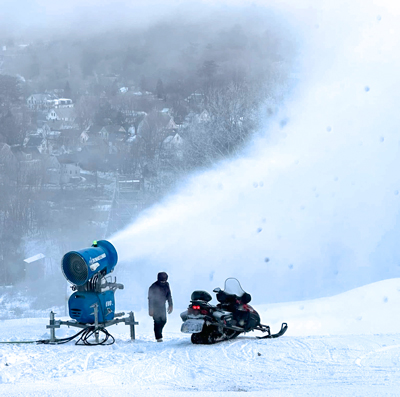
Snowmaking at Storrs Hill ski area, overlooking downtown Lebanon.Snowmaking is one of the many jobs

Snowmaking at Storrs Hill ski area, overlooking downtown Lebanon. Snowmaking is one of the many jobs

With such a dramatic increase in the number of skiers at Storrs Hill this season, it seems natural that more LOC volunteers would be needed to assist in operations. Cory Grant confirms that, saying, “Volunteers are roughly one per top, and one per bottom [on the slope]. Now we are looking to have at least four so we can do shifts and have a couple of people to help at bottom with [those with novice] abilities.”

So with the increased number of patrons, does the LOC welcome more volunteers? “Yes, we are looking for as many volunteers as possible,” Grant says.

Having a local, community ski area, especially one that offers its slopes at no charge, is a rarity. To make that possible, the community must depend on the generosity and goodwill of others. With a little help from volunteers and donors and grateful patrons, Storrs Hill will remain a hidden gem in Lebanon for years to come.

For other winter activities to explore in Lebanon, read “Mastering the Art of ‘Wintering’ in Lebanon” in this issue on page 22-23.

Share:
Reading time: 4 min
All, Cover Story

Striking at Success on the Playfields: Lacrosse Club Propels Local Athletes to High Levels

by Isabella R. Vanasse No Comments
Coach Taylor Miller and Lebanon resident, Caroline Knittle.

In the spring of 2022, the former director of the local girls athletics program, Echo Lacrosse, announced she was moving out of the area. When parent and educator Vicki McCorkle heard this, she immediately stepped up to the plate. She knew she wanted her three young daughters, and the broader Upper Valley community, to continue to benefit from a competitive youth lacrosse program. “I’ll do whatever it takes,” McCorkle had reported to the former director, expressing her intentions to keep the program going.

So after Vicki McCorkle expressed her willingness to lead, the former Echo Lacrosse director “paired [me] up” with another parent and educator, Kim Higgins, she says. Higgins had played Division I college lacrosse at Virginia Tech.

Morgan Fitts and Vera Linter at Echo Lacrosse summer camp in Lebanon.

Morgan Fitts and Vera Linter at Echo Lacrosse summer camp in Lebanon.

Higgins became the new head coach of the Lebanon-based program, while McCorkle became its director of operations. Like McCorkle, Higgins is also a mother of three growing daughters, so they had seen each other on the sidelines from afar prior to their newfound partnership.

McCorkle attests that Higgins has become “a friend I never knew I needed…We both saw the value in this program to the community.” Both have certainly shown unflagging commitment to Echo Lacrosse. Over the years, it has grown from a small exclusive program, serving primarily the Hanover and Norwich communities, to an organization that draws girls and boys from all over the Upper Valley, including seven towns last season, with many players hailing from Lebanon.

The expanded program now offers year-round programming for girls in grades 3-12: from a club team in the spring, camps in the summer, Sunday drill sessions in the fall, and indoor skill development in the winter, to keep development of technical skills sharp. Boys in grades 3-12 now too benefit from a high level of competition and offerings three seasons a year, including camps, fall Sunday drills, and competitive spring club teams, with all play rooted in New Hampshire.

In the winter, girls’ programs practice indoors at the CCBA (Carter Community Building Association), a nonprofit recreation and fitness organization in downtown Lebanon. Why continue with lacrosse in the winter if girls are already committed to their ice hockey or basketball teams? To Nordic or Alpine skiing organizations? Higgins paints the landscape: The sport of lacrosse is growing in regions of the country, and world, with prolonged outdoor play. “It’s an incredibly technical sport in terms of hand-eye coordination,” she says. “If you’re able to play lacrosse year long, you have a technical advantage.”

In the warmer months, athletes practice on the CCBA-owned fields behind the brick and mortar facility. CCBA “has become a pivot point for us,” explains Higgins. “It’s centrally located, so people can see what lacrosse looks like out here on the fields…there’s still a lot of people who don’t know what lacrosse is…and the staff have become a great partner supporting us any way they can.”

Team cheer at the end of practice.

Team cheer at the end of practice.

But Echo Lacrosse is more than a recreation outlet for Lebanon youth and their neighboring p eers. The organization’s directors have aimed to develop an extraordinarily high level of competitive play that stays as local as possible – a gem of an offering these days.

Competing on a club team for young athletes of the Upper Valley typically requires families to commute to Manchester or Boston, just for practices. Club team travel for away-games stretches to the far reaches of the Northeast: for lacrosse, the hotbed communities are Maryland, Philadelphia, and Long Island. Game and tournament travel to these locations, or Florida or Texas, typically occurs eight to a dozen times annually.

That’s why Higgins and McCorkle set as a top intention for their program to provide local lacrosse players with a high level of competitive play and multi-season skill development within their own broader Upper Valley community.

Enter Echo Lacrosse’s spring club program: Echo’s primary season of operating center-stage. The eight boys’ and girls’ Echo Lacrosse teams compete against other New Hampshire club teams through the New Hampshire Youth Lacrosse Association (NHYLA). Echo hosts its home games at the Kimball Union Academy (KUA), also a fairly central location for its Lebanon High School, middle school, and elementary athletes.

“It’s been a labor of love,” recounts McCorkle. Beyond serving their daughters, McCorkle and Higgins have been able to help Upper Valley families stay in Lebanon and Meriden for a high-level of competitive play during the travel club season, and in keeping their hands on the stick in the off-season.

Juggling eight spring teams and year-round programming, Higgins and McCorkle are far from a two-woman show. Many layers of collaborative and selfless contribution have watered and fed Echo’s profuse and quality expansion. Higgins and McCorkle are quick to spread the credit around the table: Higgins opens by noting, “We inherited a very nice program.” What’s more, Echo receives a steady amount of support from a vast and impressive array of coaches, guest speakers, and supporting organizations, such as Lebanon’s CCBA and Empower Lacrosse.

Yes, Echo Lacrosse skillfully “leverages” the incredible array of coaching and educational resources within the Upper Valley community. But much more than this, Higgins continues, “in this community, there’s a lot of willingness: [people routinely ask] ‘how can we help?’”

For instance, Echo has benefited from a cast of coaches that includes former and current Division I players – from Dartmouth College and elsewhere – former high school players, and expert teachers: Taylor Miller, for one, a current medical student at the Geisel School of Medicine and graduate of West Point. She played goalie on the military university’s Division I lacrosse team and now presently coaches goalies for Echo Lacrosse.

The diversity of contribution has also come from local sports psychologists, who talk to the players about balance and emotional well-being, and coaches who are trained or experienced educators – who know the ”science of learning.” Higgins clarifies, “educators know that learning a technical skill like lacrosse is not a linear path. There are plateaus, there are dips when new skills are acquired.” Even more than this, the Echo Lacrosse directors work to educate their experienced lacrosse coaching staff with teaching principles, and their experienced educator coaching staff with the principles of the game. “We have a good balance [of type of coaching expertise] on most of our teams,” Higgins describes.

Support has also come from the distinct complementary organization, Empower Lacrosse, which exists exclusively to offer financial support to Upper Valley players, and their families. Proof of income is not even required. According to Higgins and McCorkle, the Upper Valley Lacrosse community really wants everyone to be able to play lacrosse.

Empower Lacrosse is not the only player committed to keeping the sport financially accessible. Echo itself recently paired up with CCBA to offer a gear swap to make “this expensive sport accessible to everyone.” Higgins continues to marvel at the behind-the-scenes collaboration: the dynamic with CCBA and Kimball Union has always been one of mission-oriented problem-solving, she reports. “The conversation with them will start with the query, ‘we’re thinking about …a gear swap (for instance); there’s a need…’ So we sat down and had a problem-solving meeting.” The response is always unequivocally, “‘sure, let’s think about this.’”
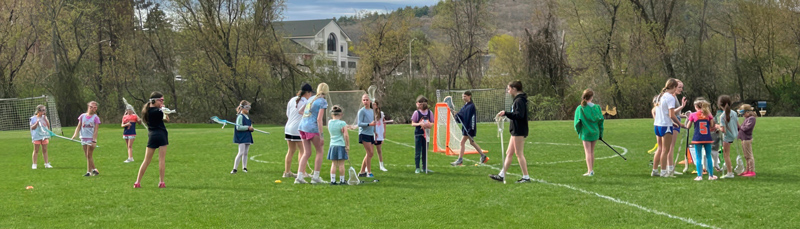
Echo Lacrosse practicing on playing fi elds at the CCBA in Lebanon.

Echo Lacrosse practicing on playing fi elds at the CCBA in Lebanon.

Another noteworthy contribution from the leadership at CCBA has been to support Echo’s three weeks of half-day summer camps by partnering to provide wraparound childcare.

For their own part, Higgins and McCorkle strive to collaborate beyond Echo’s domains as well. When winter snow flurries begin to fly, Higgins and McCorkle reach out to query how to best support the high school lacrosse teams during Echo’s off-season development program. Higgins recounts, each year at this time, “[We] contact the high school coaches to ask, ‘How can we support you? Is there any [specific skill] you need us to work on [with] your players? How can we help your players get ready?’” What other types of support do your players need?

This cycling back to reflecting on how to best support the personal development of young athletes weaves throughout this interview for the Lebanon Times. McCorkle opened our evening’s conversation at CCBA musing, “We talk about this a lot. How to help each child develop not just as an athlete, but a person and a friend.” Higgins concurred: “We focus a lot on the intangibles…We encourage whatever [activities] a child is interested in…We also talk about how to hold each other and ourselves to high standards, standards of excellence…in a non-confrontational way.”

The focus and commitment of Echo’s second phase, with McCorkle and Higgins at the helm, has paid off: in their community-wide relationships, their friendship and professional collaboration with one another, their impact upon countless Lebanon youth, in the saving of innumerable Lebanon families from extensive driving beyond state limits; and not least of all, with the successes of their own daughters on the lacrosse field.

Lena Braga and Maddy Pearce at Echo summer camp in 2024.

Echo Lacrosse practicing on playing fi elds at the CCBA in Lebanon.

Higgins’ eldest, Sadie, is beginning her first year playing lacrosse for the Naval Academy. Her middle, Maggie, is a junior lacrosse player at Holderness Academy. The youngest daughters of both directors, Campbell and Clare, play on the eighth grade teams and help with the younger Echo Lacrosse groups.

McCorkle’s middle daughter, Allie, is a current player at the University of Colorado, another hotbed lacrosse region of the country. McCorkle’s eldest daughter, Maddie, just completed her tenure as a standout on the starting roster for Duke University, her father’s alma mater. She’s now working toward a master’s degree at the University of Virginia, studying public policy, with an interest in sports leadership. Maddie looks at sports philosophy underpinnings: how to help all players, not just the standouts, to feel belonging?

Both McCorkle and Higgins, as current and former educators, both know the importance of respectful and positive interactions. At the Ray School in Hanover, where McCorkle is a speech language pathologist, the philosophy of respectful interactions predominates their educators’ perspectives: at the Ray School as at Echo, “How can everybody feel seen? Everybody [needs to] get a greeting …Every single person should get a touch point, (for example) ‘I’m so glad you’re here,’ explains McCorkle. “People need to feel seen and valued for more than being …the best [at a sport].”

The focus on steady service, focused contribution, and the whole child’s well-being seems to be bearing fruit for many.

When Higgins observed the girls arriving at the first session of the winter program, returning to Echo Lacrosse and CCBA after a month away, she heard exclamations of greetings between not just teammates, but friends. “We’re building something special.” McCorkle nods in agreement: “you get a sense we’re their people. We are their community.”

“It’s about so much more than lacrosse,” McCorkle summarizes. “It’s about community and learning about yourself, as a person and a teammate.”

During all seasons of the calendar, from the neighborhood gym and fields of CCBA, young Lebanon athletes are maneuvering, spinning, pivoting, and stretching their lacrosse sticks – and spirits – towards their goals, and their own personal best.

Share:
Reading time: 9 min
All, Cover Story

From Page to Stage in a Day: Lebanon Residents Behind the Upper Valley’s “24-Hour” Play

November 29, 2024 by Siobhan Kizis No Comments

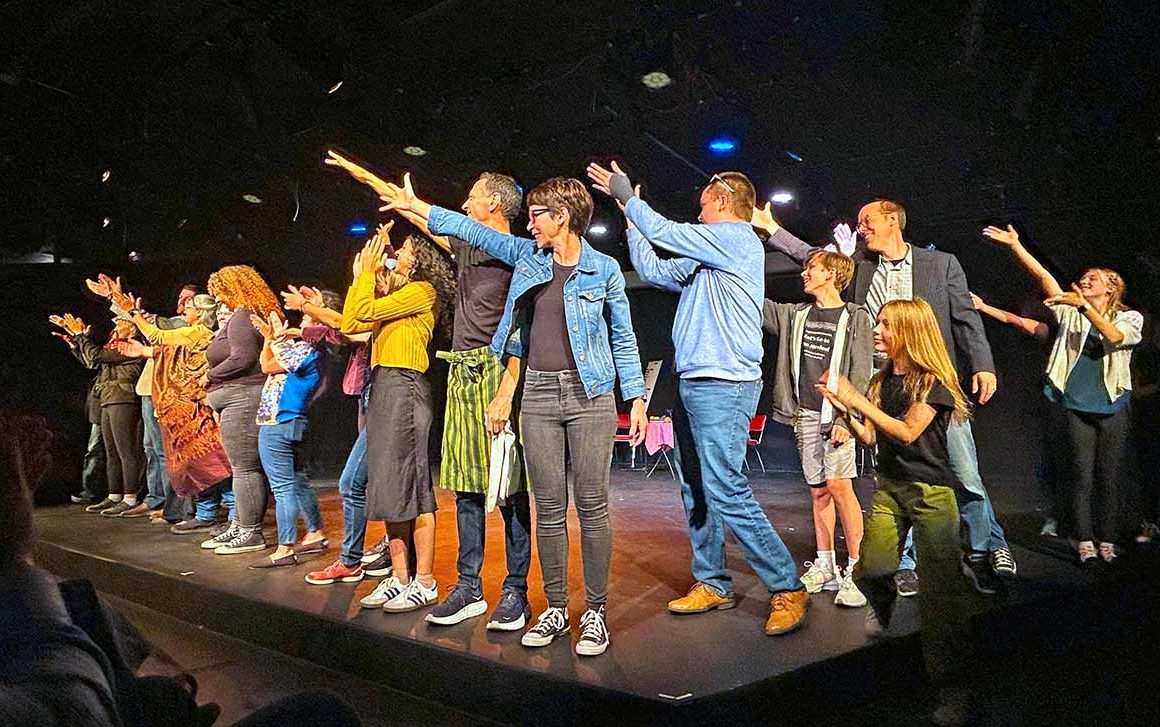
After a successful first year, the Upper Valley 24-Hour Play Fest was back this September, held at the Briggs Opera House in White River Junction, and organized by Lebanon residents Rachael Thomeer and Molly Raposa. What is a 24-hour Play Festival? Great question! It’s just what it sounds like: 24 hours for participants to audition, write, direct, rehearse, and then perform short plays in just one calendar day.

With the festival beginning at 7pm on a Friday night, the actors audition (everyone is cast), and the writers stay overnight to work on their plays until the wee hours of the morning, when they then head home for some sleep. On Saturday morning, the directors and actors arrive to review scripts and hold the casting session, and then the tech crew arrives, rehearsals take place, and a performance begins to take shape. By 7pm Saturday night, the plays begin – six ten-minute plays – written, rehearsed, and performed in just 24 hours, and never seen before by any other audience. The Play Fest’s theme this year was “The Day Everything Changed”.

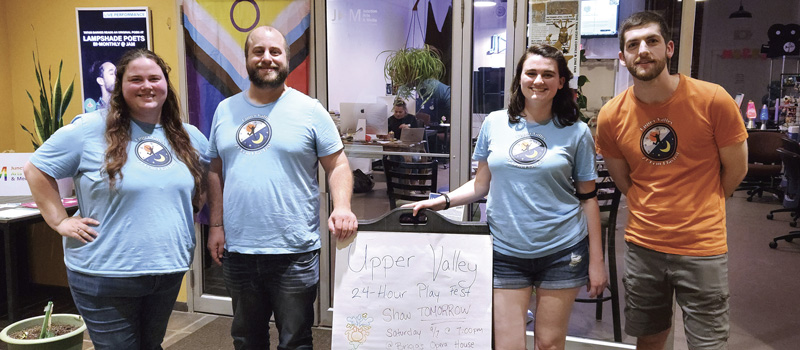
Upper Valley 24-Hour Play Fest Producers: Molly Raposa, Aaron Richter, Rachael Thomeer, Loriston Fennell

Upper Valley 24-Hour Play Fest Producers: Molly Raposa, Aaron Richter, Rachael Thomeer, Loriston Fennell

I met with two of the four producers to ask them some questions – Rachael Thomeer and Molly Raposa. Rachael has a background in community building, social events, and theater, and she served on the board of the Upper Valley Young Professionals. Having participated in a couple of play festivals in college, she had a vision of bringing such an event to the Upper Valley when she moved here in 2021, with the goal of inviting people from the broad community to come together for a fun, low-barrier, all-inclusive experience. She explained that the small time commitment (of 24 hours) helps make the event accessible to many, and the aspects she looks forward to the most are the camaraderie and team-playing of the participants who all work to bring the plays to life.

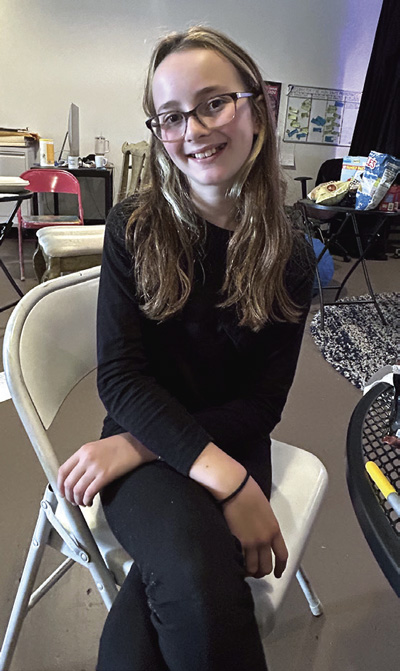
Eliza, UV 24-Hour Play Fest actress

Eliza, UV 24-Hour Play Fest actress

Outside of organizing the Play Fest, Rachael also works in the box office at the Lebanon Opera House, and she loves how walkable downtown Lebanon is. “I like walking on the Rail Trail, going to the summer farmers’ market, and visiting the downtown businesses (Katie’s Cookies is my favorite!),” she said.

Molly also has a theater background, having majored in theater management and participating in play festivals at college as a director. She gave a shout out to the “Upper Valley Ladies 20s and 30s” group on Facebook, which is where she was first introduced to Rachael last year and joined in her mission to hold annual play festivals for the Upper Valley.

Both Rachael and Molly live in Lebanon, and “The festival has always been rooted in Lebanon,” Rachael said. “Since its founding, we’ve always had at least half of our production team live in Lebanon.” A few of the actors this year hail from Lebanon, too.

Even though the event itself is only 24 hours long, the producers and collaborators – all of whom are volunteers – work on making this event possible for months. In the months of planning leading up to the festival, the producers met at libraries in Lebanon and Hanover to plan the event. Rachael said that she sometimes forgets that the UV 24-Hour Play Fest is a real thing that an audience is coming to watch: it’s “not real until it’s real,” she said, and “it’s so short it feels like a dream.”

“It’s exciting and so nerve wracking at the same time,” Molly explained. “We are so heavily involved, and on the day-of, we’re starting to pass [what we’ve worked on] off to other people [actors].” She expressed how exhilarating the leap of faith and trust feels in passing their idea over to the Play Fest participants and seeing what they come up with over such a short period of time.

As far as this kind of event being a valuable part of the community, they both had a lot to say. Rachael said that this kind of event brings people together, especially during a time when social ties have disintegrated in recent years. “We really try to be inclusive and welcoming,” she said. “It’s an opportunity to let people try new things, and I think that’s just really empowering for them…We want to offer a low barrier of entry, and we want to make it really low stakes.” The first priority is that “we want everyone to have fun, feel safe, and be comfortable,” she added. “Our second thing is that [we] put on a good show. We really care about our [audience and actors] and their experience.”

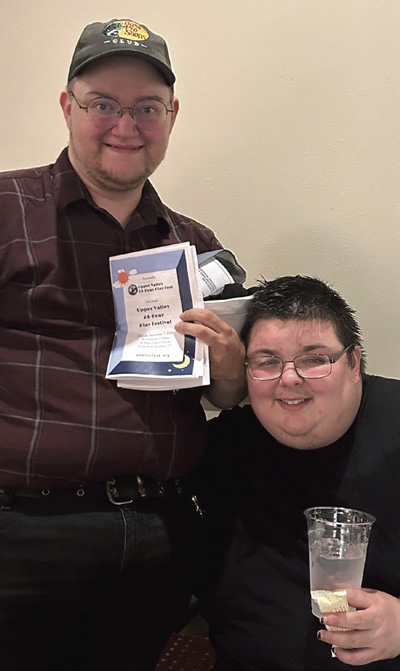
Aran Eagle (L), director and Talon Eagle (R), actor

Aran Eagle (L), director and Talon Eagle (R), actor

Molly said, “we’re just so passionate about bringing accessible art to the Upper Valley.” A 24-Hour Play Fest is a unique niche that is “awesome for the community.” A lot of people don’t want to make a big commitment (time wise), but still want to be involved in theater, and the Play Fest provides a great, low-commitment opportunity for them. “And, if you walk away from the day wanting to get more involved in the local theater scene at all of our amazing local arts venues, that’s awesome, and that’s a win for us,” Molly added.

This event is all-inclusive, no experience necessary, and come as you are, with some participants trying it for the first time, while others may have a background in theater and acting. Everyone gets to participate and share in the collaborative process, making it a rewarding and community-building experience.

As far as any changes since last year’s event, there were a few notable things. The auditions used to happen the morning-of, after the writers had written the plays. However, not knowing the demographics of the actors ahead of time, they wrote plays that were not necessarily written with specific demographics in mind, such as more kid-friendly scripts. This year, they had the writers watch the auditions, so they had a better idea who they were writing for, and this made a big difference. They learned a lot about the venues as well. Last year, they held the first Play Fest at Parish Players, and it was such a huge success; not only did they have to turn away participants because of lack of space, but the festival sold out! So, this year they found a larger space and ended up having over double the number of participants – 60 participants in total, with the number of children increasing and even a couple of families joining the mix.

Eliza, an 11-year-old participant, said this was her first play festival experience, though she has been involved with plays in the past at camp and was in

A Christmas Carol at Northern Stage. What excites her most about this event is the pressure of it. “I work best when I’m under stress,” she said. “This is really motivating but also scary, in a good way.” She thinks this is a valuable part of the community because it “causes a lot of people who share the same interests to come together and meet new people, and share their passion,” she said.

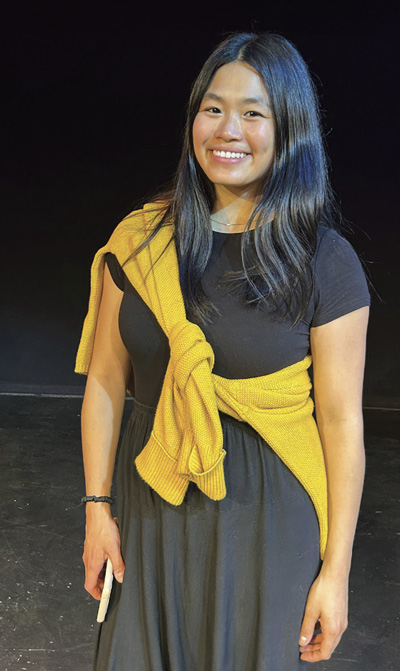
Fauve Dela Cruz, actress

Fauve Dela Cruz, actress

Alexander Bulova, one of the co-directors who participated in 24-hour play festivals back in college, said that the most challenging aspect of the event is having only 24 hours to pull everything together. He is very used to coming into rehearsal having already done the blocking and preparation, and you don’t have that kind of time with the 24-Hour Play Fest. “This is really an opportunity to step out of my comfort zone and just work in the moment, learn with the actors, and discover stuff in the moment, which is really valuable,” he said. He explained that it’s important to keep things fresh for the performers, and that you don’t want them to “over act” and be tired by show time. “You want a little bit of uncertainty before you go on stage, because that’s where the acting and the magic comes from, is working with that audience and discovering stuff in the moment.” Also, the format removes barriers between the different roles, and everyone comes together. “This is a great opportunity for people to step out of their day-to-day lives and their jobs and just have fun.”
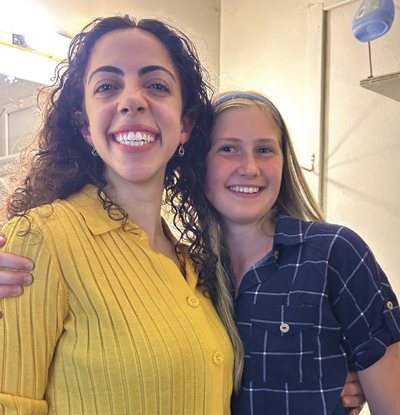
Play Fest actor Rawan Bresselsmith, from Lebanon, is new to acting, though you would never know; she is such a natural! Her background in ballet lends to her familiarity with stage performance, and part of her studies in medical school require some role playing. This was her first time taking part in a play festival, and she explained that the most challenging aspect of a ten-minute play is learning to memorize lines. And, in their play, they had a few scenes taking place all at once, which made it a challenge to stay focused on her next line. “This is a great way to meet people that I otherwise never would have crossed pathways with,” she said. “Coming together to do something collectively challenging is so fun…this is the essence of teamwork.”

Fauve Dela Cruz, another actor, said this is her second year involved with a play festival. What excites her most is “how it is so uncertain, and we have no idea what the outcome is going to be,” she said. “Everyone is obviously pushing to their best, but there’s no pressure to make it perfect…You literally have no time to get into your head, you’ve just gotta do it and go for it, and that’s the beauty of this whole thing that everyone’s going for…because you’re only doing it once.”

“It requires a lot of different people of different abilities, and so it pulls from all these different areas of the community,” Fauve added. “It will pull people from all walks of life…This is such a great entry-level way of getting into it and getting your feet wet and seeing if you like it, versus a huge commitment for a full production.”

Rawan Bresselsmith (L) and Jane Svindrychova (R), both UV 24-Hour Play Fest actresses.

Rawan Bresselsmith (L) and Jane Svindrychova (R), both UV 24-Hour Play Fest actresses.

Talon Ansteth heard about the UV 24-Hour Play Festival from his partner, who participated as a director. He was planning on being an usher, until someone dropped out from acting and he decided to audition. He participated for a number of years with the “Arts In Reach” program in Durham, Nh, and this really piqued his interest and involvement in theater.

What excited Talon most is that, “from the group that I’ve been in, they’re very inclusive, and they understand that I can’t do a lot of things, and they’re really helping me express myself in the play itself.”

You might not think it takes long to put something like this together, but there is always more behind the scenes than we ever imagine. It takes months to find just the right space, the sponsors and partners that come together to make this possible, the creative marketing, and all the thoughtful coordination. The four producers, including Molly, Rachael, Loriston Fennell, and Aaron Richter (who is the music director/organist and admin assistant at the West Lebanon Congregational Church), all volunteered their time, energy, and effort to make this happen. And, at the end of the night, a successful, exciting show that left me with such enthusiasm that I just might have to participate next year myself!

Share:
Reading time: 9 min
All, Cover Story

In Loving Memory: A Community Vigil on the Winter Solstice

by Devin Wilkie and Sophia Gawel No Comments

December 21 marks the winter solstice this year – the shortest day and longest night of the year, and the moment when the Northern Hemisphere tilts the farthest away from the path of the Sun in the sky. This has become the annual date of the Homeless Memorial Vigil that is the product of efforts by LISTEN Community Services, Lebanon Human Services, the Upper Valley Haven, the First Congregational Church of Lebanon, TLC Family Resource Center, and a range of other individuals and organizations, many rooted in Lebanon. The 2024 vigil will take place on December 20 starting at 5:30pm at LISTEN’s campus in White River Junction, in memory of those who have passed in the last year, whose lives have been shortened due to homelessness. The event is open to anyone who wishes to attend to recognize and grieve the lives that have been lost.

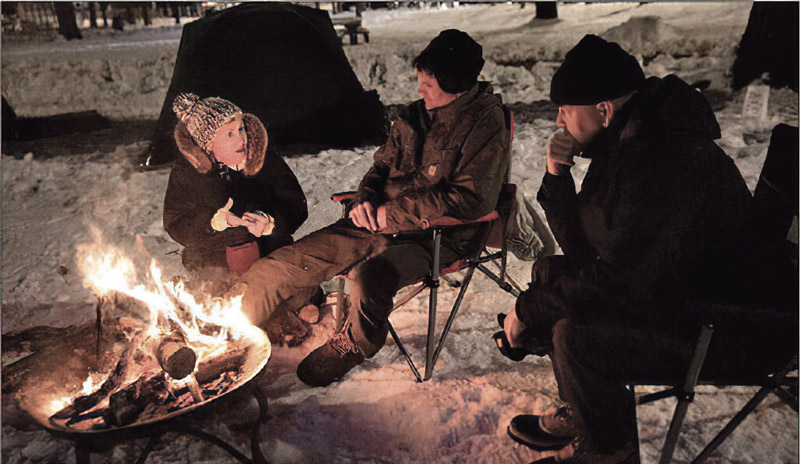
The winter solstice has long been the setting for memorial vigils across the country for those who have been without stable housing. In the Upper Valley, the event has taken many iterations over the past few years. The event, which centers on the reading of names of the departed, has also featured stories about the departed, hymns, and calls to action. In recent years, the event has taken place at various locations in the Upper Valley, including Colburn Park in Lebanon, as well as on the Upper Valley Haven’s campus in Hartford. In 2018, the vigil included a walk across Lyman Bridge to symbolize the bi-state nature of the event; in 2020, the vigil was broadcast virtually. This year, the event will be co-sponsored by organizations in Lebanon and Hartford and will take place outside LISTEN’s Community Dining Hall, a common destination for many seeking a warm dinner in the evening. Following the event, organizers, community leaders, and other members of the regional community will hold vigil, aiming to keep a campfire lit throughout the night.
Attendees holding vigil around a campfi re at 2022’s memorial vigil

Attendees holding vigil around a campfi re at 2022’s memorial vigil

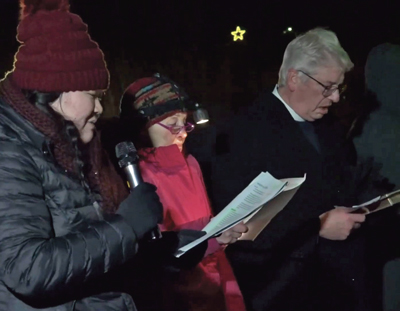
In her introduction at last year’s vigil, LISTEN Community Services programs director, Angela Zhang, invited attendees “to notice the cold and the wind, and how it feels on your skin, in your fingers and toes, on your nose and ears, in your bones.” This experience is a key component of the vigil, and Zhang asked her sheltered listeners to imagine how their unsheltered neighbors feel when they do not have the option to return to a warm place after the event. “For those of us who are sheltered, this is an exercise of imagination,” she said. “For those of us here who don’t have shelter, this is a daily, lived reality, and the beginning of a long night, not just a long hour.” The vigil’s speakers then read the names and stories of nineteen individuals from the Upper Valley who passed away in 2023.
Angela Zhang of LISTEN Community Services speaking at the 2023 vigil.

Angela Zhang of LISTEN Community Services speaking at the 2023 vigil.

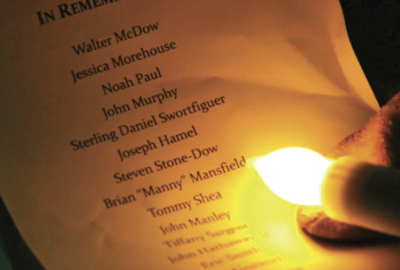
Sterling Daniel Swortfiguer is one of the Upper Valley residents whose passing was mourned by the attendees of last year’s vigil. Sterling was born on October 22, 1947, and died alone in his vehicle on March 25, 2023 in Lebanon. He worked as an interior designer in New York City for many years before coming to Vermont and becoming a substitute teacher at Leland and Grey Union High School in Townshend.

The Upper Valley community also mourned Walter McDow, who spent many of his later years in Lebanon and White River Junction. Walter was born on November 10, 1965 and died on January 13, 2023 in the care of the oncology unit, visiting nurses, and hospice staff at Dartmouth Hitchcock Medical Center. He enjoyed listening to country music, watching old sitcoms, and sharing stories about his loved ones. While living in the Upper Valley, Walter was a regular client of LISTEN, Lebanon Human Services, and the Haven; many staff members of these helping organizations continue to grieve Walter’s passing.

Sterling and Walter were two of the nineteen individuals whose stories were read at the 2023 vigil. Sadly, there will be more stories of our neighbors to be shared at this year’s gathering, but the spirit of remembrance and togetherness will be collectively experienced. The list and stories will be compiled shortly before the date of the vigil, to ensure the information is as accurate and comprehensive as possible, but there are likely more individuals who were not known to service providers, and certainly far more experiences than can be shared in the short time of the event.

The Upper Valley Housing First Working Group has been meeting regularly since 2016 under the guiding principle that safe and reliable shelter is a fundamental need for human beings, and so the first step in supporting the needs of unhoused people is to ensure this access to shelter, after which their other needs can be addressed. The working group has since seen numerous successes, including the apartments at 10 Parkhurst Street in Lebanon, that provide access to both housing and supportive services to those in need as the result of a partnership between Twin Pines – which owns and manages the building – and the Haven, which provides supported housing services and a seasonal emergency shelter that opened on Mechanic Street in Lebanon at the beginning of 2024 and is returning this winter. The working group in turn convened a smaller organizing group for the Homeless Memorial Vigil; this year the group began meeting in July to plan the December event.

Reading the list of names at the 2023 vigil.

Reading the list of names at the 2023 vigil.

The vigil is an important event for many in the community. “Mourning the dead is one of the most fundamental of human instincts, an activity that is common across cultures around the world,” notes Reverend Stephen R. Silver of Lebanon’s First Congregational Church, one of the members of the organizing group. “The unhoused who have passed away in the past year were our neighbors, members of our community. It is fitting to acknowledge the death of these individuals, known and unknown, for they are people, just like you and me, and it is appropriate that we grieve their passing.”

The vigil’s organizers recognize and support the need of people to grieve the loss of life; that said, they also hope to prompt members of the community to take what action they can to mitigate this problem. For some, this may be as simple as having a conversation with neighbors; for others, it may mean volunteering time at organizations and municipal boards. Lebanon Human Services director, Lynne Goodwin, notes that “inaction will lead us right back here next year,” organizing another vigil for more lives lost. As such, the organizers have the distinctive goal of organizing an event that calls for its own end. This reality is not lost on the organizers, who hope in future years to complement the vigil with a celebration of those community members who have found permanent housing. Until the point at which no more lives are lost due to homelessness, though, the group intends to continue mourning those lost lives and to seek more solutions to support our most vulnerable neighbors.

Share:
Reading time: 6 min
All, Cover Story

The Nexus Festival: “Our Olympics”

September 3, 2024 by Richard Ford Burley No Comments
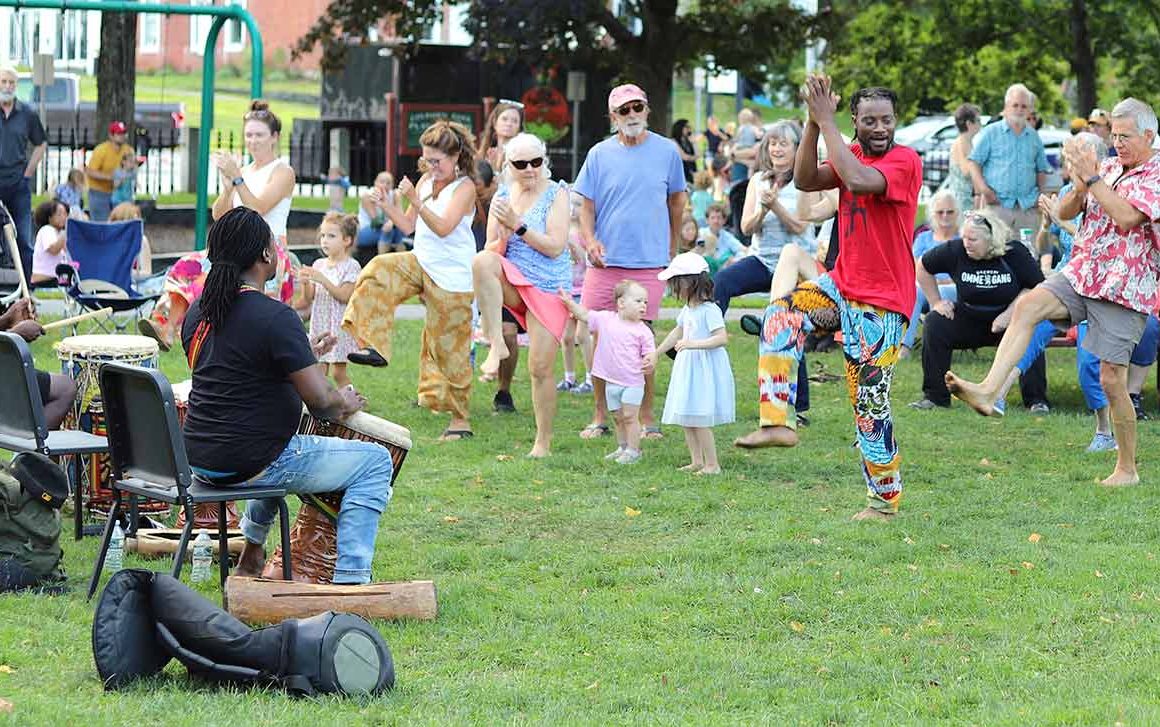
West African music and dance ensemble Jeh Kulu lead a dance workshop in Colburn Park Saturday afternoon.

When Joe Clifford became the executive director of the Lebanon Opera House in 2017, one of the first things on his mind was the 100th anniversary season. Since then, there have been some ups and downs for the live entertainment industry, but the Nexus Festival – the Opera House’s response to the challenges of the pandemic – highlights not only the executive director’s vision, but also the hard work of everyone at the nonprofit, plus the incredible engagement of the whole community in supporting, preserving, and celebrating an important center for culture and the performing arts in the Upper Valley.

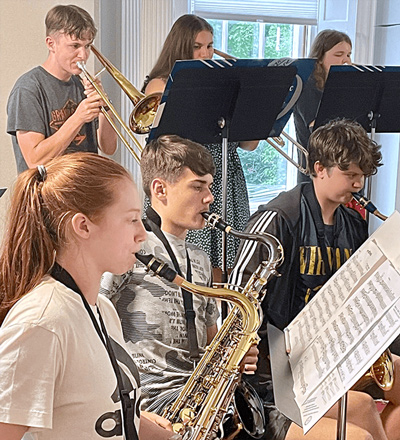
High school students from the Upper Valley Music Center kick off Day Two of the Nexus Festival in 2024.

High school students from the Upper Valley Music Center
kick off Day Two of the Nexus Festival in 2024. (Photo from lebanonoperahouse.org)

The Nexus Festival was born out of the pandemic. Everything shut down in March of 2020: from office work to restaurants, meetings to movies, everything that could do so “went remote.” Needless to say, this posed a problem for a community organization whose focal point is a live, in-person entertainment venue. “By six months in,” Clifford says, “we were getting pretty squirrelly.” But at the same time, it was also becoming fairly clear that the safest place a person could be was outdoors. “At that time, people were doing drive-in movies, outdoor concerts – any workaround not to be in a contained space.” That was when he and the Opera House’s technical director, Joel Giguere, started to formulate a plan.

“We hit upon the idea of doing our festival in downtown Lebanon,” Clifford says. On the one hand, it would allow them to continue with their mission, “by doing events, bringing people together.” But it would also serve as a thank you to a community that helped them to survive. “Even though we weren’t doing programming, they were there to support us during that closure.” The Lebanon Opera House is a nonprofit, and, as Clifford told the Valley News back in 2021, half of their revenue stream at the time came from donations, with the other half coming from events: “To have one half of your revenue stream completely shut down is terrifying.”

It took a year of planning, organization, and elbow grease to see the plan turn into reality. The first Nexus Festival ran for three days: Friday to Sunday, August 13-15, 2021. As with this year’s event, they had three stages: the main stage in the parking lot behind City Hall, the bandshell in Colburn Park, and a “busker stage” directly on the Mall. Featured acts included Bitter Pill, a NH “rhythm and bluegrass” group, Mystic Bowie’s Talking Dreads, who reimagine the hits of the Talking Heads as reggae anthems, and Red Baraat, a NYC-based funk, punk, and hip-hop band with a Punjabi bhangra flair. The festival has only grown since.

This year’s Nexus, the Opera House’s fourth, was bigger and better than ever. Friday evening’s acts may have been moved indoors thanks to Tropical Storm Debby, but they didn’t suffer for the venue change. Jax Hollow kicked things into gear with her signature riff-driven blues rock and an energy that was more than enough to overcome the soggy start to the weekend. Next, the Clements Brothers kept the crowd enthralled (and dry) in the Opera House’s lobby with a gentle combination of guitar, upright bass and harmonies, until grammy-nominated singer-songwriter, Joan Osborne, took to the main stage, playing new singles and old stalwarts alike.

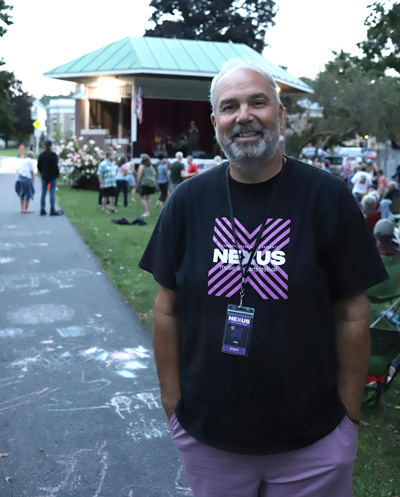
Lebanon Opera House Executive Director Joe Cliffordstands in front of the Colburn Park bandshell Sunday night.

Lebanon Opera House Executive Director Joe Clifford
stands in front of the Colburn Park bandshell Sunday night.

The sun came out Saturday and shone on a full day of eclectic acts, both local and wide-ranging. Notable acts included a dance workshop in Colborne Park led by West African music and dance ensemble Jeh Kulu; Los-Angeles-based folk punk singer, songwriter, and guitarist Sunny War; and a boisterous set by self-described “foot stomping freak folk” collective Bella’s Bartok that had crowds dancing in front of the mainstage well into the night.

Sunday saw yet another day of acts, with an afternoon of jazz and soul by performers like Nation Beat and Soul Porpoise giving way to the mainstage finale: The Full Cleveland. Described as “Vermont’s premier Yacht Rock band,” they played hits by the likes of Steely Dan, Hall & Oates, and Toto to much fanfare. According to Clifford, “the closing band on Sunday has always been a cover band. The first year was a tribute to Van Morrison, the next year it was tribute to the 80s, and then last year was tribute to Prince.” The Full Cleveland did not disappoint.

All in all, this year’s festival had over twenty acts split between the three stages, drew thousands of attendees, and – thanks to the generosity of the festival’s many sponsors – it cost the music-and dance-loving public absolutely nothing. This year, the Opera House’s costs hit “about $60,000” for the festival, Clifford says, between paying artists and extra staff onboarded specially for the event. That also doesn’t include the “army of volunteers”: 20-30 people working 3-hour shifts, doing everything from crowd control, to handing out information, to physically guiding attendees between the stages.

That estimate also doesn’t include the seven months of work that lead up to the event. “Probably in January” is Clifford’s answer to when the planning starts, but he immediately backtracks, explaining that in a way, he’s always thinking about it. The decision to try to get Sunny War, for instance, began when he saw her perform in Nashville back in September of 2023. But “after the holidays,” he says, “that’s when I’ll start putting out offers, and the tech team will start thinking about changes and tweaks to the setup.” He starts recruiting volunteers in March.

But even though it’s an incredible amount of work, and also (as he gently puts it) “a break-even event,” Clifford sees it as something more. “It’s a point of entry,” he says. “The evolution would be, you come to the free festival, and then this fall, come across the street. Go buy a ticket at the box office, go to the show, you know?” If the announced lineup is anything to go by, Nexus attendees will have more than enough reasons to come back.

In fact, looking at the fall schedule, the weekend’s festivities were only the opening act for an exciting season to come. The reason? This October marks the 100th anniversary of the Lebanon Opera House’s construction, and Joe Clifford has been making plans. When he joined the team in 2017, fresh on the heels of a 17-year stint at the Hop, he had already decided that the Opera House’s 100th anniversary season would be a blockbuster one. The response was, as Clifford describes it, a slightly quizzical “okay, but that’s not until 2024?” But there was a lot that needed to happen first. Building the kind of momentum that would be needed would take, in his words, “a seven-year runway.”

It hasn’t always been easy for the performing arts in Lebanon. Back in 1924, when the 100-year-countdown started with the construction of a new Town Hall, it wasn’t unusual for civic buildings to come with a public performance space inside. But, according to city historian Nicole Ford Burley, “it quickly became clear that live theater was out and movies were in.” For decades to come, the Opera House would serve as Lebanon’s local cinema, until that venture closed in 1969. After that, an attempt was made to bring live performances back – an attempt that was stymied by a temporary blacklisting by Equity (the Actors’ Equity Association) because of the state of the green room and other preparation spaces. In 1975, after a renovation, the Lebanon Opera House reopened to great fanfare, with a pre-Broadway production of Moss Hart’s “Light Up the Sky.” “It was a big deal” at the time, notes Ford Burley. Since then, the venue has played host to increasingly notable acts. Among others, pianist George Winston graced the stage in 1996, Marc Cohn performed in 2010, Buddy Guy shredded his way through town in 2012, and Chris Isaak crooned for a full house in 2016.

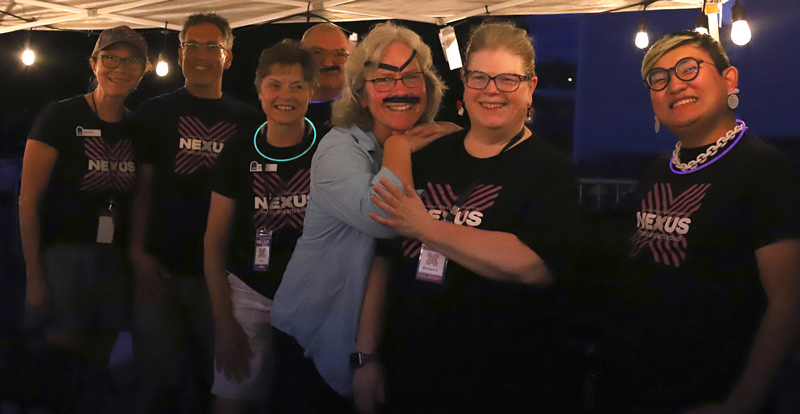
Opera House staff, board members, and volunteers pose under a tent Saturday night. L-R: Kristen Coats, PaulCoats, Chris Morin, Bob Winters, Patrice O’Brien, Barbara Sterling, and Lucas Mendelsohn.

Opera House staff, board members, and volunteers pose under a tent Saturday night. L-R: Kristen Coats, Paul
Coats, Chris Morin, Bob Winters, Patrice O’Brien, Barbara Sterling, and Lucas Mendelsohn.

But Joe Clifford is more ambitious. Under his leadership, the Lebanon Opera House has undergone a major renovation, including a new lobby and concessions, a complete makeover of the performance hall, and improvements to the sound systems and the lighting, all funded by a community-driven capital campaign. “We bought a piano, we built up our donor base, and the staff. To get us ready…It’s like a marathon, right? It’s our Olympics.” And if that’s the case, then it’s clear that the Opera House doesn’t intend to sit out any of the events.

At the time of writing, announced acts for the fall season include the multiple Grammy Award-winning blues-rock band Blues Traveler; singer-songwriter and sometime lead singer of the Canadian indie-rock group The New Pornographers, Neko Case; an evening with Pulitzer-Prize-winning NPR host Ira Glass; hot off his Netflix special “Sweet & Juicy,” comedian Sheng Wang; the incredible participatory musical experience Choir!Choir!Choir! with “An Epic Queen Singalong”; and for the ballet fans, the World Ballet Company will be performing Swan Lake – and that only takes us to the end of November. Clifford gives assurances that there’s more excitement yet to be announced.

“In some ways, it’s a look back on the last 100 years,” Clifford says of the upcoming season, “But also, maybe more importantly, what’s coming forward. It’s [about] the future of the arts in this community. The future of live arts in general.” With Clifford at the helm, a capable team by his side, and a whole community at his back, it’s hard to think that the future will be anything but bright.

Share:
Reading time: 8 min
All, Cover Story

One Family’s Journey to Calling Lebanon Home

by Cindy Heath No Comments
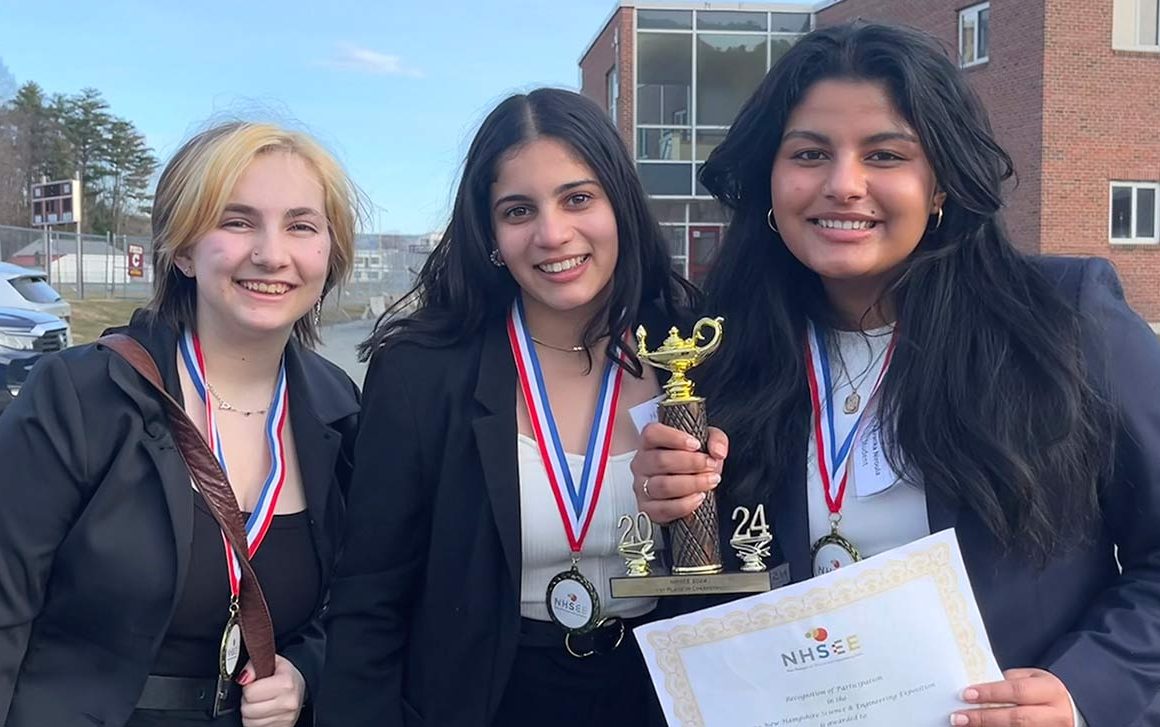
Dipak Niroula with his wife Sharmila, son Aadish, and daughter Aavarika after her high school graduation award ceremony at the Lebanon Opera House.

Dipak Niroula is an award-winning social entrepreneur, published author, and an active community volunteer whose journey from his home country of Nepal to Lebanon, NH is an inspiring and compelling story.

Growing up in an impoverished Nepalese village as the eldest of six children, Dipak had to walk four hours both ways to get to elementary school. After his father led a community effort to build a school in their village, all of the local children then had the opportunity to receive an education, subsequently lifting them out of poverty through education. Dipak was the first in his family and community to graduate from high school, and these early life experiences inspired him to commit to a lifetime of helping other vulnerable children and families, particularly in the rural areas of Nepal.

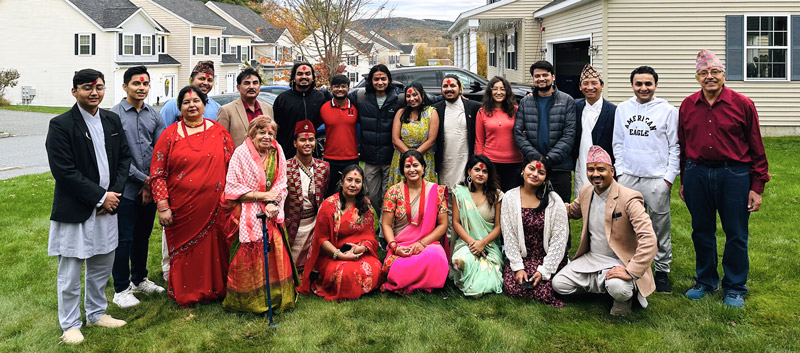
Dashain Celebration with Dartmouth Students and parents (2023)

Dashain Celebration with Dartmouth Students and parents (2023)

In 2011, while still living in Nepal, Dipak and his wife, Sharmila Karki, co-founded Better Life Social Organization (BLSO Nepal) to realize their dream of making a difference in people’s lives, especially for children. The active non-profit offers a diverse array of services to fund its work, including education consulting, travel tours, and homestays. Despite a few setbacks along the way, today, BLSO Nepal helps nearly 200 children in rural Nepal, providing education, healthcare, school uniforms, snacks, stationery, books, and clean drinking water. Dipak is pleased with the work BLSO Nepal is doing. “One thing I’m particularly proud of is how BLSO Nepal has responded to emergencies. During the 2015 earthquake and the COVID-19 pandemic, we rallied hundreds of volunteers to provide critical support. We worked side by side with local residents, government officials, schoolteachers, and social activists. Even with limited resources, our team showed incredible resilience and dedication.” Dipak has been recognized with awards by several international organizations including Lions Club International, Tumbewa Municipal Offices in Nepal, and the National Cultural Heritage Development Society.

Dipak Niroula (right) volunteering with the Rotary Club of Lebanon to clean up the Mascoma River.

Dipak Niroula (right) volunteering with the Rotary
Club of Lebanon to clean up the Mascoma River.

It was during a family vacation to the U.S. in 2015, the same year as the Nepal earthquake, that Dipak and his family received some shocking news. Dipak explains, “We faced a life-altering event. The devastating earthquake that struck Nepal while we were here resulted in the complete loss of my travel company, education consultancy, homestay, and children’s organization. Our home in Nepal was also severely damaged.” Fortunately, the U.S. government granted the family Temporary Protected Status (TPS), and the Niroulas began rebuilding their lives and establishing community connections in Lebanon. “My family and I have adjusted remarkably well to life here in Lebanon. The scenic beauty of the New Hampshire landscape, with its rolling hills and lush forests, evokes memories of our homeland, and has made our transition much smoother.”

Dipak and his family pivoted and became active members of the Lebanon community, continuing their passion for lifting up those in need by developing personal and professional relationships in the Upper Valley, and rebuilding BLSO Nepal remotely. “It’s been so heartwarming to see our kids thriving in the Lebanon schools, even being recognized as exemplary students.” The  Niroulas are grateful for the warm neighborhood welcome they’ve received, as well as the peaceful and safe environment in Lebanon. “We’ve found a perfect balance here – a community that allows us to maintain connections to our Nepali culture while fully participating in American life,” Dipak adds. “The supportive environment, combined with the diverse opportunities available, has not only eased our adjustment but has also opened new horizons for our family’s future.”

Over their time here, the Niroulas have come to appreciate the diverse nature of the Upper Valley and the broader American landscape, and are now working on becoming permanent residents of the U.S. by obtaining a green card. “My long-term goal in pursuing a U.S. green card is to achieve stability and make a significant contribution to the community. I also want to pursue career advancements and educational opportunities that are currently limited due to my temporary status,” Dipak explains.

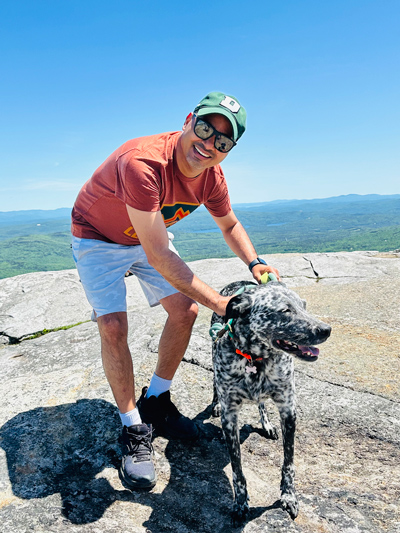
Dipak Niroula enjoying a moment with a dog brought by visitors to Cardigan Mountain (2024)

Dipak Niroula enjoying a moment with a dog brought by visitors to Cardigan Mountain (2024)

In Lebanon as well as in southern New Hampshire, there are thriving Nepali communities that help the Niroulas stay connected to their Nepali culture while becoming fully immersed in a new American community. “We’ve gotten involved with groups like the NH Nepali Community, the International Nepalese Literature Society, and the NH Center for Nonprofits. Having friends who share our cultural background has provided a sense of belonging while also allowing us to introduce our American neighbors to our rich heritage,” says Dipak. The Niroulas join with their friends to cook traditional Nepali dishes, organize sports events, and annually host a local  Dashain (15 day Nepali cultural and religious celebration) for Dartmouth students and area Nepalese families. “This celebration creates a nurturing and supportive environment, helping us all feel cherished and connected to our cultural heritage during this profoundly meaningful festival,” Dipak says.

Traditional Nepali food and fun include momo (dumplings) and dal bhat (lentil soup with rice), traditional music and dance with instruments like the madal (drum), and intricate art like thangka paintings. According to Dipak, a celebration of faith, including Hinduism and Buddhism, is central to the Dashain. “By blending Nepali and American traditions, we strengthen our community and create meaningful connections. Celebrating and sharing these experiences with everyone is incredibly rewarding,” he says.

One of the local organizations Sharmila and Dipak have become involved with is the Rotary Club of Lebanon, participating in events like the Mascoma River clean-up and distributing books and school supplies to elementary school students. “It was wonderful to see the smiles on the children’s faces. It really drove home how important community support is for education,” recalls Dipak. Marilyn Bedell, former president and current secretary of the Rotary Club of Lebanon, is enthusiastic about the Niroulas’ participation, particularly from an international diversity perspective. “Both Dipak and Sharmila have demonstrated remarkable resilience, determination, and an unwavering commitment to improving the lives of marginalized communities in Nepal, and have collaborated on various projects involving disease prevention and treatment,” she says. “Having Dipak and Sharmila involved has educated us about their home country and its traditions and the challenges that have faced Nepal since the earthquake.” Dipak highlights one memorable project that involved providing 200 families with water filters: “It was amazing to see how such a simple thing could make such a big difference in people’s lives. Clean water is something many of us take for granted, but for these families, it was life-changing,” he recalls. For their part, Dipak and Sharmila are grateful for their Rotary Club connections as well. “It honestly feels like family. They’ve been so supportive, not just of our projects, but of us personally,” they say. “Our daughter, Aavarika, has grown up with the club, and it warms my heart to see how much everyone cares for her.”

Helping young people in Nepal find safe opportunities for work and travel is another one of Dipak’s passions. Seeing the struggles of young people when they traveled to other countries not knowing the culture or language, Dipak set about writing two guides that have been widely distributed by the government of Nepal and other organizations. “My books cover everything from language basics to cultural tips, safety information, and advice on managing money abroad,” Dipak explains. “I also wanted to warn people about the risks of human trafficking and give them practical ways to stay safe.” The books helped design Nepal’s mandatory pre-departure orientation program for migrant workers, and the Ministry of Labor presented Dipak with an appreciation certificate for his work. “Writing these books and seeing how they’ve helped people has been one of the most rewarding experiences of my life. It’s amazing to think that something I wrote at my desk in Nepal has gone on to help so many of my fellow Nepalis as they set out to work abroad.”

The Niroula family before coming to the U.S.A.

The Niroula family before coming to the U.S.A.

As to what’s ahead for Dipak and his family, the priority is achieving green card status to open up opportunities for education, federal aid, and business development. There are constraints on realizing the full potential of developing BLSO USA, but giving up is not in Dipak’s nature. “With a green card, I could dedicate more time to developing local programs without the constant worry about visa restrictions, and build stronger, long-term relationships with community partners and donors. It’s exciting to think about the possibilities,” he says. “We’ve seen firsthand how much of a difference this kind of work can make, and we’re really looking forward to bringing that same spirit of support and advocacy to our new home here in the U.S.”

Dipak’s enduring mission of helping others has shaped his life philosophy as well as his life’s work. “These projects have taught me so much about the power of community and working together. Whether it’s cleaning up a local river or helping families across the world, it’s all about making a difference, one step at a time,” he says. “I want the readers of the Lebanon Times to know that helping yourself, your family, and your community can make a huge difference. By caring for others and supporting those in need, we create positive change that extends beyond our own lives.”

For more information or to volunteer with BLSO, contact Dipak Niroula at niroulainfo@gmail.com.

Share:
Reading time: 8 min
All, Cover Story

Unmasking the Invisible

June 8, 2024 by Shannon Panaggio No Comments
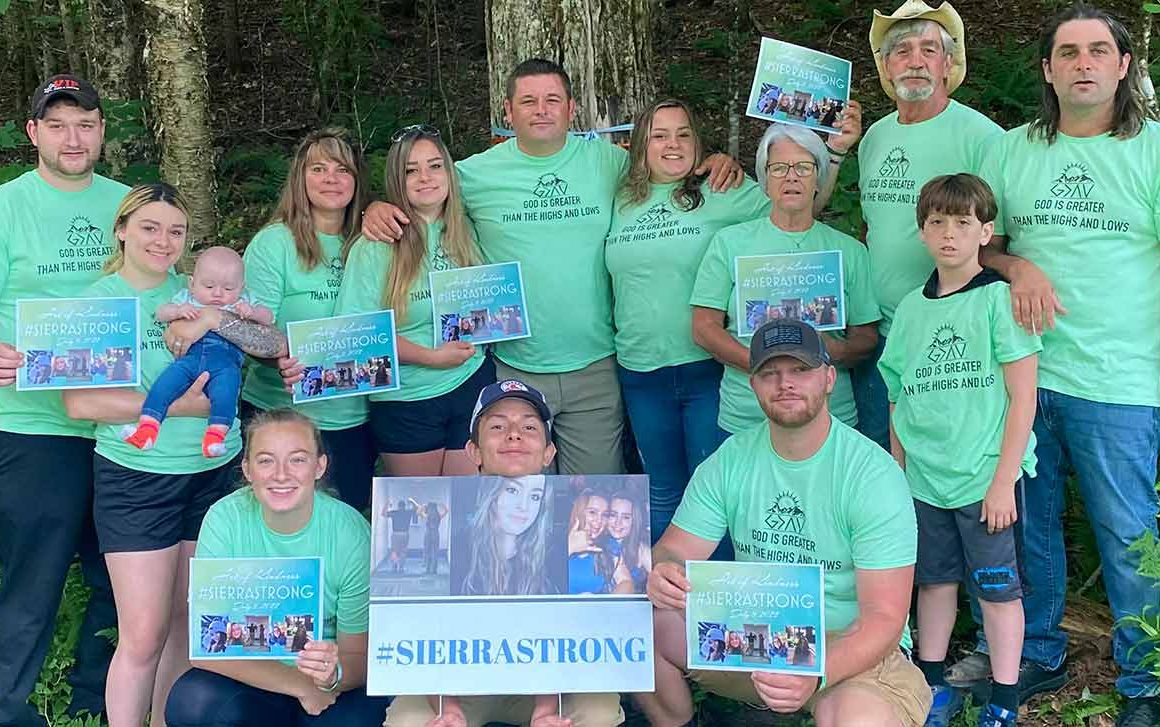
July 8, 2022 - The Longmoore family on the second year anniversary of Sierra’s accident by the site where the crash occurred.

Illuminating Traumatic Brain Injury Through Art, Education, and Advocacy

Change often happens quickly and sometimes unexpectedly, and in an instant, life can get turned upside down. This is one notion that speaks to the story behind a Lebanon-based nonprofit organization, Unmask the Invisible, co-founded by Lebanon residents Amy and Steven Longmoore, that illuminates the invisibilities of traumatic brain injury (TBI) and brings hope and support to those who are affected by it.

The nonprofit was spurned from unthinkable tragedy, when Amy and Steven’s daughter, a then 17-year-old Sierra Longmoore, sustained a traumatic brain injury from a horrible car accident in the summer of 2020. Sierra spent many weeks fighting for her life and months recovering at Dartmouth Health Children’s in Lebanon with the support of her medical team and family.

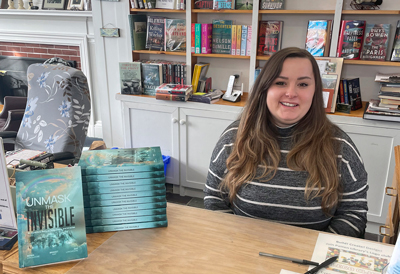
Sierra Longmoore at a book signing for “Unmask the Invisible / An Incredible Story of Faith, Family,and Miracles.”

Sierra Longmoore at a book signing for “Unmask the Invisible /
An Incredible Story of Faith, Family, and Miracles.”

Sierra’s accident was an unexpected and devastating event that changed the lives and routines of her whole family. Through it all, faith, resilience, and a dedication to helping others have sparked the passion and mission of Unmask the Invisible, which aims to provide inspiration and community surrounding TBI through art, education, and advocacy.

It is estimated that 5.3 million men, women, and children are living with a permanent brain injury-related disability in the United States today. Of those 5.3 million, there are countless more loved ones supporting these survivors who also experience trauma and need support. In light of this, Unmask the Invisible encourages and offers support not just for survivors, but also their friends, family, caretakers, or anyone who lives or works with a survivor. The stories and recovery journeys of TBI survivors are often both emotional and complex, which is why Unmask the Invisible works passionately to illuminate the full spectrum of aspects that impact each member of the TBI community. “One of the reasons we started the nonprofit was so we could meet people where they are at in their spiritual journey,” Amy says.

A strong sense of faith helped anchor Amy, Steven, and their loved ones as they weathered the proverbial storm through Sierra’s initial accident, her fight, and her recovery. Being presented with this challenge ultimately inspired the Longmoores to help other families who are experiencing similar difficult situations cope with and learn from their own storms.

Spiritual encouragement is one foundational support that Unmask the Invisible offers. The Hope Café, a web page dedicated to “feeding your spirit with little sips of hope” with artwork and inspirational quotes is one spiritual resource that the organization curates, along with links to a variety of other philosophical and spiritual resources, including music, poetry, movement, and reading.

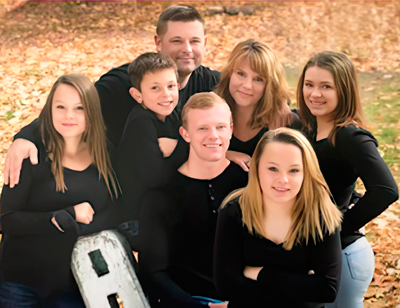
The Longmoore family: (from left) Aspen (Sierra’s twin), Tanner, Steven,Tristan, Amy, Sierra, and Lindsay.

The Longmoore family: (from left) Aspen (Sierra’s twin),
Tanner, Steven, Tristan, Amy, Sierra, and Lindsay.

Amy, Steven, and the team that surrounds them (which includes Sierra, who is the nonprofit’s ambassador) are diverse in their expertise and experiences, from military service to healthcare specialties.

Justin Putnam, the nonprofit’s vice president, served in the Army as an engineer all over the country and the world for two decades. Advisory board member of the organization, Beth Pastor, has also dedicated much of her life to service, seeing patients for 45 years as a pediatric physical therapist. Board member Alex Giesing brings her passion for inclusive and equitable care to the table as a registered nurse who cares for the babies who need extra support in the Intensive Care Nursery (ICN) at Dartmouth Hitchcock Medical Center in Lebanon.

With backgrounds in care and service, the team members behind Unmask the Invisible are all strongly knit together by their passion to make a positive difference in the lives of TBI survivors and their families, which helps keep the freshly minted organization’s efforts chugging along smoothly.

The ways in which the 501c3, which according to their website “illuminates resources and support for families affected by TBIs,” approaches supporting the TBI community is unique and differs from other familiar organizations that are also centered around similar goals.

“[Some] organizations are more focused on incorporating physical activities such as yoga into recovery,” says Amy. “Some people cannot participate in activities like that, or it takes them a long time to get to a place where they can. Some people simply do not recover from traumatic brain injuries at all. We really try our best to meet people where they are at in their journey, as it looks so different for everyone.”

And ‘meet people where they are’ they will, as they are gearing up for an incredibly busy remainder of 2024 as the organization continues to grow and inspire others.

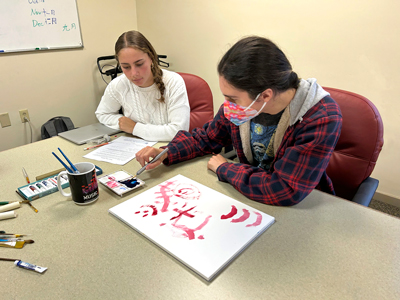
Thayer School of Engineering student working with a braininjury survivor on Unmask the Invisible’s Weighted Paintbrush Program.

Thayer School of Engineering student working with a brain
injury survivor on Unmask the Invisible’s Weighted Paintbrush
Program.

One exciting development in the works is a revamped website for the nonprofit. “Our new and improved website will provide visitors with a clearer understanding and breakdown of our programs and services,” Amy explains. “The site will be anchored by Unmask the Invisible’s three main pillars – education, resources, and family support. In this sense, education encompasses speaking engagements, reintegration and events; resources refers to scholarships, therapies and art-based initiatives; and family support brings spirituality and inclusion into the mix.”

The team have also been continuing to further develop ongoing initiatives, like “Paint It Forward”, an art-based program that provides inspiration and builds relationships. With 50 percent of materials for the initiative donated by Blick and The Home Depot, Paint It Forward provides survivors and their families with free at-home art kits (that are packed by volunteers) that promote creativity, healing, and fun at any stage of their journey. “Unfortunately, there was no art involved in Sierra’s recovery process in the hospital,” remembers Amy. “But art is so conducive to expressing emotion, and we want other families to experience its benefits.”

For survivors and their loved ones who enjoy flexing their artistic muscle in the company of their peers, the free “This Is Your Brain On Art” event coming up on September 28 is for them. Seasoned instructor, Jennifer Dube, will help participants create an inspired masterpiece that they will want to hang where it can be admired. While “This Is Your Brain On Art” is Upper Valley-centric for now, Unmask The Invisible is hoping that this program will span state lines and perhaps make a positive impact on those outside of New England someday. “They still have that creative side,” Sierra says of survivors of TBI. “Anything they can achieve, to any degree, is incredible. No matter what, they are unstoppable and embody the fact that you can persevere.”

Of course, as a fledgling nonprofit that relies heavily on grants and donations for the important work they do in the community, fundraising is also top of mind as things grow and expand. “Since our inception, we have been really focused on opportunities to get our name out there in front of people that don’t cost us anything,” Amy says.

Recently, participating in Green Up Days around the Upper Valley wearing matching branded t-shirts to garner awareness for the organization and its cause was one such opportunity. And of course, encouraging people to follow and share Unmask the Invisible on social media, as well as give their time and talent by volunteering, helps greatly to spread awareness for the cause. “We were able to raise a few thousand dollars last year to fund our various programs, which has definitely been helpful,” Amy says. “But we need to raise more to be able to bring to life the big ideas we have for the future of the organization, like in-person retreats and scholarships for crucial medical equipment.”

The newest and biggest undertaking this year, which will see all proceeds going directly back to the nonprofit, is the first annual Unmask the Invisible Softball Tournament, which will take place on Sunday, July 21st at Civic Memorial Field in West Lebanon. Co-ed teams of up to 14 players can register to play for a fee of $350 per team.

Unmask the Invisible volunteers participating in Hanover, NH Green Up Day.

Unmask the Invisible volunteers participating in Hanover, NH Green Up Day.

Participants and spectators alike can look forward to bat and 50/50 raffles, concessions, live entertainment (you’ll have to swing by the event to find out who!) and more over the span of the tournament. The enthusiasm surrounding the upcoming event is palpable, especially as far as Sierra is concerned. “Sierra was a three sport athlete who made it on her varsity softball team freshman year of high school,” Amy says. “Sports used to be a huge part of her life.”

“I am really excited and happy that we are having the softball tournament,” Sierra adds. “The fact that it will include people with TBIs and the people who love and support them is so important.”

How is Sierra doing close to four years post-accident, you may be wondering? She’s certainly busy these days juggling working part-time and being an ambassador for Unmask the Invisible. Not to mention, she and her mom have been making stops at local libraries recently for book signings of Unmask the Invisible, a book they wrote together about Sierra’s journey and overcoming the challenges of TBI through faith, family, and miracles.

Above all else? “I am excited to be a voice for others so we can shine a light on their experiences,” Sierra says.

For more details on all of Unmask the Invisible’s upcoming events around the Upper Valley, to register your team for the first annual softball tournament, grab your own copy of Unmask the Invisible, and learn how you can get involved, be sure to visit the nonprofit’s website, unmasktheinvisible.org.

Share:
Reading time: 8 min
All, Cover Story

Lebanon’s DAR Good Citizen

by Cindy Heath No Comments

Contributing to the community seems to come naturally to Aavarika Niroula, a senior at Lebanon High School and recipient of the 2023-2024 Daughters of the American Revolution (DAR) Good Citizens Award. But Niroula’s path to community service has been markedly different from the average American high school student.

Originally from the ancient city of Kathmandu in Nepal, Niroula and her family arrived for a visit to the U.S. in 2015, but a devastating earthquake in their home country would prevent them from returning. Reeling from the enormous loss of their home, livelihood, and Kathmandu family members, they were granted temporary protected status by the U.S. government, and they began to build a new life in America. As a result of this experience and being suddenly propelled into a strange new world, Niroula developed a passion for helping others.

Nepali New Year get-together with fellow Nepali youth. Left to right: Suvana Rai, Deepasha Giri,Aavarika Niroula, Dina Adhikari, Shreela Kadariya, and Nistha Prasai.

Nepali New Year get-together with fellow Nepali youth. Left to
right: Suvana Rai, Deepasha Giri, Aavarika Niroula, Dina
Adhikari, Shreela Kadariya, and Nistha Prasai.

Niroula credits her parents for the inspiration to become involved in community service. “My parents have been social workers ever since I can remember,” she says. “My dad, along with his business, ran a nonprofit organization that supported 96 homeless kids. His organization, Better Life Social Organization, was able to build houses and build schools with paid teachers. Now through the Rotary Club of Lebanon, he still donates and is able to send money back to the organization.”

Niroula and other area award winners were celebrated at the holiday luncheon of the Reprisal Chapter of DAR, based in Newport, New Hampshire, and named after the USS Reprisal, the first ship of the Continental Navy to reach European waters during the Revolutionary War and the vessel that transported Benjamin Franklin to his diplomatic post in France. The students shared what being a good citizen means to them within their school and broader community. For Niroula, it’s about exploring a diverse slate of interests. “I came into high school with a mindset of ‘I want to try everything and if I don’t like it then I will try something else’.  I have carried this mindset into everything as I got involved in various clubs and sports such as soccer, theater, Model UN, and such,” she says.

Known as the largest women’s service organization in the world, DAR has more than 180,000 members with approximately 3,000 chapters in all 50 states and in 13 countries. One of many awards the organization bestows, the DAR Good Citizens award recognizes and rewards high school seniors who consistently display the qualities of dependability, service, leadership, and patriotism in their homes, schools, and communities. These students are selected by their teachers and peers because they demonstrate these qualities to an outstanding degree.

Aavarika is pictured with chapter regent Pamela Lee (in hat), chapter Good Citizens Chair Pat McCabe, Aavariki as a young childCaroline McMahon from Sunapee, and Jennette Davis from Hanover.

Aavarika is pictured with chapter regent Pamela Lee (in hat), chapter Good Citizens Chair Pat McCabe, Caroline McMahon from Sunapee, and Jennette Davis from Hanover.

The local Reprisal Chapter has members not only from Newport, but also Lebanon and West Lebanon, Claremont, Sunapee, Hancock, and some as far away as Florida, Maryland, and Montana, and is one of 25 chapters throughout New Hampshire. Chapter leaders are called “regents”. To be a member of the DAR, a woman must be at least 18 years of age and be able to prove direct descent from a man or woman who served in or aided in the American Revolution,  according to Pamela Lee, the current Reprisal Chapter regent. “One of my patriots, John Knight, fought in the battle of Bennington. After the war, John received a land grant in North Hero, Vermont, now the site of Knights Point State Park,” Lee says.

The DAR is committed to historic preservation, education, and patriotic service, and provides assistance to anyone interested in discovering if they have a Revolutionary War patriot in their family tree. Lee notes, “We have people who suspect that they have a patriot ancestor, but would like to know for sure. We have a wonderful registrar who can help people trace their ancestry.” The DAR is said to have one of the largest genealogical libraries in the world.

Aavariki as a young child

Aavariki as a young child

Nationally, the DAR is trying to identify as many female and African American patriots because they haven’t been historically recognized, Lee says. In November, the New Hampshire organization will be dedicating a new marker at the American Independence Museum and the Winter Street Cemetery in Exeter to honor the brave black soldiers from New Hampshire who fought for our nation’s independence.

Kim Chandler, honorary Chapter regent and current historian, started tracing her genealogy in 2002. “My patriot is John Caverly from Strafford. John was a farmer and one of the early settlers in Dover and then Barrington,” she says, citing the overwhelming recognition of how important the revolution was to the formation of our country. “When I moved back home and joined the chapter in Newport, I was pleased to see the chapter supporting Veterans groups, patriot grave restorations, and schools with scholarships and service projects.”

American colonial history is in its infancy compared to the rich history of Kathmandu, which dates to between 167 BC and 1 AD according to archaeologists. For Niroula, maintaining a connection to her home country is important, and is reflected in her commitment to raising funds for earthquake relief among other activities. In her DAR essay, Niroula cites her motivation: “Living in a predominantly white community, I ached for youths with similar backgrounds as me. I sought out the NH Nepali Community based around Manchester and Nashua. Following that, I joined the Diversity and Inclusivity club at my own school where I was able to fully embrace my identity.” Over the past three years, Niroula has also been teaching English as a second language to students all over the world via Zoom. “I love doing this so much because I once was an English learner myself, and for me to be on the other side as an educator is so fulfilling to me,” she says. “Volunteering grounds me and is a very big part of my life.”

John Caverly gravesite, marked with a bronze marker for hisRevolutionary War service.

John Caverly gravesite, marked with a bronze marker
for his Revolutionary War service.

In addition to teaching English as part of the Global Language Learning Club, being a member of the Diversity and Inclusivity Club at Lebanon High School, and raising funds for Kathmandu earthquake survivors, Niroula’s many activities include participating as a Dartmouth Health summer intern, Rotary Youth Leadership member,  Student Council secretary, and model UN delegate. She has researched microplastics and curcumin to earn a 1st place award in chemistry at NH Science and Engineering Exposition, joined the NH Nepali Community and became a senior coordinator, served as a student representative on the Lebanon School District superintendent search committee, is currently participating as a thrower on the Lebanon High School track and field team, and is a member of Students for a Sustainable Future.

In her essay, Niroula also shares deeper insights into why community service is so important to her. “Instead of being consumed by our pending status, I decided to contribute, to give back to this community that had adopted me,” she says. “Starting off small with volunteering at community events, I familiarized myself with the people around me, their stories, and their values. I shared the lessons of my own journey, using my struggles to bridge others.”

Niroula’s diverse life experiences have shaped her decision about which career path to pursue after high school. She has been accepted at St. Anselm College and is on the waiting list at two others, planning to pursue a degree in child psychology as part of a pre-med course of study. Niroula’s youthful wisdom is evident in her DAR essay, suggesting she will be an excellent contributor and leader in whatever field she chooses.

“My journey of constantly adapting to changing environments pointed toward one direction: child psychiatry. I realized that I wanted to dive into understanding the young minds that face upheavals, to provide them the support and guidance I once sought, and, in many ways, still do,” she writes. “Today, as I stand at the edge of my next academic chapter, I carry with me the echoes of Kathmandu’s streets, the lessons from the halls of Lebanon High School, and the hopes of every child I wish to support. The uncertainty, once my opponent, has become my ally, urging me to embrace whatever life throws at me, to be the aid for many navigating their disruption, just as I navigated mine.”

Caverly House that John built in Strafford

Caverly House that John built in Strafford

For more information, visit the national organization website at dar.org.

Share:
Reading time: 7 min
Page 2 of 11«1234»10...Last »

Our Latest Issue

The Lebanon Times is delivered to every mailing address in Lebanon.

  • Subscribe at an out of town address!
  • Pick up a copy!

© 2024 copyright Greater Good Media. All rights reserved.