Home
Our team
Content
    Cover Story
    All Articles
    Animals Rule!
    Around Town
    Cityscapes
    Community Impact
    Elder Profile
    For The Love Of It
    Good For You
    Goodness InDeed
    Green Page
    History
    Local Sports
    Meet your Neighbor
    Miscellaneous
    Spotlight on our Sponsors
    The Arts
    Your Green Spaces
Advertise
Archives
Donate
Contact


The Lebanon Times - Good people, good places and good things happening
  • Home
  • Our team
  • Content
    • Cover Story
    • All Articles
    • Animals Rule!
    • Around Town
    • Cityscapes
    • Community Impact
    • Elder Profile
    • For The Love Of It
    • Good For You
    • Goodness InDeed
    • Green Page
    • History
    • Local Sports
    • Meet your Neighbor
    • Miscellaneous
    • Spotlight on our Sponsors
    • The Arts
    • Your Green Spaces
  • Advertise
  • Archives
  • Donate
  • Contact
All, Cover Story

The Past and Future of Sugaring in Lebanon

February 24, 2024 by Richard Ford Burley 1 Comment
sugaring in lebanon - maple syrup lined up on a window

You can find maple syrup in every city, town, and rest stop in New England, and in every grocery store and gift shop from Connecticut to Maine. Whether you buy it in the familiar, screw-capped, gray plastic jugs or in fancy glass bottles shaped like little leaves, maple syrup carries with it a long tradition of community, family, and hard work. Nowhere is that more true than in Lebanon, where some of the oldest families in town are not only continuing the long legacy of maple sugaring, but carrying it forward into a more efficient – and more sustainable – future.

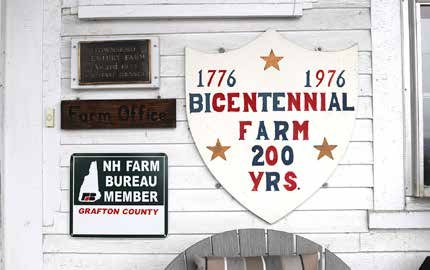
Perched on the top of Storrs Hill sits a white farmhouse, decorated with signs reading “century farm” and “bicentennial farm” on the side. It was built in 1784 by Nathaniel Storrs, one of the first settlers to come to the area. The land had come into his brother’s possession in 1763, just two years after Governor Benning Wentworth signed the charter that brought Lebanon into existence. In February of 1769, “Grandfather Nathaniel” (as his descendant Heidi Townsend Bundy calls him) bought the plot from his brother Cornelius, and two years later he moved his whole family up from Mansfield, Connecticut. The log cabin they first lived in no longer survives, but the farm, which has gone by several names over the years, including Storrs-Townsend and the current Tomapo (an abbreviation of Townsend Maple Orchard) is still in the family – and still producing maple syrup.
sugaring in lebanon - farm 200 years sign
Tomapo Farm, January 2024.
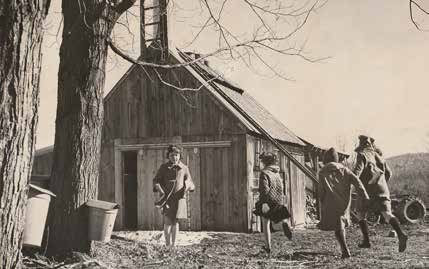
sgaring in lebanon - sepia photo from 1965 showing Tomapo farm sugar house with 4 children outside
Storrs-Townsend (Tomapo) Farm sugar house 1965.

“We believe that they were probably sugaring shortly after Grandfather Nathaniel settled here,” Heidi says, sitting at the kitchen table in the old farmhouse. Nathaniel was her fifth-great-grandfather. “We only have records back to 1824,” she but “of all the things on the farm, that’s the one thing that we can track having been here. I have diaries from Grandfather Abel from the late 1800s. I have diaries from my grandfather, Harry [Storrs Townsend], from the late 1950s…we’ve got a lot of paperwork that makes us believe that sugaring was here early on.” Sarah Murchie, Heidi’s daughter, sits across the table with her own toddler daughter sitting in her lap: “It’s been the one constant,” she adds.

The earliest history of maple syrup itself isn’t perfectly clear, but one thing that everyone can agree on is that it’s always been plenty of work. Indigenous oral histories from across the northeast tell of the origins of sugaring – clearly an indigenous practice long before the arrival of settlers – with several suggesting that syrup itself once flowed directly from the trees until greater powers intervened, diluting it into sap to prevent humanity from becoming too lazy. When the sap comes out of the trees, its sugar content is very low, usually one to two percent by weight. Finished syrup is around sixty-six percent, and the art and science of sugaring is in how you get from one to the other.

Once upon a time, the secret to maple syrup production was simple: more bodies. “When my father was young,” Heidi says, “there would be an announcement at the [high] school in the afternoon, that the Townsends needed help…and the boys would hike up over the hill and spend the afternoon gathering sap.” Today, the sap is collected using vacuum pumps and plastic lines that crisscross the hillsides and collect in great tanks, but back then, the height of technology was metal buckets and rubber boots. “They still stop at the market and identify themselves as one of those kids that gathered sap, [saying] ‘we had so much fun’…I was around when there were buckets, and I don’t remember it being fun,” Heidi laughs, reminiscing. “They were happy. I always had sap in my boots; my mittens were always wet.” The industry has modernized since, not least because students who will work for a dollar an hour (plus a little ‘sugar on snow’ at the end of the day) are understandably harder to come by than they used to be.

“We have come into the 21st century,” Heidi says. “Back ten plus years ago…we added a vacuum system to our mix…so for quite a while we had a vacuum system on the one side of the road, about a thousand taps, and then we had five hundred on the other side that were all gravity fed to a tank” (they’ve since expanded to over 2,000 taps). But that division still meant extra manual labor, and so they tried an experiment with something called a “sap ladder”. “You bring all of your tap lines into a main line that’s headed downhill, and then there’s a vacuum system that has you spread that volume out into small lines so it will climb up into another line that goes downhill,” Heidi explains, describing the way the sap can travel up a line sixteen feet into the air to safely cross a road frequented by farm trucks and utility vehicles. “And then this past year, we added reverse osmosis to the mix.”
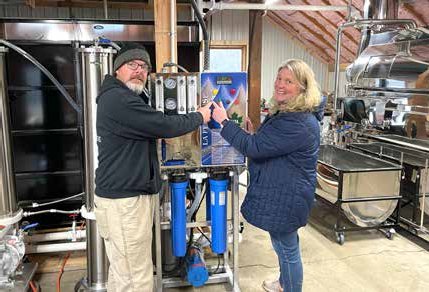
sugaring in lebanon - eric and his wife cole pressing the start button on the RO machine
Eric Cole and his wife, Susan Cole, pressing the start button on the RO machine for the first time.

Reverse osmosis – or RO – is a technology that might be more familiar as a water filtration system: using high pressure and a semi-permeable membrane, water is divided into pure drinking water on the one side and a leftover liquid called concentrate on the other. Its use in sugaring just flips around which side is considered valuable. In a drinking water system, it’s the pure water that’s the goal, but in sugaring, it’s the concentrate. “So what it does is, it separates. Seventy-five percent of the water is pulled out of the sap before you even put it in the evaporator,” Heidi says. “I end up with hundreds of gallons of pure water in a tank that I use for cleaning, and then I have the rest of the sap that’s left, which has been condensed from two percent sugar to eight percent.” That means less time and energy spent boiling the sap down into syrup. “Last season, I spent ten 12-14 hour days in the sugar house [boiling sap], and I had help,” she adds. “This last season, 2023, we had the reverse osmosis set up, and I ended up doing 6-8 hour days, at most.” These moves toward labor-saving modernization aren’t limited to Tomapo Farm, either.

Not a mile away as the crow flies is another farm that’s also been around since almost the first days of Lebanon. Standing in his garage-turned-sugar house, Eric Cole explains that Elm Tree Farm has been in his family for eight generations. “We do business here as Ascutney View Farm, which is off of Poverty Lane…our kids will be the ninth generation.” But while sugaring is something the family has done for as long as anyone can remember, this particular venture is something new for Eric, who doesn’t look old enough to be on his third career. “I went to school for forestry, got my forestry license…was in the logging industry for a few years.” After hurting his back, he spent seventeen or eighteen years selling logging equipment:
“skidders and feller-bunchers…everything that you need to cut down a tree in the forest and process it and get it to the mill.” And then, a year ago last November, “I decided to…I say ‘retire’ from my second career,” he says, looking at the setup in the repurposed three-car garage. “And now I’m on career number three.”

The garage doesn’t look like the old traditional sugar house that’s just next door, where Eric grew up sugaring with his brother, father, and grandfather, nor does it look like the modernization of a legacy sugar house like they have at Tomapo. In fact, from the outside, the only clue that it isn’t for cars is the way three large blue sugar lines run up to (and through) the exterior wall. But one look inside tells another story: two raised, black, 3,000 gallon tanks take up a quarter of the interior space. Another half is taken up by an enormous stainless steel machine. “So that’s a three-and-a-half by fourteen CDL evaporator,” Eric says. “It’s oil-fired. Help is fairly limited today – for a lot of people – and so my goal was to be able to do as much of this myself as I possibly could.”

He isn’t overstating things: every part of his sugaring operation can be run from right where he’s standing. The sugar bush, a 20-acre patch with about 2,200 taps so far, is about three quarters of a mile up the hill. “I have a twenty foot conex box, a shipping container, out in the woods with a 2,200 gallon tank inside of it, and a vacuum releaser. So the vacuum goes out to the releaser, from that releaser I’ve got main lines that go all through the woods, which brings the sap down to the storage container…and then I have a pump that’s run off a generator out there, and it pumps the sap back to here.” From his phone, he can tell in real time the temperature and vacuum pressure of any given segment of line, and how full the sugar bush storage tank is. It’s a far cry from buckets and boots. “I don’t touch anything through the whole process. It just comes out of the trees, through here, through here, to the barrel,” he says, pointing. “It’s very efficient for me, as one person. I can do pretty much everything myself.”

Next to the internal storage tanks is an RO setup not unlike the one at Tomapo, but unlike the eight percent sugar concentrate that Heidi runs through her setup, Eric runs his up to twenty, using his two tanks and multiple passes to achieve that level of concentration. The difference is in how long the sap spends being heated in the different evaporators.

The color and flavor of maple syrup come from something called the Maillard reaction. It’s a reaction between amino acids and certain sugars that happens when they’re exposed to heat – think a nicely seared steak or a lightly-browned campfire marshmallow. That browning is what gives maple syrup its flavor, and it’s a function of the type of sugars in the sap and the length of time it spends being heated. Depending on the evaporator, the concentrate might be too sweet, in which case it wouldn’t be able to spend enough time exposed to the heat to develop all the color and flavors that maple syrup is famous for. Heidi recalls an early boil after taking hers to twelve percent: “I tasted that syrup, and I thought… this doesn’t have the kind of flavor I want.” Meanwhile at Elm Tree Farm, Eric says his “rig boils so smoothly at twenty percent that that’s what I shoot for.”
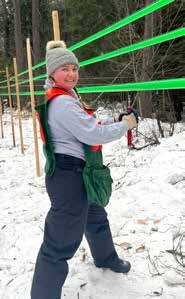
sugaring in lebanon - Clara installing tap line
Clara Cole helping install tap lines at Ascutney View Farm for another sugaring season.
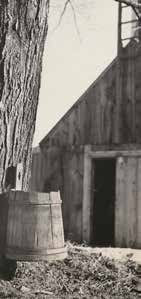
sugaring in lebanon - sepia photo from 1965 showing a wooden sugaring bucket hanging on a tree
Wooden sugaring bucket Storrs-Townsend Farm sugar house, 1965
sugaring in lebanon - Heidi holding the wooden sugaring bucket
Heidi Townsend Bundy holding the same sugaring bucket in 2024

Reducing the number of hands needed isn’t the only upside of modernizing the sugaring process: a more efficient setup also means a significant reduction in greenhouse gas emissions. At Tomapo, Heidi says they used to get six gallons of sap for every third of a cord of wood. Thanks to improvements that include the new RO setup, they now get thirty-six gallons for the same amount of wood, an over 80% reduction in emissions. Meanwhile, running twenty percent concentrate, Eric’s boiling runs are far shorter than they would otherwise be. “Last year my longest boil was two, two-and-a-half hours. I can make about forty gallons of syrup an hour,” and less time boiling means fewer emissions.

But for all the ways that sugaring has changed, some things are still the same. When asked “why sugaring?” Eric says it’s a mix of nostalgia and the need for a challenge. “I have a lot of memories of my father and my grandfather here in the sugar house… [and] I’m just kind of drawn to the woods.” Heidi’s father, Bruce Townsend, still comes down to the sugar house once a season, too. “He tastes the syrup, tells me it ‘tastes pretty good,’ and then as he leaves…he’ll turn around and look at me and say, ‘well, you look like you know what you’re doing.’” She laughs and says, “But that’s Dad…It’s a fun activity, it really is. I mean it’s a lot of work, but it’s fun, especially when you can do it with family.” With a little luck, and a little help from new technologies, they’ll be able to do it for generations to come.
Share:
Reading time: 10 min
All, Cover Story

If You Give a Girl Scout a Cookie…

by Rose Terami No Comments

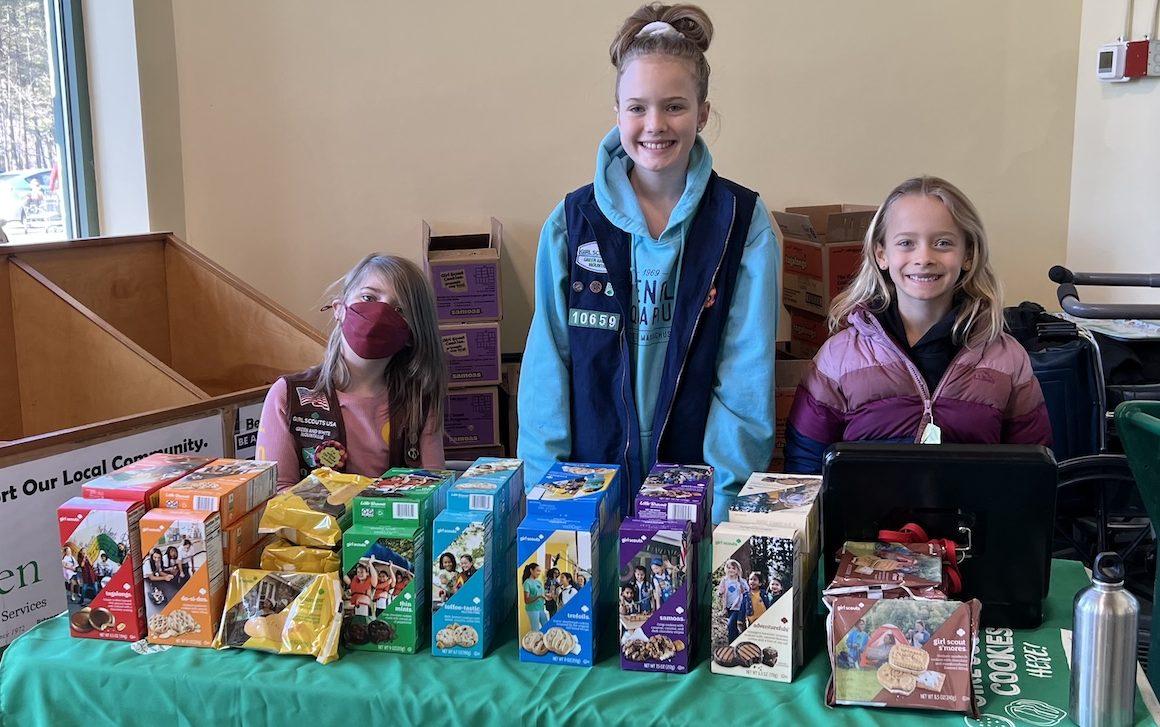
Once a year, Girl Scouts from across the country unite to fulfill a shared tradition and mission – in the well-known form of selling cookies. Whether you’ve sold Girl Scout cookies at some point in your life or eagerly await stocking up your pantry with these nostalgic treats, there’s something to look forward to for everyone when Girl Scout Cookie season rolls around. For the local Girl Scouts in and around Lebanon, there’s a lot of preparation that leads up to this beloved – and busy – time of year. Lebanon local Erin Buck is a troop leader to 18 Girl Scouts in the Upper Valley, including her two daughters, Acadia and Azalea Buck. This year, they have some big goals for cookie season. Acadia, 14, plans to sell at least 1,000 boxes of cookies, while Azalea, 8, has made a goal to sell 2,024 boxes between January up until March.

Selling cookies is more than just a fundraiser or an activity to pass the time; for Girl Scouts, it’s an opportunity to learn and realize their ability to succeed when they put their minds to something.

“I like doing cookie booths because I get a chance to manage the money or do credit-card transactions,” Acadia says. “And, I like eating cookies.”

Certain incentives also help motivate Girl Scouts to reach their cookie-selling goals. This year, if a Girl Scout sells 1,000 boxes of cookies, she gets a pair of custom Converse sneakers, and another pair will be given to a child in need. If she sells 2,024 boxes, she wins a two-week day or resident camp program or an iPad, and if she sells 5,000, she wins a travel trip.

At age 10, Acadia was the top cookie seller of the Girl Scouts of the Green and White Mountains and was awarded a trip to Athens , Greece. Unfortunately, the trip was canceled due to the pandemic.

But, it’s not just the incentives that inspire Girl Scouts to sell cookies, Acadia and Azalea both report. “The most important thing about the shoes [prize] is that you also give a kid [in need] shoes,” Azalea says.

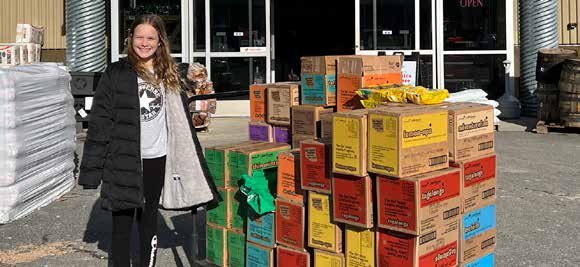
give a girl scout a cookie - Acadia delivering cookies sold at Tractor Supply
Acadia working toward her 1000 boxes of cookies sold at Tractor Supply.

“The Girl Scout Cookie program is the world’s largest girl-led entrepreneurial program,” says Carrie Loszewski, VP of engagement for Girl Scouts of the Green and White Mountains. “[It teaches] five incredibly valuable lessons in life skills: decision-making, goal-setting, financial literacy, business ethics, and people skills.”

Girl Scouts learn about and practice these skills throughout the year leading up pivotal moments like Cookie Season where they get to witness the culmination of their efforts in action. Along with these five important skills, Girl Scouts also focus on the importance of building and belonging to a community throughout the year.

Buck became a Girl Scout troop leader shortly after Acadia became a Girl Scout when she was in kindergarten. Since then, their troop has grown and had many memorable experiences together.

Acadia’s troop is a multi-level troop (Girl Scouts of all different grade-levels and ages) that caters to each girl’s interests and needs. “My role is to support all of those kids and create a bigger sisterhood than just ourselves,” Buck says. “I’m blessed that I get to do this with both of my children at the same time, and be able to offer a second family for a lot of children in our community.”

Buck also supports her daughters as a “Cookie Mom”. Cookie moms are a crucial part of their daughters’ experiences as they help with delivering cookies and restocking inventory, and they travel all across the Upper Valley to do so. “That’s what we do as Cookie Moms; we help [our Girl Scouts] get there,” Buck says. “I think one word to describe Cookie Moms is ‘organized’,” Buck says. “I put a lot of energy into understanding what both of my kiddos goals are for the season ahead…it means being realistic about our
goal-setting and managing expectations.” There are various steps throughout the season that start with initial ordering, which involves asking local businesses and community members to support their local Girl Scouts. This encourages Girl Scouts to get to know members of their community and create new relationships, while also teaching business and entrepreneurial skills. Next steps include booth sales at local businesses, like Joann Fabrics or the Lebanon Coop.

Acadia and Azalea’s troop meets every Monday. Weekly troop meetings begin with a snack, followed by reciting the Pledge of Allegiance and the Girl Scout Promise and Law. The rest of the meeting might consist of crafts or an activity that explores the traits involved in earning a particular badge.

During cookie season last year, Girl Scouts in Buck’s troop created their own version of The Day the Crayons Quit – an imaginative picture book written by Drew Daywalt about the interpersonal conflicts between different colors in a box of crayons.

The Girl Scout version of the story followed a similar plot, but instead of crayons, each of the girls were assigned different Girl Scout cookies – both current and discontinued varieties. By looking at life through the perspective of each cookie type, they created dialogue between each of their characters. The re-imagined story, “The Day the Cookies Snapped”, was a way for the Girl Scouts in Buck’s troop to use their imagination to find a creative solution to a make-believe problem, and to familiarize themselves with all the different types of Girl Scout cookies. The Girl Scouts program is built around trust and nurturing relationships through unique shared experiences. Through activities, badge opportunities, and community service, Girl Scouts have a chance to work together as a team and express themselves creatively, while also offering their unique talents to help solve problems.

“Encouraging girls to explore, reach for their dreams, and thrive in our complicated world while being their authentic selves is core to the mission of Girl Scouts,” Loszewski says.

“While many Girl Scouts earn these prestigious honors, earning badges and participating in our activities fulfills our mission to make the world a better place,” she adds. “You see it when a young girl comes out of her shell to speak up for herself, when a child conquers her fear and reaches the top of our climbing wall or jumps into the water at summer camp, or simply makes a new friend.”

give a girl scout a cookie - Azalea preparing food
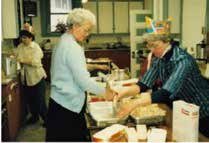
Azalea preparing food for community members at the LISTEN Center Dinner

Girl Scouts interact with their local communities in a number of ways. Some of Acadia’s favorite ways to give back to her community as a Girl Scout are by volunteering to help serve dinners at the LISTEN Center, helping out at local humane societies, and participating in local food drives. “I get to help my community and learn business skills,” she says. “I also feel like a leader in my community.”

Through the Girl Scout program, girls complete a variety of tasks that challenge them to employ their knowledge and skills to earn badges. Each badge represents a different trait or skill earned when a Girl Scout completes a particular project among a variety of categories.

“Since 1912, girls have learned to turn their passions into action through Girl Scouting. Whether they’re using science, technology, engineering, and math (STEM) skills to solve problems; starting their own nonprofits; finding more ways to protect the environment; or discovering the power of spreading kindness, all their actions add up to a better world,” Loszewski says.

Earning badges in areas like these encourages Girl Scouts to not only better themselves, but also make a difference to others around them by giving back to their community.

“Girl Scouts of all ages take action in their communities,” Loszewski adds. “The pinnacle of the Girl Scout Experience is the Gold Award, which Girl Scouts in grades 9-12 may earn. This past membership year, 18 Girl Scouts in our council achieved this remarkable honor. They took on issues like fighting the negative impact of fast fashion, helping grieving children, helping children deal with stress and anxiety, honoring veterans, encouraging reading, feeding the hungry, and more.”

Younger Girl Scouts – like Azalea – also give back to their communities and learn leadership skills by earning awards and badges for their grade levels.

give a girl scout a cookie - Azalea, Erin, and Acadia smiling at the Memorial Parade
Azalea, Erin, and Acadia at the Memorial Day Parade in Lebanon.

“We try to plan a variety of activities so it hits every kid’s interest,” Buck says. Everyone is able to share their interests and can expect their ideas to be heard. The older girls of the group including Acadia will help the younger troops like Azalea, voice their opinions. Older kids give ideas that will benefit the wants and needs of the younger girls and they have a strong connection with them.

“Often, our youngest look up to our biggest,” Buck says. “Emotionally, [the older girls] are very important, they help stabilize the younger side of the group. They find a lot of comfort in each other and that’s an integral part of what we do.”

“Really, it’s just about how much fun we get to have with the Girls and we get to go on fun trips,” Azalea says. “And it’s amazing that we get to help the community and other people.”

Fun trips that align with learning goals – like visits to a trampoline park or amusement park, camping adventures, and even international travels – are some of the experiences that Girl Scouts look forward to as they advance through the program and celebrate their accomplishments. An annual boat race is one of Azalea’s favorite Girl Scout memories, where her troop works together to craft boats out of cardboard and duct tape and race them across the pool at Six Flags.

The quality time that the Girl Scouts get to spend with each other allows for relationships to develop and flourish within the troop. For Azalea, it’s this quality time and friendships that she loves most about being a Girl Scout. “I love spending time with everyone and I know I’m with safe people,” she says.

“When other parts of life aren’t going well, Girl Scouts is a big outlet,” Buck adds. “It’s a different group of people that you can be yourself with.”

Share:
Reading time: 8 min
All, Cover Story

Lebanon’s History in Pictures

November 25, 2023 by Cindy Heath No Comments
lebanon history in pictures

As an Enfield native, Nicole Ford Burley has a special connection to the Upper Valley and its history. With a background in medieval art history and research administration, Nicole is well-positioned to serve as the Lebanon city historian, chair of the City’s Heritage Commission, and curator for the Lebanon Historical Society. Nicole’s volunteer and professional roles converged recently to inform the writing of her first book, Images of America: Lebanon (Arcadia Publishing, 2023), now available online through the Lebanon Historical Society website, at the Lebanon libraries, and at local bookstores.

William Bliss (1815–1853; standing at left) moved to Lebanon at the age of 7 and enrolled at West Point at 14. He was chief of
staff to Maj. Gen. Zachary Taylor (seated) and became Taylor’s private secretary after the general became president of the United States in 1849. William Bliss was a talented linguist able to read 13 languages, and he taught mathematics at West Point. He fought in the Mexican-American War and participated in the forced displacement of the Cherokee people. Bliss died of yellow fever at the age of 37, and the US Army named the El Paso military post Fort Bliss in his honor.

Surrounded by iconic cultural and academic institutions such as Dartmouth College, the Enfield Shaker Museum, the Cornish Colony, and St. Gaudens National Historic Park, Lebanon’s history and relevance in the Upper Valley might be easy to overlook. However, Lebanon’s location along the Mascoma River was significant for the Western Abenaki Indians, who lived close to the land for farming, fishing, and traveling the land and waterways in all seasons. The arrival of European settlers eventually served to position Lebanon and West Lebanon as centers for agriculture, commerce, and industry. This pattern continues today with Lebanon steadily earning livability, recreation, and business-friendly accolades since 2008 when Forbes magazine ranked the City as the #1 least vulnerable town in America, and Bizjournals named Lebanon a Top ‘Dreamtown’.

Writing a book about Lebanon’s history wasn’t exactly on Nicole’s agenda when she and her family returned to Lebanon after a decade of living and working in the Boston area. Getting involved in the Lebanon community was a priority for Nicole, and the book opportunity naturally arose in alignment with her appointment as the City Historian. With a young child, the time commitment required over the year of writing the book was a challenge, but not the biggest one.

The Mascoma Mill, shown here in the foreground, was first constructed as a flannel mill in 1882 and was expanded as the American Woolen Mill in 1899. The mill’s location near Scytheville preserved it from destruction during the 1887 fire that consumed Lebanon’s other major mills. This photograph was taken from the side of Storrs Hill around 1915 and shows the mill alongthe Mascoma River, with Mechanic Street running beside it and leading into the central Lebanon village in the distance. The towers of the town hall and the First Congregational Church are visible in the background at right, as is the smokestack of the Lebanon Woolen Mill (between the towers). The railroad runs just behind the houses lining Mechanic Street at left.

“The hardest part of writing the book was paring down which images to include,” says Nicole. “Nearly all the images came from the Historical Society’s vast collection.”

Working within strict guidelines set by the publisher, it was a little tricky to pull the correct images to tell Lebanon’s story spanning more than 10,000 years. “I really wanted a narrative shape to the book,” she adds. “Picking the right images to tell that story was challenging. There were many images I wanted to include, but they didn’t fit into the final structure of the book.”

In researching images housed in other collections, Nicole was surprised by the quality of the available images and the generosity and enthusiasm of the organizations she contacted. “I worked with the Vermont Historical Society and they provided a wonderful portrait of Ammi Burnham Young.” Young was a Lebanon-born architect who designed the First Congregational Church in Lebanon and went on to design custom houses and courthouses around the country, as well as many Dartmouth buildings and the Second Vermont State House. Nicole continues, “I received a fantastic image of Phineas Gage from Dominic Hall, the curator at the Warren Anatomical Museum at Harvard.” Gage is still considered a medical marvel for having an iron rod driven through his skull and surviving for many years.

Members of the United Garment Workers of America labor union are shown here posing with their Labor Day parade float on North Park Street around 1905. Many of the union members were employees of the H.W. Carter & Sons factory on Bank Street, including Mary Josephine Stas (third from left), Eliza Copp (fifth from left), and Daisy Dowse (seated immediately to the left of the “U.G.W. of A. Local 90” sign).

The time period covered in the book was Nicole’s decision. “It was really important for me to capture Lebanon’s history even before the Western Abenaki people settled here. I leaned on images of the natural features of Lebanon, as well as maps, for that component.”

The book’s timeline begins around 11,000 BC when the first humans came to the area. “Images of Lebanon’s pre-history are more like place settings, and they build a foundation for 10,000 years of history.” For the first Abenaki settlement, Nicole obtained an impressive image from the Archives de la Ville de Montréal of an early Abenaki couple. There are a total of 204 different photographs in the book, each with a well-researched caption contributing to Lebanon’s story. “I am at the point now where I can look at the book from an evaluation perspective. I’m quite happy with how it turned out, but it could have been twice as long. I could easily do another book with an entirely different set of topics.”

Forty families from single-family homes and apartment buildings were displaced by the 1887 fire. Many of their hastily evacuated possessions, loaded into wagons and sleighs, found safety in Colburn Park alongside the contents of the liveries, gristmills, machine shops, grocers, cobbler shops, and photography studios destroyed by the disaster. Remarkably, no lives were lost in the fire.

Writing the book deepened Nicole’s understanding of Lebanon’s history. “It required me to think about all the different facets of Lebanon’s history, and in particular the architectural and building history, and it also reinforced my understanding of how neighborhood-focused Lebanon has historically been. I also had to expand my thinking about the City’s recreation and athletic history.” Historically, like many Upper Valley towns, Lebanon was made up of village centers (Lebanon and West Lebanon) and surrounding regions like Hardy Hill and Poverty Lane. “An entire history could be done about each neighborhood,” says Nicole.

It was important to make sure West Lebanon was well represented, according to Nicole. “It’s natural to focus on Colburn Park and the center of the city. In the Mascoma and the Mills chapter, I included references to the Connecticut River, and I tried to include as many of the geographic areas as possible. West Lebanon could still have its own book!”

On April 30, 1886, the Atlantic attempted to cross the bridge at Chandler’s Mill (near Riverside Drive). However, the bridge was designed for older, lighter trains, and the 60-ton locomotive caused the bridge to buckle. The engine crossed before the bridge failed, but three freight cars were caught in the collapse. There were no serious injuries, and, remarkably, the wreck was cleared and a temporary bridge was installed by the following evening.

In her day job, Nicole manages research grants as the senior manager of research administration for the Institute of Human Development and Social Change at New York University. She has also worked with biomedical engineers and in cancer research, and is currently focused on education and working with students in inner-city schools. “One of the most exciting projects we’re working on is supporting a version of Sesame Street in Arabic,” says Nicole.

Writing the book fit well with Nicole’s professional training. “I knew I wanted to do it right away, but it was incredibly ambitious. I discussed the idea with the Historical Society because the majority of the photos were coming from our collection. The group felt that we had such a great collection, so why not share it.”

Nicole credits her predecessors at the Historical Society with setting up and maintaining strong organizational systems for the papers and artifacts in the society’s collection. “Previous curators and custodians have done a great job,” says Nicole. “Robert Leavitt (a previous long-time City Historian) was before my time being involved in Lebanon’s history, but he wrote extensive reports on houses and scribbled notes on tiny slips of paper to remind himself to come back and expand on different aspects.” Nicole first came across Robert Leavitt as a college student. “The most inspirational thing about him was that his commitment to Lebanon’s history was transcendent. You can’t touch anything in Lebanon’s history without encountering him. I try to have that same level of commitment.”

One of Nicole’s primary interests is the history of individual buildings. “I love looking at the photos of buildings throughout different eras – when a building was built, how it has changed. The most common request we get is from people who have just purchased a house and want to know more about it.” Nicole and her Historical Society colleagues look through the Society’s document collections and deeds, researching previous owners and other information related to the house to share.

Community support for the book has been gratifying following a successful launch party in September. “I’ve been blown away by how many people have expressed interest and enthusiasm for the book. We sold 115 copies at the launch and the Historical Society inventory was completely sold out.” The publisher takes care of supplying the major vendors and author appearances at local bookstores.

Nicole hopes the book will have a positive impact. “My major hope is that people will develop a better understanding about Lebanon’s history. I wanted it to be readable for people with as many interests and perspectives as possible.”

Nicole Ford Burley
Images of
America: Lebanon

For more information or to get involved in volunteering with the Lebanon Historical Society, contact Nicole Ford Burley nicole.ford.burley@gmail.com.

Share:
Reading time: 8 min
All, Cover Story

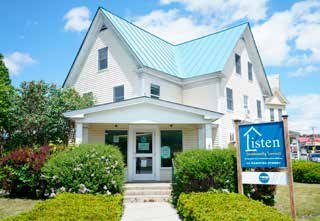
Listen: Serving the Community for Over Fifty Years

by Richard Ford Burley No Comments
listen's holiday baskets probram

By the time the ink had dried on the 501(c)3 paperwork declaring “Lebanon in Service to Each Neighbor (LISTEN)” an official nonprofit in 1973, the start-up activist collaborative had already racked up some significant accomplishments.

In the early 1970s, the conversation around town might have sounded familiar to modern ears: it centered on the shortage of quality, affordable housing for the people who lived and worked in the city. The city’s residents were in favor of the idea of public housing, but then – as now – the question had been about exactly where to put it. In late 1971, the City Council had rezoned South Main Street in West Lebanon to rule out anything other than single-family homes. But by the end of the following year, not only had a tight-knit band of parents and activists helped to overturn that decision – leading to the Lebanon Housing Authority’s construction of Romano Circle –they had also started a food co-op, a community garden, and a thrift store, and had begun to focus their efforts on a proposal for expanded tenants’ rights. Fifty years later, LISTEN Community Services is still working hard every day to serve those in need, in Lebanon and beyond.

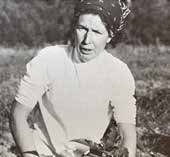
LISTEN’s founder,
Marcia Boutin
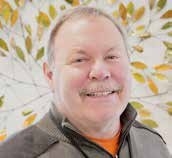
current executive director,
Rob Roy McGregor
comms coordinator,
Roscoe Putnam

It would be impossible to explain the early days of LISTEN without mentioning Marcia Boutin – its founder, first chairperson, and (as everyone will tell you) the driving force behind its early achievements. By all reports, Boutin was an activist in every sense of the word. In 1972, she showed up to City Council meetings to complain that the City’s “substandard housing board” rarely, if ever, met, and that there were dozens of “wrecks” it should be addressing – complaining that she had personally been working on three of them, but that it was a losing battle without City help. The fact that she had been doing so while both founding a community garden on Heater Road and opening a thrift store in the side of former Olympian Ernie Dion’s ski shop on Hanover Street only serves as further testament to her commitment to the cause.

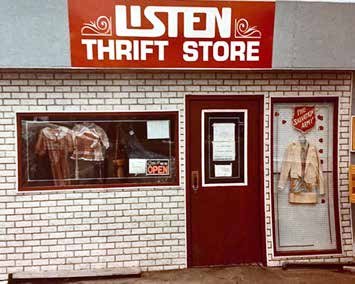
Early Listen thrift store, circa 1980s

According to Roscoe Putnam, LISTEN’s Communications Coordinator, the thrift shop began as a way to fund the organization’s community aid efforts. “[Marcia] went to the community and said, you know, you donate [the clothes], we’ll put them all on hangers. We’ll sell them for fifty cents and we’ll give the money away to anybody who needs heat or food or whatever else.” By 1973, the shop had moved to 92 Hanover Street, the site of the drive-through for the present-day Jiffy Mart and Dunkin’ Donuts. But even that home proved too small for the quickly-growing organization, and in 1976 they purchased 60 Hanover Street, at the time known as “Scotty’s Boarding House,” and made it LISTEN’s central office. “We had a thrift store downstairs, a food pantry in the back, and [offices upstairs].”

Over the years the thrifting operation expanded further. They opened a second location in White River Junction in 1980 and expanded into Canaan in 1985. In 2013, LISTEN opened their River Point Plaza in White River Junction – renamed the Bourne Center in 2016 after former executive director Merilynn Bourne –which houses not only a thrift store and a used furniture store but also the kitchen and dining hall for their Community Dinners program. In 2018, they purchased the old Bridgman’s furniture showroom on the Miracle Mile and moved their Lebanon thrift store to where it is today. While the stores aren’t solely to fund the other work the charity does – they don’t sell everything they take in, offering vouchers for clothes, shoes, kitchenware, linens, and even furniture to those in need –according to the organization’s 2023 Annual Impact Report, last year the stores generated 22% of LISTEN’s roughly $1.5 million operating budget.

That budget goes towards fulfilling LISTEN’s core mission, “to provide services and support to meet the critical needs of Upper Valley individuals and families,” and few needs are as critical as food. The community garden, first planted in June 1972, was meant as a part of the “Food Co-op” LISTEN had started in March of the same year. The Co-op was intended as a way to shrink families’ grocery bills and provided roughly 75 families a week with nonperishables, bread, and around 25 varieties of fresh vegetables from the garden. There was even a canning operation, both to provide preserved vegetables for the winter and to teach families how to preserve produce for themselves. The Co-op also worked with local businesses like Cabot Creamery to provide access to cheese and milk at wholesale prices, a model that persists to this day, with McNamara Dairy providing milk to the Food Pantry at a deep discount. The community garden and Co-op programs eventually evolved into the modern-day Food Pantry, which had over 11,000 visits last year. Also, in 1986, LISTEN took on the responsibility for the “Soups On” program, which was a weekly free dinner program run through local churches. It was quickly renamed to the Community Dinners program, and in 1994 it found a more permanent home in Canaan. Today, the dinners are served Monday to Friday from 4:30 to 5:30 at the Bourne Center in White River Junction, last year serving almost 33,000 meals.

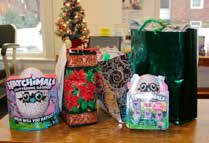
LISTEN Holiday Baskets
LISTEN Community Dinner at
Sacred Heart Church c 1987

LISTEN also serves the community in other important ways. In 1982, when the Winter Home Emergency Network (WHEN) dissolved, LISTEN took on the home heating assistance program itself. In 1998 it became their Heating Helpers program when it became internally funded. In 2002, the organization began its Housing Helpers program, providing one-time grants and legal assistance to help community members stay in their homes when they are at risk of losing them. Last year alone, those programs helped over 1500 people stay warm and prevented over 350 evictions.

Although they have stepped back from aid specifically for children and teens in recent years – in 2020, they transferred ownership of the Junction Youth Center in White River Junction to Second Growth, an organization more tailored to youth aid and outreach – LISTEN still does a great deal to support children in the area, running an annual Holiday Basket program and giving out scholarships for students to attend summer camps when they otherwise might not be able to. The Holiday Baskets program began in 1980, and today provides groceries and winter clothing for under-18s and seniors, and the Summer Camp Scholarship program began in 1990 and last year made it possible for 186 students to attend summer camps.

The Holiday Baskets and Summer Camp Scholarship programs were also two things Roscoe Putnam mentioned when asked about the benefits of being an independent charity rather than a government agency. “It may be hard for the government to see the need for summer camp scholarships and holiday baskets. Why do you need a holiday basket?” It could be hard, he argued, to sell the need

for summer camps to a government-run program that’s beholden to voting taxpayers, but “[it’s] an opportunity for kids to have some good memories of summer, not [just] sitting at home, sitting on the steps, bouncing a ball.”

The wide diversity of programs offered by LISTEN is at the core of the way the organization operates today, and that flexibility is important for LISTEN’s future, as well. In March, Rob Roy McGregor was appointed as the new executive director of the nonprofit, after almost twenty years as President and CEO of the Southern District YMCA in Exeter, New Hampshire. When asked about the future of LISTEN, he said he sees it as “a social enterprise, where you have a core part of your organization that generates revenue to support other elements of your organization that can’t support itself.” He said it was important for the charity to continue “to be able to generate the revenue through our thrift stores and [to] be able to use that as a revenue driver” to fund their fuel assistance and food insecurity work. He also wants it to be a “community driver for sustainability and environmental impact,” describing a kind of virtuous cycle, diverting clothing and goods from landfill and into reuse, all the while using the proceeds to help those in need.

McGregor seems to feel as though, at LISTEN, he’s standing on the shoulders of giants. He refers to himself and others privileged enough to do the work as “stewards,” of “fifty years of history.” “That’s all we can do, is to try to build on the pillars of what each of us has done.” As a final thought before rushing off to another meeting, he added a final, pragmatic thought about the future: “I’d love to see us out of the food industry and food insecurity business because that doesn’t exist in this world [anymore]. I don’t see that happening. And I’d love to see us out of the housing insecurity world because that doesn’t make sense, but I don’t think that will happen [either]. Until then, we just have to keep moving forward.” With fifty years under its belt, LISTEN has proven that it can do just that.

Shelf stable food and personal care items can be dropped off at LISTEN’s main office at 60 Hanover Street from 10 am-4 pm, Monday-Friday, and monetary donations can be made by going to listencs. org/make-a-donation-now.

Share:
Reading time: 7 min
All, Cover Story, History

Happy 10th Anniversary, Lebanon Times!

September 6, 2023 by Jennifer MacMillen No Comments

Wait! My older daughter was only 18 then? About to be a freshman at Northeastern? She’s 28 now and just got engaged. How could that be?

It seems like a lifetime has happened since I launched the inaugural issue of the Lebanon Times 10 years ago. In fact, many lifetimes have happened and we’ve been able to capture and share moments in time from those lifetimes. For ten years, four times per year, the Lebanon Times has had the privilege of getting to know the good people, good places and good things happening in and around Lebanon and then celebrating the stories in our pages.

And I really do mean privilege.

When someone lets you into their life and shares their story, and then digs up old photos to accompany that story, and then lets you print the whole shebang for the entire community to see… that’s a gift and a privilege for us all. When neighbors share their authentic stories with each other, every citizen is uplifted and the community is strengthened.

And, for some reason, Lebanon grows ’em good. People are authentic, kind, caring, hard-working, innovative, creative and actively engaged in nurturing Lebanon’s ongoing evolution. What a privilege it is and has been for us to have such a vast melting pot of good things to write about.

Let’s take a look to see what we mean. We’ve included thumbnails of every cover we’ve printed thus far. I hope by glancing at the snapshots in time throughout the past 10 years, you will be reminded about how awesome Lebanon is and about the big and small changes that have shaped who we are today as a community (as a reminder, you may download a copy of every issue ever printed from our website: www.thelebanontimes.com/archives). After reviewing past issues, I see where we have room for improvement: over the next 10 years, we will include more stories about our young people and about the many new Americans who help make Lebanon so rich, interesting, and resilient. 

Allison Rogers Furbish
Donnie Perkins

From the very first advertisers and businesses who said “YES” to the idea of supporting a local, good-news-only community publication, to the writers and subjects who captured and told their stories, respectively, the Lebanon Times is a community effort and success story. Every business and organization that has advertised their goods and services off and on over the 10 years has been absolutely essential in keeping good news delivering to every address in the Lebanon and West Lebanon zip codes. As always, there are some standouts that deserve a shoutout: Mascoma Bank, Coop Food Stores, Dartmouth Health, Lawn Master, Hanover Road Dental Health, Mascoma Dental Associates (and others). These financial partners have not missed having an ad or a sponsored article in every issue for 10 years! Thank you for your unwavering support. Your message is delivered along with the good news the entire City of Lebanon has come to look forward to for 10 years.

Ruth Sylvester and Elfie
Dave Nelson

Obviously, just like at the Oscars, one cannot possibly name everyone who should be celebrated for helping bring the Lebanon Times to life. Allison Rogers-Furbish who grew up in Lebanon and has many generations of family members here, was LT’s founding editor. While I had worked in Lebanon for many years and had many connections, it was Allison’s insider’s knowledge and tremendous story-telling and editing skills that helped bring Lebanon’s authentic personality to the forefront. 

Cindy Heath was the first person I approached with the idea of starting a good-news-only paper in Lebanon. As Director of Parks and Rec in the 1990s, I knew she had a sense of what might work. She gave it a thumbs up and has been writing for us ever since!

And, while he hasn’t been directly involved, Steve Christy, the longstanding former President of Mascoma Bank, planted the seed for the merits of good-news-only media in my receptive mind in 1991 and, without realizing it, shaped my entire life’s work. To read the details, see the first ever cover story about Steve in the Lebanon Times Fall 2013 edition at www.thelebanontimes.com/archives.

While the LT focuses on good news, more importantly we celebrate people, places and events that uplift and inspire. I would be terribly remiss in not expressing my deepest gratitude to those contributors who have passed on and without whom this publication would have wilted. Donnie Perkins wrote “These Times” from the very first issue until he passed away suddenly in 2020. A lifelong native, Donnie was a “character” and wrote about his escapades and musings that would strike a resonant chord with many a local. I am honored that he willingly added his downhome perspective about “These Times” for old timers and newcomers, alike, to enjoy. 

Ruth Sylvester, while a Norwich resident, was a tireless volunteer with Lebanon’s Upper Valley Music Center and played the cello with many UV music ensembles. She wrote for all three of the Greater Good Media publications – including the first Norwich Times 25 years ago and the first Lebanon Times 10 years ago. She was a brilliant writer and captured the heart and soul of her subjects with grace and simplicity. Ruth passed away in 2020 after battling cancer, yet her legacy lives on through her words, deeds and the music she shared. 

A force of nature, Dave Nelson helped everyone in his path –  from his elder neighbors at Quail Hollow to his grandson during important ski races to a days-old fawn that needed attention. Without Dave and his willingness to write multiple articles for every issue, the Lebanon Times would have floundered during life moments when I had too much to manage.

Dave was highly principled and admired and respected our local civic institutions. He politely insisted on submitting articles about the Lebanon Police Department, the Lebanon Fire Department and many other government entities because he staunchly believed in giving them the respect they deserve.

Dave passed away quite suddenly after a short struggle with cancer. His incredibly generous, optimistic and gregarious personality can be brought back to life when reading the many stories he wrote for the Lebanon Times and by viewing the many phenomenal photographs he took for multiple outlets.

So, it is with tremendous gratitude that we bring you this issue of the Lebanon Times as we head into the next decade of focusing on and celebrating the good news that happens in and around this remarkable community every day.

Share:
Reading time: 5 min
All, Cover Story

Katharine Ogden: Making a WISE Difference in the Community

September 5, 2023 by Justin Lafleur No Comments

Katharine Ogden made her presence felt as an All-American skier at Dartmouth College (Class of ‘21). Today, she is making a difference right down the road in Lebanon with WISE.

“WISE, as an organization, has a pretty broad mission statement in that the organization’s goal is to eradicate gender-based violence in the Upper Valley,” said Ogden. “My role involves working directly with survivors who are currently experiencing gender-based violence, usually helping them through the logistics of fleeing from an abusive relationship, or with processing what they had been through.”

Ogden is enrolled in a remote Master of Social Work program through Columbia University. Half of the degree consists of online classes and the other half is fieldwork. Living in nearby White River Junction, she was matched with WISE by her fieldwork coordinator at Columbia.

“WISE was really interesting to me when I talked about it with my fieldwork coordinator,” said Ogden. “I started there in September working three days a week as an intern, which was a part of my education. It was an unpaid position where I was learning and benefiting from working with the advocacy team with WISE.”

“Starting in the first week of May, I transitioned from being an unpaid intern into a part-time employee for the duration of the summer,” Ogden continued. “I’ll then go into my next field placement for school starting in September.”

Ogden’s interest in social work began at Dartmouth College in a Poverty and Education class with Professor Michele Tine.

“It was my favorite class I’ve ever taken — in college, in grad school, anything,” said Ogden. “It was an incredible class and an amazing professor. We learned a lot about the ways that systemic injustice affects child development, especially at really young ages. That first sparked my interest in working in social work because I was starting to understand the nuance that contributes to systematic problems, and I wanted to be a part of addressing it.”

As a sophomore at Dartmouth College, Ogden was accepted to the SIBs Program through the Center for Social Impact. It’s a one-on-one mentoring program that pairs Dartmouth students with children ages 6-12.

“I was paired up with this incredible little girl,” said Ogden. “I got to know what her life looked like and we had a lot of fun together. I really appreciated the privilege of getting to know her and her family over the subsequent year of weekly meetings. I value engaging with a wide and diverse swath of my community, and this experience certainly highlighted that value for me.”

Katharine Ogden, an advocacy intern for WISE, sits behind
brochures that offer support for survivors of domestic and
sexual violence

“When I think about social work as a career path, getting to meet and work with so many different unique people is certainly a draw for me,” Ogden added. 

Enter where Ogden is today.

There are different areas of WISE, including education and advocacy.

“I work on the advocacy team, working directly with survivors who are currently fleeing domestic violence or who are working to process domestic violence in their past,” said Ogden. “My day-to-day is varied. We work with any survivor who comes to us, is in crisis, and needs help. That means there’s a lot of people on any given day while sometimes, there might be not as much going on.”

One of Ogden’s responsibilities is answering the 24-hour crisis line.

“I will take shifts answering the crisis line – both during the day and then twice a month – I also have overnight shifts on the crisis line,” she said.

By doing that, Ogden put herself outside her comfort zone.

“When I first started on the crisis line, it was really overwhelming and I was nervous,” she said. “But watching myself gain confidence in that setting has been rewarding.”

Ogden also meets with survivors who come to the program center.

“My area of focus is on housing advocacy, so I frequently help people with housing applications,” she said. “A lot of that is working through subsidized housing applications and helping connect people with other resources. Housing in the Upper Valley is pretty tight, so this usually takes some creativity.”

“We have a safe house at WISE where survivors who are fleeing and need housing can live, so I also regularly work with our guests there, helping to coordinate that experience for them,” Ogden continued. “Also, fairly regularly, we get calls from local hospitals to meet with survivors, so that’s another regular task of mine.”

If people screen in at the hospital for domestic violence or sexual assault, WISE will be notified and an advocate will come to speak with the survivor in the hospital.

All of this work helps Ogden feel a closer connection to the community, which is another aspect that motivates her every day.

“I’ve noticed a much closer connection to the community from being able to work in this nitty-gritty, in-depth way with the people of the Upper Valley,” said Ogden. “It’s also so empowering to be able to feel confident in myself in those types of situations and then simultaneously, watch the mind-blowing resilience of the people I’ve been working with in the face of some very difficult situations.”

Ogden’s experience as a Dartmouth student-athlete has helped her adapt to – and cope with – the challenging situations she comes across today.

“The work that I’m doing right now – and that I plan to continue doing throughout my life – while it’s incredible and empowering, can also be really hard,” she said. “Sometimes, it gets very emotional. From being an athlete and especially from learning how to be an athlete while in college, I learned a lot about how to take care of myself by using exercise and time outdoors – both as an outlet for my energy as well as a tool for processing.”

Ogden always felt like she had an outlet in the ski team.

“I was able to go out and do a hard workout, be outside, and be with people,” she said. “That was so crucial to my well-being and mental health throughout my undergraduate experience. Having that definitely taught me a lot about myself and how I need to take care of myself.

“Working with WISE, having that tool in my toolbox and knowing I can help myself feel better when I’m not feeling the best – by going out and going out for a run, or going for a bike ride or calling a friend to go for a hike – that type of outlet has been really important for me,” Ogden continued. “That was definitely something I learned at Dartmouth, how important that is and how impactful that is on my life.”

Late in her time at Dartmouth College, Ogden’s focus turned to racing for the United States National Team for cross-country skiing.

As a cross country skier, exercise and the outdoors helped Ogden
learn to adapt in challenging situations

“My senior year at Dartmouth (because it was still the end of the COVID era) and one year after, I was racing primarily in Europe on the World Cup Circuit,” she said. “I didn’t qualify for the Olympics, which was a bummer, but I was close to it. I spent a lot of time traveling and racing those two years.”

Then, Ogden’s focus turned to Columbia’s online social work program, a two-year program in which she had already started part-time. But this past school year (2022-23) was her first full-time year, highlighted by her fieldwork at WISE.

“I have really loved working at WISE, which is why I was eager to take a position that extended into the summer,” she said. “Every single person that works at the organization is an amazing friend and role model, so that has also been wonderful and has made me feel inclined to this type of work.”

As WISE executive director Peggy O’Neil said, “We have appreciated having Katharine with us at WISE. From the very first day, she jumped right in with a beautiful sense of compassion and commitment to her work. We’ll miss her when she leaves us at the end of the summer, but are pleased that she will remain close.”

“It also says a lot about the Dartmouth community that students return and settle in the Upper Valley,” O’Neil continued.

Next school year, Ogden’s field placement will also be in the Upper Valley at the veteran’s hospital in White River Junction.

“I will be in two of their inpatient clinics, intermittently,” she said. “That will be a very different journey for me. My last year of school will be next year and then I’ll be graduated and have my degree. Because the population, the work, and being in a hospital will be so different, it’s hard to really know how I’ll come out of that feeling and where I’m inclined to go after graduating from Columbia.”

“But that said, I have had such an incredible experience working at WISE that I would be absolutely inclined to pursue something similar,” Ogden continued. “It has been so educational and empowering.”

What is the most rewarding feeling?

“Seeing survivors we’ve been working with for months finding success, finding more peace,” said Ogden.

“Being a part of it all has definitely been an incredible experience.”

Share:
Reading time: 7 min
All, Cover Story

An Enduring Legacy: The Rotary Club of Lebanon

June 6, 2023 by Cindy Heath No Comments

As long as humans have roamed the earth, we’ve been coming together around common interests. We’ve formed groups of all kinds – tribes, guilds, coalitions, communities, associations, and clubs, to name a few. At last count, the online database – Cause IQ – listed almost 32,000 community service clubs and organizations in the United States. This year, the Rotary Club of Lebanon is celebrating 100 years of community service, as it steadfastly maintains the Rotary tradition of “Service Above Self” while continuing to find ways to adapt to our changing times.

Fellowship, service projects, and leadership development are deeply embedded in the club’s priorities, and always have been. Bruce Pacht, a Rotary Club of Lebanon member since 1976, points to the emergence of a sense of social responsibility and caring for one another as a catalyst for the founding of many service organizations in the early 1900’s – Boys Scouts, Red Cross, Rotary and Lions Clubs among them. “The purpose of Rotary was then – and still is – based on four points: the development of acquaintance as an opportunity for service; high ethical standards in business and professions; service in personal, business, and community life; and the advancement of international understanding, goodwill, and peace,” says Pacht. This sentiment is echoed by club member Ron Michaud, who is active in international projects. “Community service has been very important to me both professionally and in my private life,” Michaud says. “Rotary’s focus on positive community spirit and enhancing people’s lives happens in a very dramatic and sometimes hidden way.”

Jim Damren, fellow Rotarian, standing in line to register for a Rotary golf tournament

The club has chosen to develop a new kind of park called “Harmony Park,” located on the walking mall in downtown Lebanon. The park features colorful bells, chimes, drums, and other outdoor musical instruments accessible to all. According to current club president Ed Friedman, Harmony Park is wonderfully aligned with Rotary’s mission. “It’s Rotary’s gift to the City. We’re a group of like-minded people trying to do the best in our community and worldwide,” he says.

Harmony Park, a new Rotary-sponsored community fun-spot in Lebanon

A common thread among many groups like Rotary is the importance of building friendships and actively working on projects that serve humanity and the environment – both locally and globally. Rotary International is one of the few service organizations that has withstood the test of time, enduring plagues, wars, depression, recession, and other global and domestic disasters across its 118 year history.

Rotary was originally founded with four members in 1905 by Chicago attorney Paul Harris, who was looking for business and social connections in his new home town that mirrored his upbringing in Wallingford, VT. Today’s Rotary International has more than 1.4 million members worldwide, with 36,000 clubs operating in 200 countries. Rich in tradition, yet responsive to societal trends, Rotary International recently added “protecting the environment” to its areas of focus which also include promoting peace, fighting disease, providing clean water, saving mothers and children, supporting education, and growing local economies. The organization is seeing growth in Asia and India, where new wealth and young people are merging to continue practicing the Rotary service ethic, while clubs based in the U.S. are strategizing on how to attract the next generation. Hybrid meetings, e-clubs, partnerships, a focus on diversity, equity, and inclusion, global exchanges, and clubs for young emerging leaders are evolving in various forms throughout the world. The latest evolutionary milestone was the 2022 installation of the first female president of Rotary International, a communications executive from Canada. Today, regardless of how volunteers identify, all are welcome to join, and international virtual fellowships have been formed including “Empowering Women”, “LGBTQ & Friends”, and “Young Rotarians”, along with “Peace Fellows”, “Urban Gardening”, and about 100 other special interest fellowships.

The Rotary Study Room at the Lebanon Library

Marilyn Bedell, a long-time member, past Rotary Club of Lebanon president, and past district governor (regional oversight of 41 clubs) notes that the Lebanon club has worked with numerous local and regional partners to achieve its goals. “We’ve done flu shot clinics with the Public Health Council of the Upper Valley and projects with the LISTEN Center. Environmental projects like polystyrene recycling with Sustainable Lebanon and trail and river clean ups with the Lebanon Conservation Commission have been very successful. Our service trips to El Salvador with Epilogos Charities address our international service goals,” she says.

One of the signature projects falling under the new environmental protection focus is the Mascoma River Clean Up, held every other year along the length of the river in the City. For more than a decade, volunteers working on foot and in canoes have removed trash and debris from the river in collaboration with the Conservation Commission and City departments. An unusual array of items has been discovered over the years, including car tires, a farm tractor tire, and a boiler. Ernst Oidtmann, a retired physician, clean up coordinator, and member of the Conservation Commission reports in the club newsletter that 30 participants turned out for the most recent clean up. “We had four Rotaractors (18-30 year old Rotarians) from the Rotary Club of Hanover, many members of the Lebanon Conservation Commission, and City Manager and fellow Rotarian, Shaun Mulholland,” he says. “The good news is that the river continues to be less littered than when we started this service project long ago.”

Rotarians lend a helping hand at the Epilogos house build project in El Salvador

A testimony to the evolving nature of Rotary is shared by veteran member of 50 years, Steve Whitman. “Interact (high school volunteers) and Rotaract is where I think the future is,” he says. “If we can get students involved in community service we can ease the pressure on the teachers and build the next generation of club members.” Rotarian Joy Gobin, who coordinates the eight-year-old Lebanon High School Rotary Interact Club, says, “We try to mirror the goals and activities of Rotary. It doesn’t make sense in our world today to stay in your own lane, because resources are so thin, so you have to look at the big picture. There is more engagement by the students because they have a voice in how to give their time.” Interact club members have initiated a 24/7 food pantry at LISTEN, collaborated with The Haven to knit 200 hats, gloves, scarves to donate to those in need, and raised funds to support girls’ education in Ecuador. 

Incoming President David Crandall has designs for revitalizing the club as well. “We want to keep Rotary vibrant and engaged through community projects like Harmony Park,” he says. When Crandall moved to the Upper Valley four years ago, he looked at joining a few civic organizations so he could meet new people. “I went to a Rotary lunch,” he remembers. “The people were so friendly and I was impressed at how organized it was, and that people really cared about being in Rotary. You feel like you’re doing good work and most importantly it’s enjoyable.”

Rotarians Bill Secord and Bruce Bergeron sharing memories of their house build in El Salvador at a club meeting

As chair of the 100th Anniversary Committee, Crandall notes that 2023 is a big year for Rotary. The committee looked at a dozen different projects working with the City’s Recreation, Arts & Parks director Paul Coats and the City Council to honor the anniversary and give back to the community. In the end, because of the club’s musical history (long-time music teacher Doris Mollica played the piano at club meetings), the Harmony Park concept was selected.

The “magic” of Rotary is to identify a compelling cause and gather volunteers to take action to get things done. Internationally, Rotary is focused on eradicating polio in partnership with national and international foundations through improved sanitation and vaccines. The initiative began in the Philippines in 1978 with millions of child immunizations. The results of this global focus is that worldwide, polio cases have now dropped by 99%.

Locally, Rotary magic shows up in a full calendar of events and projects according to board member and Community Service Committee chair Bruce Bergeron. “The Community Service Committee is what got me involved in Rotary 30 years ago,” he says. “At the time, I wasn’t thinking about all the other avenues of service that Rotary offered in particular, because I wanted to get involved in my own community.” Project highlights include giving a personalized book to every 1st grader (as one child told a Rotarian, “this is blowing my mind!”), sending local youth to the Rotary Youth Leadership Assembly, developing several parks throughout the City, and international projects to build houses, eradicate guinea worm disease, and provide clean water and enhanced food production.

Rotarian Marilyn Bedell expresses the question of many service club leaders in today’s digital age: “How can Rotary become the service club of choice for the next generation?” Her advice: “Don’t think you have to commit to joining Rotary when you first start coming. You can have a wonderful time connecting with a great group of people, and then decide.” Bedell would not have had the risk-taking experiences, joys, adventures, and ability to create change in herself if not for Rotary International, she says. “We are really trying to educate ourselves about how our club can innovate and inspire the next generation as we keep evolving over time,” she added. Bedell tells the story of a local Nepalese couple who supported their daughter’s attendance at the Rotary Youth Leadership Awakening program and now the young woman is a dynamic member of the community.

Rotarians Jim Damren (vest) and Angela Nelson (royal blue top)distributing personalized books to first-grade students in Lebanon
Rotarians Jim Damren (vest) and Angela Nelson (royal blue top)distributing personalized
books to first-grade students in Lebanon

Today’s Rotary members suggest that the next generation needs networking and human connection just as much as they all did when searching for a way to get involved in their community. It stands to reason that the timeless human need of coming together for the betterment of others is still relevant, even in the digital age.

Share:
Reading time: 8 min
All, Cover Story

Taylor Soule: From Lebanon Roots to the WNBA

by Faaron Washburn 1 Comment

From humble beginnings, she stays humble. Virginia Tech women’s basketball star Taylor Soule – who grew up in Lebanon – is officially on her way to the WNBA after being selected in the April Draft.

Soule was raised in West Lebanon alongside her sister Zoe, and together, the self-proclaimed “Soule Sisters” represented New Hampshire on a national level as members of their junior high track team. “(I’m) not sure if anyone ever called us that, but we did,” Soule says. At age 10, Soule won the national 9/10 girls 100-meter event while competing at the Hershey’s Track and Field Games North American Finals in Hershey, PA.

Soule graduated from Kimball Union Academy (KUA) in 2018, where she excelled in both soccer and basketball. Her former women’s high school basketball coach, Liz McNamara, has previously been quoted highlighting Soule’s extreme athleticism and major representat ion of the Upper Valley on a national scale.

In 2017, Soule was recruited to play basketball for Boston College and started 20 out of 29 games during her freshman year. Soule would go on to score over 1,000 points over four seasons at Boston College and then transferred in 2022 as a graduate student to Virginia Tech (VT), known for its academic prowess in addition to its glowing sports program.

“Growing up I was always athletic, always enjoying sports, and running,” Soule recalls. “I kept doing it to please my parents and coaches.” When asked about the “heroes” in her life, Soule gives a heartfelt shout-out to her parents, John McDermott and Kate Soule of West Lebanon. “I really just want to thank them for all the small stuff they did, things that I may not remember, but they do.”

One of Soule’s best memories of growing up in Lebanon is “hanging out with all my friends playing basketball and throwing footballs, and the jump rope classic” after school at the CCBA, she says. The CCBA’s Witherell Recreation Center has been offering youth programs to families for over 100 years, used widely by area residents like Soule.

While enrolled at VT, Soule has been a star forward for the women’s basketball program, wearing the lucky #13 jersey. She would start each game and score double figures in more than half of those games. This April marked an even bigger milestone for the Virginia Tech “Hokies” (named after the college’s “HokieBird” mascot which resembles a turkey).

The Virginia Tech women’s basketball team sat together on April 11th to watch the WNBA draft while on campus. “It was crazy. I was at school watching with my teammates in sweatpants,” Soule recalls. Guard Kayana Traylor was swept up by the Chicago Sky as the 23rd draft selection; which garnered cheerful screams and cries from the team when the news broke.

“Hokie” number 13, Taylor Soule

Soule retells that she then stood up, heading toward the door, thinking the chances of another VT player being selected to the WNBA were slim – it had never happened before. Little did she know that only five selections later, she would set a new record for her college and team when she was selected alongside Traylor. The Minnesota Lynx took Soule as the 28th draft selection. The room full of teammates erupted at the news and “I was crying tears of pure joy to be selected,” Soule remembers.

When asked how her team celebrated this double-draft pick, Soule recalls emotions of excitement, relief, and disbelief. “The celebration is endless,” she says. Only eight players from Virginia Tech have ever been drafted into the WNBA to date. The Upper Valley sports fans and community are still celebrating this momentous selection of a Lebanon native to the WNBA. For many of us as players or parents, this news is truly inspiring.

Soule will now be wearing the #7 jersey alongside three other women selected as part of the 2023 draft class for Minnesota, including the number two overall draft pick Diamond Miller from Maryland. “My greatest strengths as a professional athlete would have to be my defensive versatility and my ability to guard multiple positions,” Soule says. “I’m planning to show off these skills at training camp.”

Last year’s WNBA regular season standings ranked Minnesota as #9 overall. The addition of four bright new stars has the potential to take Lynx to the top. Preseason games will quickly begin on May 5 and the team’s season opener on May 19th will be against Chicago Sky, meaning that Traylor and Soule will meet again as opponents!

Soule in 2012, a CCBA Youth Basketball team member

As an athlete, Soule stays motivated by “playing with people that take the time to enjoy what they do and work hard,” she says. Soule is also currently completing a one-year online Master’s Degree in Instructional Design and Technology through Virginia Tech. When asked about her plans for this degree, she highlights the endless possibilities and says she “(sees) herself as a future teacher or coach.”

As far as Soule’s daily routine, her workout and diet regime consists of generally completing her workouts in the morning so she can make her afternoons available. Hydrating to keep herself feeling energized and snaking throughout the day are other habits Soule swears by. “I tend to go with the flow on a day-to-day basis,” she says.

When not on the court, Soule loves clearing her mind by listening to music. “I’ll sit in the car sometimes for three to four hours just listening to anything. People ask ‘Is that country music?’ And I ask them, ‘You know where I grew up?’,” referencing her childhood in the Upper Valley. “I listen to McDonough, R+B, Coco Jones… anything.”

Finally, when asked how the similar temperatures of New Hampshire may have prepared her for a 21-hour move to Minnesota, Soule replies, “I brought my boots.”

Soule at an Ohio State game for Elite 8
Share:
Reading time: 4 min
All, Cover Story, Uncategorized

Diaries of a Diner: A Hopeful Fate for a Beloved All-American Dining Experience

February 23, 2023 by Laura Jean Gilloux No Comments

It’s easy to imagine a time when silver, streamlined diners speckled the granite landscape – but it seems only a few of these American relics remain open in Vermont and New Hampshire today. It’s one reason why there’s been so much buzz around the “For Sale” sign outside the Four Aces Diner in West Lebanon. The question on everyone’s mind seems to be: will it remain open? And, if so, will it stay the same diner we know and love?

Although the diner was likely named for the 1950s pop quartet – The Four Aces – its history is summed up by the contemporary singer-songwriter, Martin Sexton. In his song “Diner,” Sexton sings: “They were made back in Worcester, MA, of aluminum, and Bakelite, and glass.” Look up the famed Worcester Lunch Car Co. on Wikipedia and you’ll see “4 Aces Diner” listed as one of at least four lunch wagons that made their way up the East Coast to New Hampshire in the 1940s and ’50s. Although camouflaged by a red clapboard exterior, the Four Aces is – in fact – Worcester diner car #837, dating back to 1952.

A booth at Four Aces Diner, complete with menus and Magic 8 Ball

“They towed them in next to factories, so the factory workers could go in, have something to eat, and get out in a half hour. That’s what they were designed for,” Four Aces co-owner Steven Shorey says, who provides me with his own brief history of the diner as we sit in a cozy booth with his sister and fellow Four Aces co-owner, Leann Briggs, on a snowy Friday afternoon in January.

“All the cooking was done out front of these diners originally, and it’s hard to find someone who can do that,” Shorey says. “It’s a lot of people, and a lot of mouths to feed.” Hiring and retaining line cooks is something Shorey and Briggs know a thing or two about. Shorey has owned the Four Aces for thirty-four years and has managed the diner alongside Briggs for over fifteen of those years.

The Stewart family – whose name appears on the original diner blueprints before it was built – owned the Four Aces Diner when it first opened on December 6, 1952 at the corner of Main Street and Dana Street in West Lebanon, New Hampshire. It remained at that location for thirty-two years before moving down the hill to its current location in 1986. In celebration of the diner’s 70th birthday this past December, Shorey and Briggs sold hamburgers and hotdogs at their original ’50s price point. Q106 (“The Valley’s Best Rock”) held a live broadcast of the event until noon, and WCAX showed up to gather footage for their evening news.

After its initial run, Dot Gomez, of Lebanon, purchased the diner in 1965 and began her successful twenty-year operation, ending in ’85. Shortly thereafter, Shorey purchased the property in ’89 for around $150,000. He had an interest in the food and beverage industry dating back to 1963, when he was twelve years old and working as a busboy at the former Montshire Restaurant on Route 10 in West Lebanon. Shorey continued to work locally at the Hotel Coolidge and the former Howard Johnson’s restaurant, both in White River Junction. He also spent a brief period of time in Florida running resorts. Other than that, he and Briggs have lived most of their lives in Lebanon.

Briggs became involved with the diner when it reopened on Mother’s Day in 1991. “On my first day here,” she recounts, “I went home crying. I was never coming back to this place.” Briggs explains that they ran out of food and one of the grills caught on fire. “It was just a horrible day,” she says, then adds, “By the time my husband and kids came for lunch, the only thing left to feed my youngest son was a peanut butter and orange marmalade sandwich!” After the unexpectedly busy opening day – having served 50 customers without even advertising – Shorey and Briggs spent the rest of the night baking pies in preparation for the next day’s customers.

After five years, Rick Clark ran the diner from 1998-2007. By the time 2010 rolled around, Shorey was planning to sell the property, but realized the business would be worth more if it remained open, so he and Briggs once again opened its doors without much fanfare, but to great success. “Actually,” says Shorey, “this last time we reopened, we did 130 just unlocking the door!”

I comment that someone could probably make a movie about the Four Aces. “Every day is different,” the pair says. “You never know what to expect.”

That being said, there’s something about ‘the American diner’ that feels predictable in an unpredictable world, holding iconic sway in Americana imagery. From Edward Hopper’s Nighthawks to the famous booth in the popular ’90’s sitcom Seinfeld, diners are as familiar as they are familial, especially in small, close-knit communities like Lebanon. Named one of Yankee Magazine’s “15 Best Diners in New England” in 2022, Four Aces embodies the image of the quintessential American diner, from the way it looks to the comfort food it serves.

Shorey explains that Monday through Friday at the diner tends to beckon more of a blue-collar crowd. “It’s a lot of construction people,” he says. “We have contacts with an electric company, Liberty Facilities, so when the power goes out, we feed ‘em.” Given recent widespread power outages in the Lebanon area back in December, it’s heartening to imagine electric workers stopping in for a warm meal and hot coffee to ease the demands of their profession at such a time.

Marilyn Monroe’s words to live by on display at Four Aces Diner

The diner, which has always held strong ties with Dartmouth College, hosts large numbers of students on the weekends. “They all eat here,” Shorey says. “It’s been that way for 70 years, and now grandfathers who went to Dartmouth bring their grandkids in to feed them, too.”

Indeed, weekends are very popular at Four Aces, bringing in close to 500 people a day. “What’s totally amazing to me,” Shorey explains, “is that we get below-zero weather here and people will wait for an hour outside to get in! Every weekend we have a line around the corner. Every single weekend. Even in the cold.” “It’s a right of passage,” Briggs adds. 

There was a time in the early days when Shorey and Briggs knew their regular customers by name, but since the diner’s popularity continues to grow, it’s not so easy to keep them straight, unless you’re part of the 7 am crowd. “If you come in here at seven in the morning, you’ll see all these stools fill right up with the same people every day,” Briggs says. “In fact, the other day, (our customer) Dave didn’t come down and the girls were all worried about him because he’s been working on his generator…and he’s an 80-year-old guy. The girls were all like, ‘Where’s Dave?!’and when the other guys came in, they’d ask, ‘Have you talked to Dave? Is he okay?’”

I can imagine this scene on an early weekday morning. The interior – worn but familiar – with tiled floors, stainless steel contrasting dark wooden booths, and built-in coat hooks covered in heavy winter coats. The red and white stools along the counter, and kitschy American memorabilia lining the shelves that combine with an unmistakable greasy diner smell mixed with black coffee and the constant, bustling hum of servers and customers interacting. It all plays out over a backdrop of oldies tunes – songs waitresses sing along to. It cradles a person.

It’s easy to understand how significant moments in the lives of Upper Valley residents take place here. As if on cue, a group starts singing “Happy Birthday” during our interview. Briggs smiles and says, “There are a lot of people who say, ‘Oh, we had our first date here!’”

While Shorey has had to make some changes to the diner over the years – like shields that have been installed between the booths since the pandemic – he’s been careful that any alterations remain faithful to its original design. Other than that, not much about its interior has changed in 70 years. “A lot of people have asked to buy the memorabilia, but it’s not for sale. Elvis is popular,” Shorey says, referring to a bust of the famed rock ‘n’ roll icon that sits next to a small, pink Cadillac on a shelf above the booths. I imagine the porcelain bust of Elvis longing for a peanut butter, sliced banana and crisp bacon sandwich, and wonder if “The Elvis” will ever appear on the Four Aces menu. It could serve as a consolation prize for visitors after finding out they can’t take the figure home with them.

Four Ace’s unique and all-American interior design features a mismatched spread of memorabilia from over the years.

According to my own informal poll, popular menu items at the Four Aces include the Eggs Benedict. One friend told me, “I don’t care who buys the place as long as they keep the Florentine on the menu!” Everyone seems to have their favorites, but during my recent visit, I opted for two eggs over easy with wheat toast and potatoes. A classic combo: the only surprise were some sassy spices in the potatoes, which I enjoyed if only because I knew I wouldn’t be able to replicate them in my own kitchen.

For $1.2 million, the Four Aces kitchen could be my own. Shorey asks if I have my checkbook. “I’ve got the keys in the closet!” he says. But, when I ask about potential buyers, Shorey holds his cards slightly close to his vest while sharing that there has been considerable interest from a number of prospects. “But, I don’t know what they’re looking for,” he says. “Are they gonna change it? Get rid of the diner? I hope not. We don’t want it to go away.” Shorey goes on to explain, “Until you put it up for sale, you don’t realize how important you are in the community.” When I ask what would happen if they don’t receive an offer, Shorey replies, “I guess we haven’t thought of that…”

For now, they’re still operating. Shorey explains, “There are repairs and things we need to do. It’s a turnkey operation, so everything goes with it.” This could include fifteen employees, which in today’s job market is a win for any new owner.

I was lucky enough to meet two of the waitresses at the counter, Tina and Kim, and enjoyed talking with them about music, specifically a Billy Joel song we were singing along to. “That your phone, hon?” Kim asks, reminding me not to forget my cell phone. I feel swallowed up by kindness when strangers take care of me in this way. This is the vibe to expect at Four Aces. In fact, when I arrived, I immediately saw friends in one of the first booths I glanced toward. Friends who don’t mind if you scoot in next to them for a quick chat, and of course I should have known that would happen. Even on a slower day amidst snowy weather, the Four Aces is still a popular destination.

Shorey tells me about some customers who left the diner recently because they claimed it was too busy and they were feeling claustrophobic. As the mastermind behind the quotes posted above the counter and sprinkled around the diner, Shorey had the perfect response, “Nobody comes here anymore. It’s too crowded!” He turns to Briggs and asks, “Who am I quoting?” Briggs replies, “Is that Yogi Berra? It sounds like him.”

One quote I notice in particular is by Marilyn Monroe. It’s posted at the end of the diner on the door leading to the kitchen and it goes, “Ever notice that ‘what the hell’ is always the right decision?” I can’t help but wonder if this is the overarching attitude in the whole process of listing the property for sale. “I’m already basically retired,” Shorey says. “And I want to be retired!” Briggs replies. From where I’m sitting, they deserve a rest. It’s been a long, successful run, and while everyone seems to want the place to remain open another 70 years, we might just need to consult one of the many magic 8 balls located throughout the diner and give it a good shake.

Share:
Reading time: 10 min
All, Cover Story, Uncategorized

New England School of the Arts to Call Lebanon Home

by Cindy Heath 1 Comment

When career educators Jennifer and Carl Chambers first met in New York City twenty years ago, they shared a passion for an experiential style of teaching and for life’s great adventures. These mutual interests eventually led to their marriage and a move to the Upper Valley to continue their teaching careers in both public and private school settings – Jennifer in music and Carl in English and administration. Now the couple is dedicating themselves to an exciting new venture – realizing their dream of opening their own school on the mall in Lebanon this fall.

The New England School of the Arts (NESA) will offer an integrated curriculum of science, technology, engineering, math, languages, physical education, and humanities, all with an arts focus. After decades of experience spent refining their educational philosophy, Jennifer and Carl have settled on a collaborative, project-based model of education that offers students a highly successful and meaningful learning experience. By partnering with existing arts organizations and businesses in Lebanon and around the Upper Valley, the pair plan to create a community-based campus and learning lab, where students can receive an arts-focused education and give back to the community as well.

Jennifer Chambers,
founding member and associate head of school

The choice to settle NESA in Lebanon was inspired by the many non-profit arts organizations located in the downtown area which offered the opportunity for collaborative alliances, as well as the welcoming support of the City’s Arts & Culture Commission. “The organizations and the City couldn’t have been more welcoming to us,” says Jennifer. “We’ve felt welcomed by the private school community too, and to have access to visiting artists and other programs will be a wonderful opportunity for the students.” Jennifer also credits John Hochreiter, whose family owns the space above the Women’s Health Resource Center where NESA will be based, for fully supporting the mission and vision of the school and helping with fundraising strategies.

Carl Chambers,
founding member and head of school

What does project-based learning look like? According to the Buck Institute for Education – a national non-profit providing professional development, research, and conferences – project-based learning offers students real-life experiences such as engaging with local organizations, faculty, and fellow students on personally meaningful projects. Jennifer notes that co-creating the curriculum with students and faculty is a cornerstone of the NESA philosophy, and collaborative projects and experiences rule the day. “When kids are making connections to real-world authentic experiences and are able to connect one subject to another, they come to discover why an area of learning is important to their life,” Carl says. “We want to convey that the arts can bring joy to their lives. We want to provide student choice and student voice.”

Starting a school from scratch is a lot of work, but rewarding at the same time. “It’s a process and a labor of love, and definitely a grassroots effort,” Jennifer says. “We have learned a lot of things like website design and programming, and we’ve been hosting open houses and parent nights, meeting with different organizations and partners, and speaking at schools.”

Amy Good,
NESA board chair

NESA board chair Amy Good – a 32-year veteran educator and learning specialist – is excited about supporting the new school. “Jenny Chambers is a force of nature,” she says. “As soon as she made a decision to start NESA, I was right behind her. This is going to offer students an educational experience I wish my kids could have had. I have lots of faith in the other board members and we have support from a number of arts advocates and education philanthropists.”

Jennifer notes, “The number one thing that sets us apart from a public school system is our ability to meet the physical, emotional, and intellectual needs of our students. While I’m a big supporter of public schools, the system has been around for decades, and it’s hard to repair because the system is entrenched. Often, transformative leaders try to impact public school systems but they don’t last long. We can evolve our curriculum and have the capacity to be nimble in responding to student’s needs and interests.”

Another feature of project-based learning is the classroom layout, which will be less conventional with furniture arranged in circles and gathering spaces for collaborative work and less time spent listening to lectures. Local arts organizations will potentially provide performance space and supplemental classrooms.

Carl – who will serve as head of school while Jennifer will serve as associate head of school – says that the curriculum is a living, breathing document within state guidelines, and it will evolve to be aligned with a lab school culture. Amy Good looks forward to the magic that will be created by working together with NESA’s fellow educators and supporters.“When we connect education requirements with the things that make us light up, it’s less stressful and feels more like an opportunity for the students to follow their particular interests,” Good says. “Emerging from the pandemic, we need to find a way to make sure our children’s mental health, happiness and well-being is cared for.”

Lebanon’s thriving art scene only continues to grow!

Carl and Jennifer hope that NESA will add to the growing arts scene in the Upper Valley and expand focused arts education to interested students from as far away as they want to travel.  “We expect to reach students within 30-60 miles, and want to give students who have school choice an opportunity to attend a school like ours,” Carl says. The school will have the capacity for 150 students, but Jennifer and Carl plan to start small and grow slowly to maintain the integrity of the school’s vision, so the current enrollment goal is 30 students. A robust fundraising effort is underway to help students defray tuition costs if needed. Already, the Jack and Dorothy Byrne Foundation has contributed $30,000 outright, and is offering another $50,000 in matching funds.

NESA is currently taking applications for both students and faculty members. Jennifer and Carl emphasize that teachers must have a passion for working with students, embrace a collaborative and experiential learning culture, and be comfortable with making mistakes as a component of a progressive educational model. In studying other arts-focused schools around the country like the Chicago Arts Academy, Interlochen Arts Academy, Art Student League in New York City, and The New School for Social Research, Jenny and Carl have incorporated various elements into their ‘City As School’ vision such as a student centered learning environment and hiring top notch faculty.

NESA’s physical location will be right on the mall in Lebanon

Jenny emphasizes that a high quality education is possible within a ‘low stakes’ environment. “Everything doesn’t have to be graded,” she says. “We’re aiming for immersion in the subject and a calm learning environment. Peers working together is more powerful than listening to a lecture.” Class placement will be determined with a portfolio submission. “We’re looking for kind human beings who want to be part of a team, and we’ll also provide opportunities for students who want to explore the ‘high stakes’ world of the arts professions by preparing them for auditions and other real world experiences necessary to succeed in an arts career,” Jennifer says. NESA will operate under the same state guidelines as a public high school and students will attend full-time. Students from other schools may be able to take specific classes as capacity allows.

Jennifer and Carl are both passionate educators, and as artists in their own right, hold the belief that the “arts make life worth living.” From their early days as educators in New York to discovering their mutual love for helping students take risks, grow, and thrive together, the pair  are poised to make the New England School of the Arts a fantastic new addition to Lebanon and its arts scene.

Share:
Reading time: 6 min
Page 3 of 11« First...«2345»10...Last »

Our Latest Issue

The Lebanon Times is delivered to every mailing address in Lebanon.

  • Subscribe at an out of town address!
  • Pick up a copy!

© 2024 copyright Greater Good Media. All rights reserved.